Connect with us

Featured

Dangote Refinery, Fuel Price and the Principle of Back of Forth

Published

on

By Eric Elezuo

For the umpteenth time in as many days, the Dangote Refinery has adjusted the pump price of its petroleum products, with special considerations to the premium motor spirit (PMS), popularly called petrol. This has been the sequence since the America/Israel vs Iran War, which erupted on February 28, 2026; a situation that has called to question the ability of the 650,000 barrels per day capacity refinery to sustain the country in times of crisis.

In a statement made available to newsmen, the Dangote Petroleum Refinery reduced its gantry price for petrol to N1,200 per litre and its coastal price to N1,153 per litre, amid ongoing tensions in the Middle East that continue to shape global oil markets.

The adjustment however, marks a downward review in the company’s pricing structure, and is expected to influence fuel supply costs across distribution channels, including depots and retail outlets. It is however, a far cry in the original price of less than N900, which has been market value in Nigeria before the Gulf imbroglio.

Global oil prices have remained volatile since the outbreak of hostilities involving the United States and Israel on one side and Iran on the other, which has disrupted crude shipments from the Gulf region.

The disruption has pushed Brent crude prices above $100 per barrel, forcing countries to explore alternatives to ensure energy security.

In Nigeria, the spike in global crude prices has translated into higher domestic fuel costs. Petrol, which sold for about N870 per litre before the escalation, now averages around N1,500 per litre in parts of the country.

The Dangote Refinery has repeatedly adjusted its petrol gantry prices in response to fluctuations in global crude markets, with multiple revisions recorded since the crisis began.

Across major filling stations nationwide, petrol prices have hovered around N1,350 per litre and above, contributing to rising transport costs and broader inflationary pressures.

With the latest reduction by the refinery, Nigerians expect a gradual easing of pump prices across filling stations.

As the world oil crisis escalates, many Nigerians believe that it is for a reason such as this that the country is privileged to have the Dangote Refinery within its shores. They maintain that the crisis in the Gulf should have little or no effect on the country as a result of two factors:

1. The refinery is sited within the confines of the Nigeria, and

2. The crude oil (raw material) is sourced locally

They argue that movement is not hampered on international waters or by belligerent activities as a result of the war.

“This crude is produced and sourced here in Nigeria. The refinery is right here in Nigeria. So what explains the dilly-dally in the price of the product as if we have to cross the Strait of Hormuz before making it available to Nigerian consumers,” an Energy expert queried.

He questioned the rationale behind Dangote’s back and forth journey on the price of fuel.

“I don’t think anybody has told us the truth yet. We have the crude, and we have the refinery, so why are we buying the product at exorbitant price, and blaming the war in the gulf for it,” he further noted.

But in defence of the foremost refinery, the Chief Executive Officer and Managing Director of the Dangote Refinery, David Bird, raised concerns over Nigeria’s inability to supply sufficient crude oil to the facility, disclosing that deliveries under the government’s crude supply arrangement are falling significantly short of agreed volumes.

Speaking in an interview on Arise Television, Bird said the refinery, which is currently operating at its full capacity of 650,000 barrels per day, requires between 13 and 15 cargoes of crude monthly to meet domestic fuel demand. However, he said the refinery is only receiving about five cargoes, representing just about 30 per cent of expected supply.

He explained that the gap undermines the effectiveness of the Crude-for-Naira arrangement, a policy designed to supply crude to local refiners at international prices but without foreign exchange exposure.

According to him, while the initiative has helped stabilise Nigeria’s foreign exchange pressures, its implementation has been inconsistent, particularly in terms of both volume and crude quality allocation.

“We have been very vocal that there is an existing arrangement in place under the Crude-for-Naira programme commonly misunderstood as a pricing regime, it is not. It is priced at full international benchmark crude oil pricing, however, without the foreign exchange implication.

“That has been very successful in stabilising the FX and I think Nigeria and our relationship with NNPC and Dangote, we should all be very proud of that. That agreement, however, is not only just from volume but also a quality allocation perspective not being met.

“And our demand of the government is just to be transparent with that allocation methodology  because what we see under that agreement, we should be getting about 13 to 15 cargos a month and that’s what we could process to meet the domestic fuel requirements of Nigeria. Currently we’re only getting five.

“So that’s an underperformance against that pre-agreed volume contract. Second to that is quality. So Nigeria has a wide variety of crude grades all exported from different terminals and we have a preference,” he stressed.

Many Nigerians have divided on for and against the ability if Dangote to sustain local consumption especially in the midst of the crude crunch occasioned by the gulf crisis, others have exonerated the refinery, heaping the blames on the Federal Government-run Nigerian National Petroleum Corporation Ltd (NNPCL), which has failed in its duty of making the required quantity of crude available to the refinery.

It would be recalled that ever since the launch of the Dangote Refinery, the management has consistently been at loggerheads with many petroleum-associated groups over barefaced treachery and backstabbing.

Stakeholders have said that recent developments, especially the ongoing crisis among the gulf states, highlight the strategic importance of strengthening domestic refining capacity, which Dangote, as at today, chiefly represents.

Continue Reading
Click to comment

Leave a Reply

Your email address will not be published. Required fields are marked *

Featured

How I Made Buhari President in 2015 – Amaechi

Published

on

By

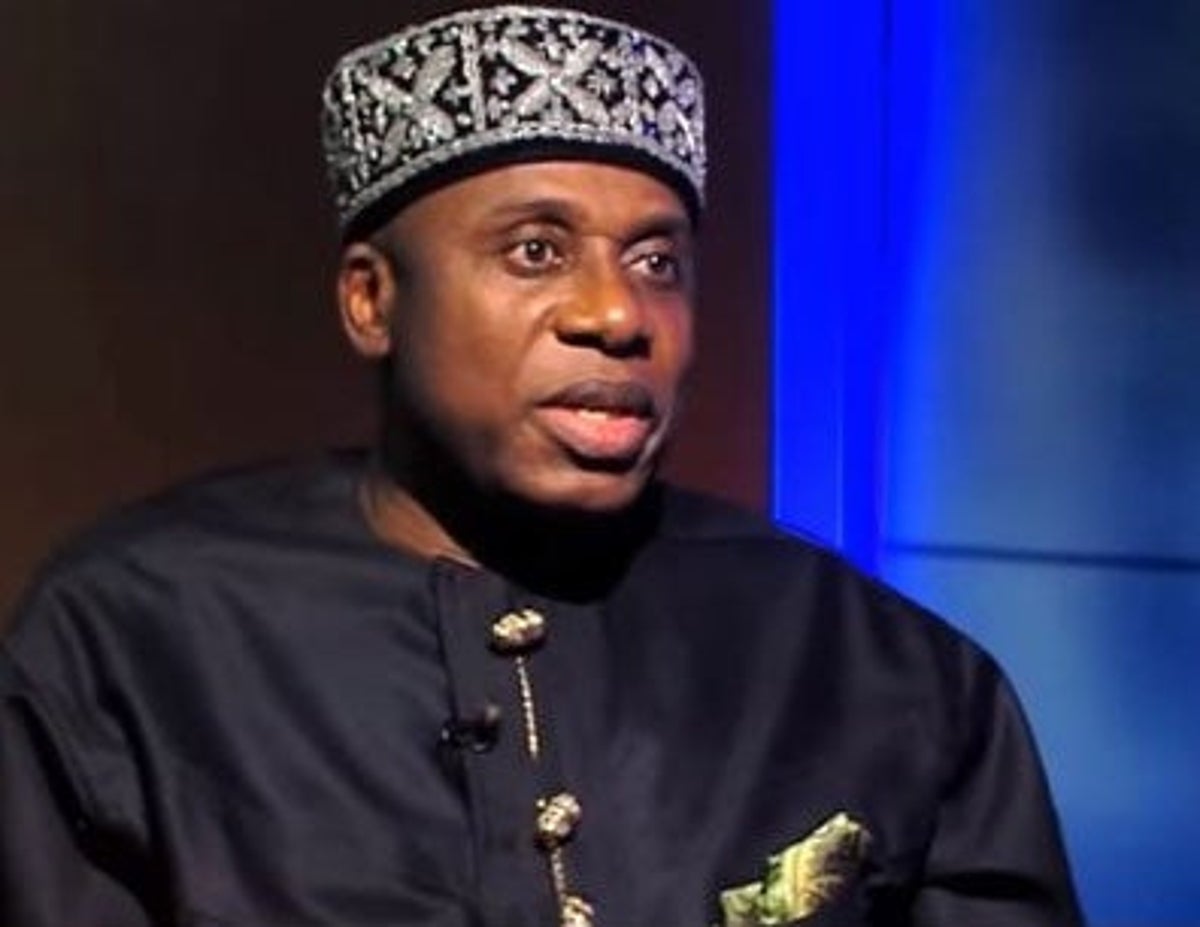
Former Rivers State Governor and ex-Minister of Transport, Rotimi Amaechi, has said that he, and not President Bola Tinubu, played the pivotal role in making late Muhammadu Buhari president in 2015.

In a Friday interview on Arise News’ Prime Time, Amaechi, who is now a presidential aspirant under the African Democratic Congress, addressed longstanding claims by Tinubu.

During his pre-2023 campaigning, Tinubu said Buhari would not have become president without him and that it was his turn to become one too.

But Amaechi explained that as a serving minister under Buhari, he could not publicly challenge Tinubu’s assertions to avoid risking his position.

“When we decided to form the APC, while I was a minister, (Tinubu) was claiming he made Buhari president and I couldn’t respond because I was a minister under President Buhari. That would have been suicidal because Buhari could fire you,” Amaechi said.

He continued, “So I couldn’t have said, ‘You are wrong.’ He didn’t make President Buhari president. Not only was I the DG of the campaign, but everybody will bear witness that I did all the battle.

“I led the Governors’ Forum, criss-crossed the country fighting here and there trying to get Nigerians to know that this is the time for change.”

Amaechi served as Director-General of Buhari’s 2015 and 2019 presidential campaigns.

He was a key figure in the 2013–2014 defection of PDP governors that helped form the APC alliance, which ultimately defeated President Goodluck Jonathan.

However, Tinubu was also instrumental in Buhari’s emergence, leading the merger of major opposition parties, including his Action Congress of Nigeria, to form the All Progressives Congress, which challenged and defeated the then-ruling PDP.

The remarks come amid Amaechi’s positioning for the 2027 presidential race as part of the growing opposition coalition under the ADC.

He has been vocal in recent months criticising the Tinubu administration over economic hardship.

Continue Reading

Featured

GLO: The Undisputed Digital Oxygen

Published

on

By

By Dr. Sani Sa’idu Baba

In medicine, oxygen is the invisible molecule upon which all human life depends. Remove it, and the body shuts down almost instantly. The brain weakens, the heart struggles, and every organ begins to fail. As someone who studies how the human body works, I have always understood the centrality of oxygen to biological existence. But in recent years, watching Nigerian society evolve in the digital age, I have arrived at another conclusion: connectivity has become the oxygen of modern civilisation.

Without network connectivity today, businesses freeze, students lose access to learning, hospital records fall into jeopardy, POS transactions struggle, markets slow down, and families become disconnected. Digital access is no longer a luxury; it is the infrastructure upon which modern life breathes.

And in Nigeria, one network increasingly stands out as the supplier of that digital oxygen: GLO.

Across campuses, markets, offices, villages, and urban centres, millions of Nigerians now depend on the Glo network for the daily rhythm of their lives. For students, it powers e-learning, research databases, virtual classrooms, and academic collaboration. For traders and entrepreneurs, it sustains mobile banking, online transactions, advertising, and customer communication. For farmers in rural communities, it ensures communication with farmland workers. For doctors and healthcare professionals, it enables telemedicine and rapid information exchange. In many homes, Glo is the invisible bridge connecting families separated by distance.

This is why many Nigerians increasingly describe Glo not merely as a telecom company, but as a necessity.

What is even more fascinating is the growing public confidence in Glo’s reliability, something I have personally witnessed. I recently observed a man asking a shop attendant to call his boss. After placing the call once, the attendant calmly replied, “Sir, his phone is switched off.” The man insisted he should call repeatedly before concluding. The attendant smiled and responded, “Sir, I am using Glo network. If Glo says the phone is unavailable, then it is unavailable.” Everyone around laughed, but beneath the humour was a powerful reality: people increasingly trust the reliability and clarity of the Glo network. That brief moment was more than a casual conversation; it was a testimony to the confidence Glo has quietly built among Nigerians.

The reality becomes even clearer during moments of national stress. In an era defined by climate change, unstable electricity supply, flooding, extreme heat, and infrastructural disruption, telecommunications networks face enormous pressure. Floodwaters damage fibre optic cables. Heat weakens sensitive electronic systems. Power failures destabilise base stations. Yet despite these challenges, millions of Nigerians continue to experience remarkable connectivity stability on Glo.

That stability is not accidental. Globacom has continued to invest heavily in infrastructure upgrades and network improvement projects aimed at enhancing customer experience nationwide. For millions of Nigerians, clearer calls and faster internet are no longer wishes but daily realities because of the company’s sustained commitment to expanding and strengthening its network systems.

What makes Glo exceptional is not simply its coverage, but its resilience. The company has increasingly embraced hybrid energy solutions involving solar systems and battery storage technology to reduce dependence on diesel-powered infrastructure. This improves network reliability during grid failures while simultaneously reducing environmental pressure. Glo has also undertaken extensive fibre reconstruction and relocation projects across Nigeria, redesigning network routes to withstand environmental disruptions such as flooding, erosion, and climate-related damage. Its investments in expanded spectrum capacity and advanced technologies have further improved efficiency, enabling stronger data delivery and smoother connectivity for subscribers across the country.

From my vantage point in Kano, a region experiencing intense heat and significant environmental pressure, the importance of resilient connectivity cannot be overstated. For traders in Sabon Gari Market, network access means economic survival. For students at Bayero University, it means uninterrupted learning and research. For countless young Nigerians trying to build digital businesses, it means opportunity itself.

In many respects, Glo functions like the respiratory system of Nigeria’s digital society. The Glo-1 submarine cable and Glo fibre optics act like lungs, bringing global bandwidth into the country. The national fibre network resembles blood vessels distributing connectivity nationwide. The 4G LTE base stations function like capillaries, delivering data directly to the individual user whether in Kano or far beyond.

The subscriber shouting “Glo Unlimited!” during a blackout while data continues flowing is not merely celebrating affordable internet. They are experiencing the result of years of investment, resilience engineering, and technological foresight.

Calling Glo “The Digital Oxygen” of Nigeria is therefore not poetic exaggeration, it is an acknowledgment of reality. In a country where millions now live, learn, trade, communicate, and dream through digital connectivity, Glo has become more than a network provider. It has become the vital breath upon which modern Nigerian life increasingly depends…

Dr. Sani Sa’idu Baba writes from Kano, and can be reached via drssbaba@yahoo.com

Continue Reading

Featured

Ooni of Ife, Wife Welcome Twin Sons

Published

on

By

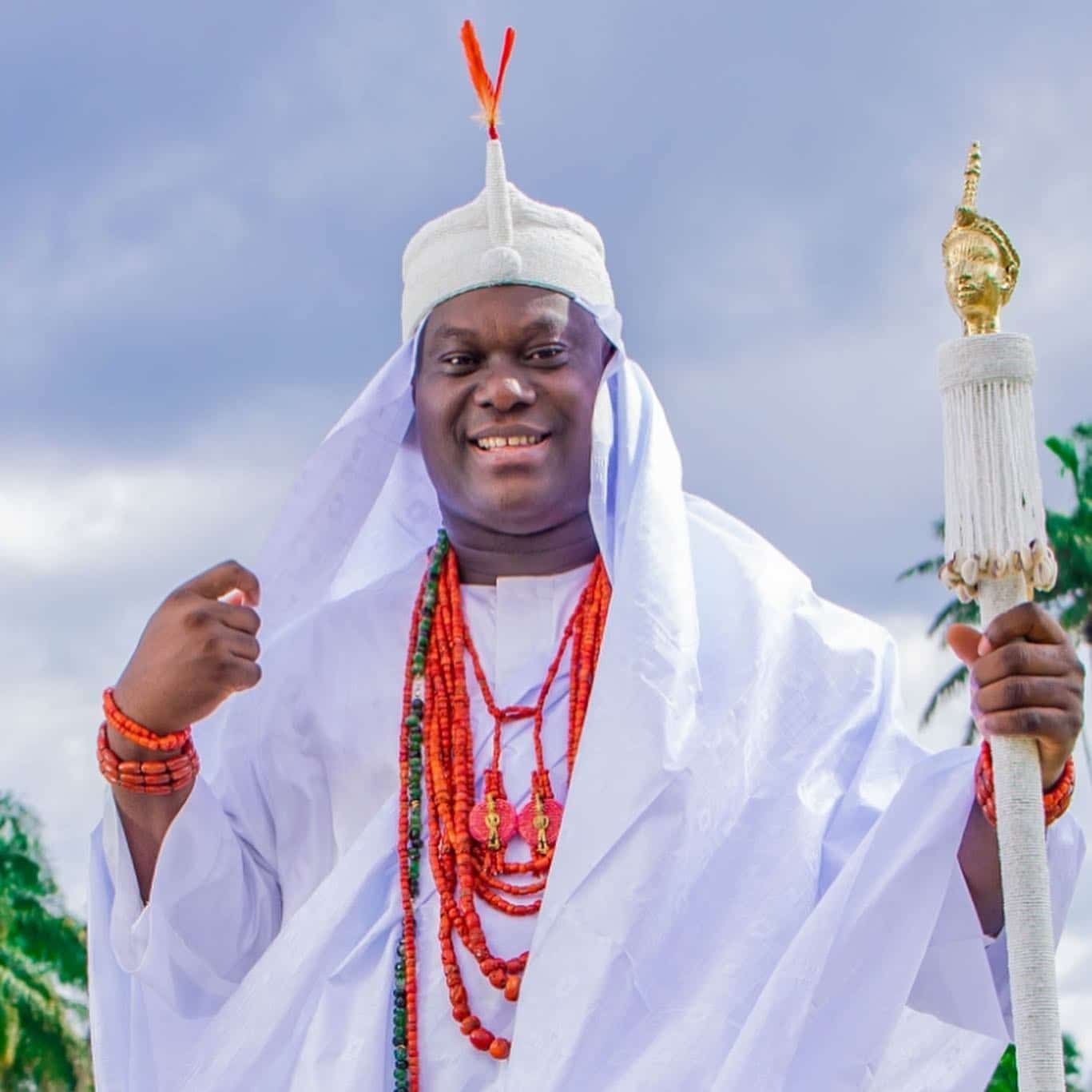
The Ooni of Ife, Adeyeye Ogunwusi, has announced the birth of twin princes with his wife Mariam Ajibola, to the Royal House of Oduduwa.

The monarch disclosed this in a post shared on his official Facebook page on Friday, expressing gratitude to God for the safe delivery of the children and the wellbeing of their mother.

“To God be all the glory and adoration for His wondrous works and abundant blessings once again.

The announcement has drawn congratulatory messages from admirers and members of the Yoruba royal institution celebrating the arrival of the newborn princes.

After his marriage to Naomi Silekunola ended, the Ooni married several queens within a short period in 2022.

Among the queens are Mariam Anako, Elizabeth Akinmuda, Tobiloba Phillips, Ashley Adegoke, Ronke Ademiluyi and Temitope Adesegun.

During celebrations marking his 48th birthday and seventh coronation anniversary, the monarch explained that his marriages were connected to the traditional heritage and responsibilities attached to the throne of Ile-Ife.

Continue Reading

Trending