Connect with us

Voice of Emancipation

Voice of Emancipation: Protest Without a Plan is Foolishness

Published

on

By Kayode Emola

Throughout history, some of the most powerful social movements have been born out of protests, exposing injustice, demanding accountability and inspiring hope for a brighter future. Protest is a means of amplifying the voices of the marginalised, forcing leaders to fulfil their duty of listening to these voices and paying attention to the concerns of their people.

However, when protests are called in Nigeria, it is often unclear what the end goals actually are. Take, for example, the “ENDSARS” protest of 2020: there was no clear message as to what the protesters wanted to achieve. This allowed the government to exploit the ambiguity and distort the message the protesters were trying to convey.

Consider in contrast the British “Suffragettes Movement” of the 20th century: their demand, clearly articulated, was that women should be given the right to vote. Women’s voting rights brought with it the capability to elect female representatives, such that today nearly half of the British parliamentarians are women. The country has also had three female Prime Ministers, as well as its current serving Deputy Prime Minister.

When it comes to the protest called at the beginning of this month in Nigeria, the organisers have cited hunger, bad government, and joblessness, among others, as the reasons for the protest. What they have failed to understand is that hunger, joblessness, poverty etc are intangible issues that arise as a result of leaders’ decisions.

Calling for protest against bad government seems to me as a bad execution of a good cause. Opposition leaders in nearly every country would call the leading government a ‘bad’ government, highlighting its flaws and presenting itself as the better alternative to the electorate, even though there is no guarantee that they would bring an improvement in quality of life.

What this protest will do, just like every other one previously, is highlight how heterogenous a population we are in a country that the leaders always want us to believe is one and indivisible. The north may choose to join or not, depending on how they feel the government is aligned to their welfare. The Igbos may implement protests everywhere else except in their own region. The Yoruba may be quick to highlight how the president is their son and must be given time to fully implement his policies.

However, as my mother always says, if a tree will grow strong, it is from the seed that you will know. You cannot plant a bad seed and expect it to grow into a strong, healthy tree. Likewise we cannot build a bad system and expect it to breed a strong and healthy political climate. As such, protesting to demand an end to bad government seems to me like the protesters would rather attack a straw man front, than deal with the true underlying problems that we actually face.

The root cause of Nigeria’s problem is the destruction of the regional government under the military rule. Since then, the north has been reluctant for a national dialogue because the balance of power was tilted in their favour. Now that is it evident that power no longer rests in the hands of the northern oligarchy, they have been very vocal in support of the protest.

It is therefore time for us in the Yoruba leadership for self-determination, both at home and in the diaspora, to take a stand for the good of our people. We know there is untold hardship in the land that is becoming increasingly unbearable by the day, yet the current government has no way of alleviating our people’s suffering..

We as leaders need to reignite hope for our people and show them that there is a pathway out of all these mess: by striving to build our own independent Yoruba nation. It is only when we have our own nation that we can truly drive a national agenda to bring about a genuine change.

Our people have suffered a lot in the country called Nigeria; and they continue to suffer because they believe that Nigeria will one day live up to its calling. The truth is, this is merely a mirage intended to fool the undiscerning heart; that the greatness people are hoping for will never come in Nigeria. As a country, Nigeria is not progressing in any meaningful direction. It was not built as a nation at its inception, and so can never live up to the calling of a nation.

Therefore, those expecting Nigeria to be a great country will need to wait an eternity to see it fulfil greatness. We have planted a seed of bad political system, and are now expecting a good government to grow out of it. It cannot work that way. Those still promulgating the idea that Nigeria will be great are either benefiting from the rotten system or have friends and families that are. No one else could think Nigeria will become great with these scavengers in the corridors of power.

I appeal to our level-headed Yoruba people to understand that our journey is coming closer to its destination of an independent Yoruba nation. Sooner rather than later we will have our own country; and it is my sincere prayer that those who helped in the destruction of Nigeria never become our policy makers.

We need to leave Nigeria and its corrupt system behind us. We need to build a culture where any act of indiscipline is punished with the full weight of the law. Yoruba nation cannot afford to be run the way Nigeria is, where the government officials are not accountable to the people. We must uphold justice in everything we do so that there will be equity and fairness in the land, giving everyone the ability to live in peace and harmony.

Continue Reading
Click to comment

Leave a Reply

Your email address will not be published. Required fields are marked *

Voice of Emancipation

Voice of Emancipation: Five Years and Still Going Strong

Published

on

By

By Kayode Emola

When Voice of Emancipation started in May 2021, little did I know it would become many Yoruba people’s favourite weekly column. Today, it has surpassed every expectation and continues to thrive beyond our Yoruba circle of self-determination community. One would imagine what stemmed from a casual discussion with the big boss himself Bob D (Chief Dele Momodu) about how Yoruba can leave Nigeria without bloodshed leading to a weekly column. I wanted a platform to propagate our self-determination message to millions of our people on a regular basis and “The Boss Newspaper” came in handy providing for us a platform to share our struggles, message and experiences.

When I asked Bob D about how we can use the media to reach out to our people, his remarks were very encouraging, and his platform was readily available. In his own word, he said “in that case, speak with my editor and he will arrange something for you. That was it, without charging us a penny, Bob D gave us his platform to send out our message to the public. This week, that journey has clocked 5 years and still going strong.

I remember that first meeting with the editor Eric, who himself is a seasoned journalist with lots of experience and many years in the business. Eric had worked for several media houses in Nigeria before joining “The Boss Newspaper” and I remember telling him, I had never written for a newspaper before and had no experience whatsoever or what I was supposed to be doing. Together, Eric and I came up with the theme, “Voice of Emancipation” after some brainstorming session as I was wanting to highlight the continued suffering of the black/brown person on the face of the earth dating back to 1526 when slavery officially started on a mass scale on the African continent.

For 500 years, the average African has been subjected to poverty, pain and suffering with no way of escape. We are looked down upon anywhere in the world despite our enormous contribution to humanity. Our people were plundered in the past, taken as slavery to mostly South and North America and once that period ended, our land was subjected to colonialisation in the name of European protection. One which we have not recovered from and may not fully recover due to the level of European oppressive structures that was left behind.

Many of the people we now share geographical boundaries with because of the European colonisation of Africa are not our kith and kin, thereby causing so many problems for Africa nations. Even in the Holy Bible which the colonial masters claimed they were relying upon to bring civilisation to Africa stated emphatically that God separated the people of Babel by their languages.

However, these Europeans in their own wisdom and foolishness thought it wise to merge people of different languages and cultures together and to impose on the local population their own lingua franca as the means of communication. One of the primary causes of many conflicts across Africa today, and especially in Nigeria where terrorism has now reached a global crescendo.

When in 2023, a Yoruba man in the person of Bola Tinubu became the President of Nigeria, there was the thought of remodelling the column by my editor Eric. However, I knew that “Voice of Emancipation” is bigger than the political ambition of one man. Considering that hundreds of millions of people if not nearly billions of Africans are trapped in these European colonial plantations called countries in Africa and are still looking for a way of escape in the contraption, they now find themselves.

Therefore, the escape from this perpetual slavery that is forcing millions of our African youths into dangerous journeys through the Sahara Desert for a better life in Europe needs to be rooted in the constant reminder of the plight of the African person. As many of our young people now see Africa as a death trap which has nothing to offer them despite all the natural resources and beautiful climatic conditions it possesses. So, I do hope and pray that this heavy yoke on the African continent will be broken by our generation, and our people can experience real emancipation in this world.

Before I sign off for today, I want to use this opportunity to personally thank everyone who has made this journey possible and those who are still working in the background week in week out. My precious wife, Bethan, who scrutinises many of the sentences in these weekly articles to make sure it is factually correct and my wonderful editor Eric who is always patient even when my article gets to his desk very late. I do hope that the celebration will be worthwhile later in the year.

I would also like to thank you the wonderful readers of Voice of Emancipation for your comments, encouragements and support throughout this journey. I can assure you that as long as God gives me the strength, I will continue to fight on the side of the oppressed peoples of Africa, and I thank God for giving me the opportunity to do so.

Continue Reading

Voice of Emancipation

Voice of Emancipation: When Leaders Can’t Let Go

Published

on

By

By Kayode Emola

In the world we live in today, many leaders cling to power as though it is their birthright. In turn, this affects their sense of judgment, thereby undoing years of hard work and personal sacrifice. In the end, it is the masses and several others who will suffer the consequences of that action.

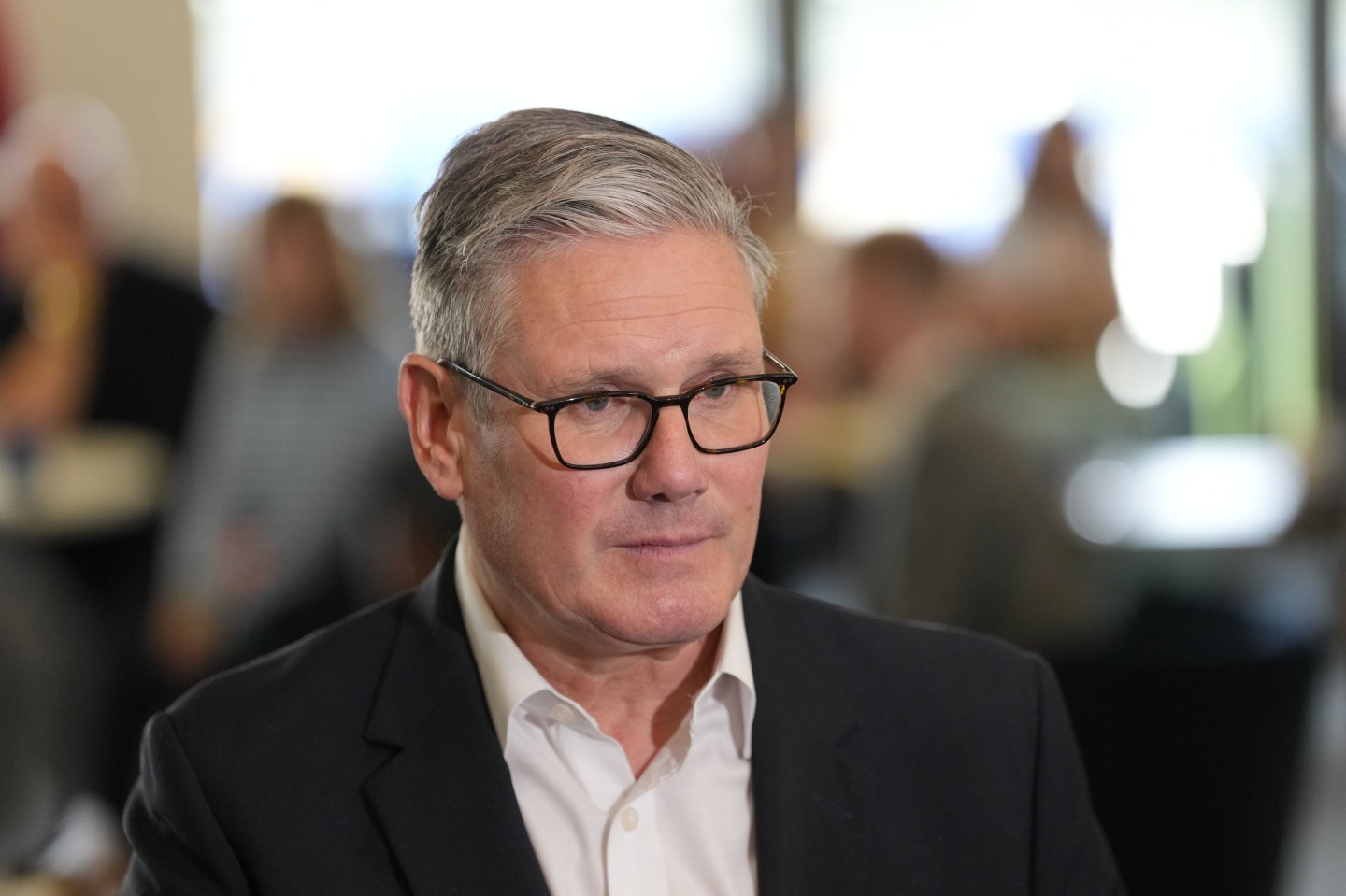
Last week, the UK had local elections in England and parliamentary elections to the devolved governments of Scotland and Wales. If the results were anything to go by, it was a complete disaster for the central Labour government that lost over 1,500 council seats in England and the Welsh Labour government in Wales.

As a matter of fact, the First Minister of Wales, Eluned Morgan, lost her own seat and the ability to return to the Welsh Senedd. The first of its kind in any government in the United Kingdom. Yet, all these events did not faze the Prime Minister Sir Kier Starmer, into action, other than a mere press conference.

Even though he consistently said he took responsibility for the bad turn of events, he has fallen short of reading the handwriting on the wall. Even in Biblical times, we were told that the great King Nebuchadnezzar read the handwriting on the wall and couldn’t sleep until it was interpreted and remedial actions taken.

It seems that this is not the case for many modern leaders of our time. They cling to power as though it is their birthright, and power revolves around them. I know many good councillors in England who lost their seats and many good people who lost their seats in Wales for no fault of their own.

However, when political leaders don’t learn to do the right thing when it’s time for them to leave the stage, then disaster is bound to strike one way or another. Sir Kier Starmer had even tried to postpone some council elections before he was threatened with court action and made a U-turn. This must show desperation in leaders who believe they have a point to prove and still haven’t completed their political assignments.

Which brings me to what the Yoruba nation would have looked like if we had taken our independence out of Nigeria when Ghana took theirs in 1957. The Yoruba government of Chief Obafemi Awolowo scored first in many areas of development, such that we even had a TV station before France.

The Yoruba government of Western Nigeria gave every child free education that even benefited those who were not originally from Yorubaland. The Yoruba government had an agricultural program that encouraged farmers and made sure every cocoa brought to the Cocoa House was duly accounted for and adequately paid for.

All these great achievements of the 1950s were thrown away for a greater project of building the Nigerian dream. One which will continue to bite the Yoruba people hard into the future unless we decide to sever all ties with anything that has to do with Nigeria.

For all intents and purposes, most Yoruba people do not know that the pain and suffering we are currently experiencing in Nigeria is artificial. Many young Yoruba who live in the homeland have never experienced good governance in their lifetime; therefore, they wouldn’t know one if they saw it.

Fela sang about bad governance a lot in his songs, but his greatest frustration wasn’t with the government, some of the time, but with the people. Even though his song titled “My People Are Useless” was aimed at the government that had previously referred to Nigerians as undisciplined and useless people. Fela knew he was a lone voice fighting for the good of his people, who would not raise a finger when he was in harm’s way.

It would be good for leaders to know when to call it a day. This will save their country and its people from unnecessary hardship that may befall them because of their action. If Sir Kier had seen the handwriting on the wall before the election and knew what was coming, I’m sure he would have chosen a more honourable path.

His claim that the British people gave him a clear mandate of 5 years is just a ruse to continue to perpetuate himself in office. As it stands, if he has any goodwill for his political party, this is the best time to quit the stage and let another person take the reins; if not, the Labour Party as we know it in Britain will become one of the minority parties and nothing to reckon with in the near future.

I pray and hope that when our Yoruba nation eventually comes, God will raise for us leaders who will do their best for the country. They would be ready to call it a day when the time is ripe and not behave like many African heads of government, where the only place they are taking themselves and their country to the grave. My prayer is for God to raise men like Nelson Madiba Mandela who will see power as a privilege and not a birthright.

Continue Reading

Voice of Emancipation

Voice of Emancipation: The World Will Never Remain the Same

Published

on

By

By Kayode Emola

Over 2 months into the US/Iran war, the effect is beginning to unravel before our very eyes. Anyone observant of the world’s affairs and the effect of globalisation knows that it’s going to take a while before the world’s economy goes back to where it was before the war.

Unfortunately for mankind, whatever goes up in our world economy finds it very difficult to come down, irrespective of where we find ourselves on this planet. It is as though the forces of nature are constantly waging war against our pockets.

Take, for instance, the market of “just in time” we have become accustomed to. This has made the world’s economy into a global village where goods and services are readily available with the click of a button. That economy has been tested very hard by the US/Iran war, and it is about to crack. What happens from here will very much depend on the direction the negotiations between the US and Iran take.

The prices of commodities are beginning to skyrocket even though there hasn’t been an active military campaign since April 7. The damage from the month-long continuous bombardment is leaving countries around the world reeling from the effects of the war.

Many airlines across the globe are now cutting flights drastically, like in the case of Lufthansa, which cut down over 20,000 flights in April. Or Spirit airline that practical shut its door for good yesterday in the US. These are just a few direct consequences of the war between the US and Iran. The indirect consequences down the line may not fully unravel until many months later.

Once travel is disrupted, the movement of goods and people from one location to another becomes problematic. This, in effect, affects the prices of everyday supplies that we need to function. Eventually hurting every one of us in one way or another.

The funniest part of this whole situation is that many people in Africa are unaware of what is going on. Some more than others are feeling the pain because their essential commodities have gone up in price.

The most important thing is for countries in Africa that are blessed with good vegetation, arable land, and natural resources to begin to utilise them for their own benefit. This will mean going the extra mile in ensuring that external factors like the war in Iran don’t affect the prices of everyday goods.

As for us, our Yoruba people, the time is now to consolidate on what has been built by the Awolowo government in the 1950’s. We need to dust all the good works of that government and see how we can build something that would withstand unforeseen circumstances now and into the future. This is the only way we can shield ourselves from any external factors that we cannot influence.

At least, the Dangote refinery in Lagos is a blessing in disguise for the Yoruba people and the entire Nigeria at large. Were it not for that refinery, Nigeria would have been in total shambles right now, not least with an epileptic power supply. This is why the Yoruba nation must prioritise the production of its own goods and services that it consumes rather than the reliance on offshore markets or other countries.

Continue Reading

Trending