
Islam
Friday Sermon: Shayatin: Season of the Evil Men

Published
4 years agoon
By
Eric

By Babatunde Jose
They are here again. We have entered another season of evil men jostling for elective offices, throwing stolen money all over the place, making the same promises they serially broke in the past and presenting themselves as the best thing that ever happened since the discovery of strawberry ice cream. Unfortunately , they hoodwink the people and that is why we are today in this state of underdevelopment.
Shayāṭīn are evil spirits in Islamic belief, inciting humans (and jinn) to sin by “whispering” to their heart. Mentioned 88 times, the Shayatin together with the angels, are the most frequently mentioned spirits in the Quran. They are a class of invisible creatures besides the angels, often thought of as ugly and grotesque creatures created from hell-fire. This aptly describes the political class except that they are not invisible, they reside and operate among us; live.
Related to the devils is Iblis (Satan), who is generally considered to be their leader. Hadith–literature makes them responsible for various calamities which may affect personal life. Both hadith and folklore usually speak about devils in abstract terms, describing their evil influence. During Ramadan, the devils are chained in hell. Now that Ramadan is over, they have been let lose to roam.
According to Muslim philosophical writings, devils struggle against the noble angels in the realm of the imaginal (alam al mithal) over the human mind, consisting of both angelic and devilish qualities. Some writers describe the devils as expressions of God’s fierce attributes and actions.
It is possible that our political class are a punishment from God for our iniquities. For too long we have suffered the punishment from these lot: Stunted socio-economic growth, retarded political development, pauperization and impoverishment and escalating poverty.
Yet we see other climes rising in all aspects of life while we regress. The City of Dubai is one of such climes, with a myriad of development which our leaders have failed to provide despite our long years of political independence from colonial rule.
Starting with beauty and aesthetics, Dubai’s towering skyscrapers are among the leading tourist attractions in the world. Yet, all our thieving leaders can do is to erect concrete jungles which they call cities dotted with abandoned structures such as the old Independence Building at the Racecourse, old Federal Secretariat, School of Nursing all in Lagos: Standing as monuments of waste and abandonment.
These are not our only monuments of waste which successive administrations have declined to address. Prominent among them is Ajaokuta Steel Company Limited (ASCL) located in Kogi State. Built on a 24,000 hectares (59,000 acres) site starting in 1979, it is the largest steel mill in Nigeria, and the coke oven and byproducts plant are larger than all the refineries in Nigeria combined. However, the project was mismanaged and remains incomplete 40 years later. Three-quarters of the complex have been abandoned, and only the light mills have been put into operation for small-scale fabrication and the production of iron rods.
Adjunct to the Steel Complex is the Warri–Itakpe Railway which fell into disrepair, and part of the track was vandalized. In 2016, the government awarded contracts to the China Civil Engineering Construction Corporation and Julius Berger to repair and complete the railway. Test runs began in November 2018, and the railway was officially inaugurated by President Muhammadu Buhari on 29 September 2020. Ope oooo!
There is also the Mambila hydroelectric project originally conceived in 1972, and 50 years on, not a single watt of electricity has been produced: A period that spanned five military regimes and three civilian republics. What a country!
The Three Gorges Dam, in China has been the world’s largest power station in terms of installed capacity (22,500 MW). Construction started on December 14, 1994. The dam was expected to be fully operational in 2009, but additional projects, such as the underground power plant with six additional generators, delayed full operation until May 2012. The dam nearly 10 times the size of our Mambila did not take China a lifetime to complete. Who cursed our country?
Dubai Has the Most Extended Automated Metro System in the world. Yet, 15 years ago there was no metro. Dubai Metro – is the longest driverless urban light railway in the world. The Red Line was opened in September 2009, 3 years after construction began in 2006. The metro line in Dubai now accounts for 75 kilometers of area coverage. Daily ridership 353,244 (2017) and Annual ridership of 200,075,000. It has taken us nearly 20 years constructing the Lagos metro rail lines, and we are still at it; a paltry 35 kilometers of construction. What a pity!
In Dubai, you will find the largest airport terminal in the world. The Dubai international airport has been transformed gradually from a rough runway in the sand to the world’s most extensive and busy Airport. Emirates operated its first commercial flight on October 25th, 1985. Today, Emirate has a fleet of 255 aircrafts and the largest fleet of wide-bodies planes in the world. Yet, times were when our accursed nation had the largest national airline in Africa with the largest fleet of aircrafts. There were also private airlines such as Okada and others competing for ascendancy in the air. Today, we have nothing remotely comparable to Emirate. Where are we?
Despite being among the driest cities in the world, ‘The Dubai Miracle Garden’ is the most substantial natural flower garden on the globe. The Garden has more than 50 million flowers and 250 million plants. We do not have anything in comparison. It makes our Conservatory in Lekki look like the backyard garden of a poor man.
While our myopic leaders with limited vision are busy converting our Bar Beach into a haven for themselves called Eko Atlantic ( the only city beach in the world to be converted into a housing estate), Dubai with one of the most creative minds in the world have succeeded in creating the largest man-made Islands in the world, of which the Palm Jumeirah is the largest. The construction of these islands consumed Ninety-four million cubic meters of sand moved from the desert and deep sea beds. In addition, there were 5.5 million cubic meters of rock that had to also be moved from different areas. And they also come with man-made beaches too.
The Burj-al-Arab hotel stands in water on its own artificial island, with the highest tennis playing ground in the world, standing at 1000 feet above the ground. In 2005 it hosted a friendly match between talented tennis players, Roger Federer and Andre Agassi. The Dubai Tennis Classic has become an annual ATP event, yet we once had our own tennis circuits with Ogbe Hard Court, Lord Rumens Classic and co. Today our premier tennis club is a drinking club with patrons inviting Saint Janet to serenade members. What a people!
This might sound incredulous, but, yes there are ATMs that dispense gold in Dubai while here, ATMs often fail to dispense cash even when located in the premises of major banks. The gold ATMs have been placed all over the city for easy access. These gold ATMs spit out pure gold nuggets and coins. Emirates Palace Hotel in Dubai was the first to install a permanent gold vending machine in the world.
The Dubai mall is one of the most magnificent buildings in the world. It is the largest shopping mall on the globe, covering over 5.4 million square feet. Despite our oil wealth we have been unable to provide anything comparable. Rather the oil wealth has been stolen and now reside in the private vaults of our Shayatin: Did I hear someone say in private ‘bullion vans’?
The mall is incredible. There is an aquarium inside of it with so many exotic fish and over 300 ocean species in a zoo. The Dubai mall also has two amazing parks on the premises. Here, our own park, was obliterated and turned into a housing estate. The metropolis of Lagos is the largest in Africa, It cannot boast of a zoo or a ‘sea world’. What a people!
As an epitome to a caring leadership, bus stops in Dubai are now being air conditioned.
In Dubai, the crime rates are almost insignificant. In 2018, Dubai was ranked the 8th safest city in the world. The same cannot be said of our cities where kidnappings and robberies are a daily occurrence, not to talk of the ubiquitous armed herdsmen. It is not for nothing that we are the crime and terrorist capital of the world. In this clime a man can never sleep with his two eyes closed.
Unlike here where the issue of fuel subsidy has become a national scam, the authorities in the United Arab Emirates have created a conducive environment and offered subsidies to the oil companies making the price of fuel relatively very low. Dubai has the lowest petrol prices in the world: the price of 1.5 liters of petrol is equivalent to 0.5 liters of water.
What then are the new promises our Shayatin are making? Nothing new. Eight years ago, ‘change’ was the clarion call and restructuring was the mantra of the day. As soon as they got voted in, they abandoned these slogans and manifestos. It has been a change for the worse and the people are experiencing untold hardship and insecurity. Who knows what the current political challenge would bring? Maybe the total disintegration and dismemberment of the country.
Barka Juma’at and a happy weekend.
Related
You may like
Islam
Friday Sermon: Facing Mount Arafat 3: A Prophet’s Final Admonition
Published
1 month agoon
May 22, 2026By
Eric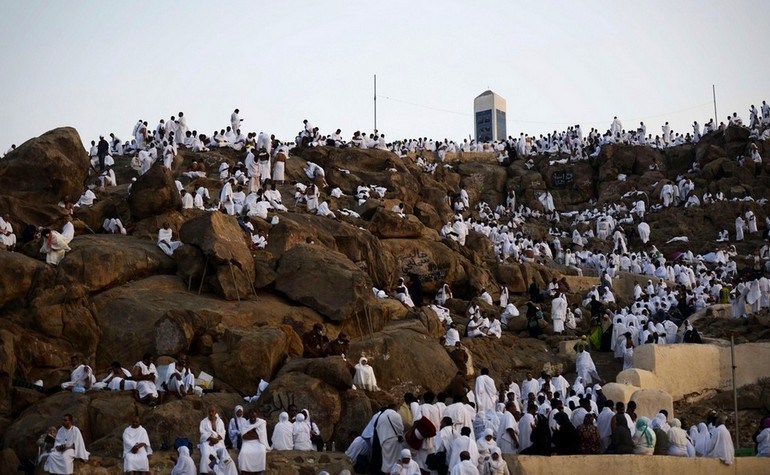
Khutbatul Wada’ or Prophet Muhammad’s (SAW) ‘last sermon’ was delivered on the 9th of Zulhijjah 10 A.H (632 C.E) on Mount ‘Arafat, Makkah.
Prophet Muhammad (SAW) is an example for all of humanity. He was always a remarkable man. He excelled in all walks of life by being a prophet, ruler, statesman, orator, soldier, husband, friend, father and a grandfather. He was a man of love, patience, courage, wisdom, generosity, intelligence and exemplary character who inspires over a billion lives throughout the world.
Allah says in the Quran that he was sent as a mercy for the people of the world: And We sent thee only as a mercy for all mankind. وَمَٓا اَرْسَلْنَاكَ اِلَّا رَحْمَةً لِلْعَالَم۪ينَ; Wama arsalnaka illa rahmatanlilAAalameen. (Surah Al Anbiya, Quran 21:107)
Shortly before his death, Prophet Muhammad (SAW) delivered a sermon during the Hajj, which came to be known as his “Final Sermon”. This sermon was not only a reminder to his followers, but also the ‘final admonition’; it also heralded the end of his Prophetic Mission. Historically, the Farewell Sermon of Prophet Muhammad (SAW) occupies an important place in Islam.
The sermon consisted of summarized exhortations reflecting some of the core teachings of the Quran and Sunnah. The sermon exemplifies the Quran’s assertion that the prophet was but a Warner: This was mentioned 57 times in the Quran.
Prophet Muhammad (SAW) undertook his farewell and only pilgrimage in the year 10 A.H. and it has since been the model for performing the fifth pillar of Islam, the Hajj.
The Final Sermon:
“O People, lend me an attentive ear, for I know not whether after this year, I shall ever be amongst you again. Therefore, listen to what I am saying to you very carefully and take these words to those who could not be present here today.
“O People, just as you regard this month, this day, this city as Sacred, so regard the life and property of every Muslim as a sacred trust. Return the goods entrusted to you to their rightful owners.
“Hurt no one so that no one may hurt you. Remember that you will indeed meet your Lord, and that He will indeed reckon your deeds. God has forbidden you to take usury (interest), therefore all interest obligation shall henceforth be waived. Your capital, however, is yours to keep. You will neither inflict nor suffer any inequity.
“God has Judged that there shall be no interest, and that all the interest due to Al-Abbas ibn Abd’el Muttalib shall henceforth be waived… Beware of Satan, for the safety of your religion. He has lost all hope that he will ever be able to lead you astray in big things, so beware of following him in small things.
“O People, it is true that you have certain rights with regard to your women, but they also have rights over you. Remember that you have taken them as your wives only under a trust from God and with His permission. If they abide by your right, then to them belongs the right to be fed and clothed in kindness. Do treat your women well and be kind to them for they are your partners and committed helpers. And it is your right that they do not make friends with any one of whom you do not approve, as well as never to be unchaste.
“O People, listen to me in earnest, worship God, perform your five daily prayers, fast during the month of Ramadan, and offer Zakat. Perform Hajj if you have the means. All mankind is from Adam and Eve. An Arab has no superiority over a non-Arab, nor does a non-Arab have any superiority over an Arab; a white has no superiority over a black, nor does a black have any superiority over a white; [none have superiority over another] except by piety and good action. Learn that every Muslim is a brother to every Muslim and that the Muslims constitute one brotherhood. Nothing shall be legitimate to a Muslim which belongs to a fellow Muslim unless it was given freely and willingly. Do not, therefore, do injustice to yourselves. Remember, one day you will appear before God and answer for your deeds. So beware, do not stray from the path of righteousness after I am gone.
“O People, no prophet or apostle will come after me, and no new faith will be born. Reason well, therefore, O people, and understand words which I convey to you. I leave behind me two things, the Quran and my example, the Sunnah, and if you follow these you will never go astray. All those who listen to me shall pass on my words to others and those to others again; and it may be that the last ones understand my words better than those who listen to me directly. Be my witness, O God, that I have conveyed your message to your people.”
Thus the beloved Prophet (SAW) completed his Final Sermon, and upon it, near the summit of Arafat, the revelation came down: “…This day have I perfected your religion for you, completed My Grace upon you, and have chosen Islam for you as your religion…” (Quran 5:3)
Perhaps it is more appropriate to present this ayat in proper context: “Forbidden to you (for food) are: dead meat, blood, the flesh of swine, and that on which hath been invoked the name of other than Allah; that which hath been killed by strangling, or by a violent blow, or by a headlong fall, or by being gored to death; that which hath been (partly) eaten by a wild animal; unless ye are able to slaughter it (in due form); that which is sacrificed on stone (altars); (forbidden) also is the division (of meat) by raffling with arrows: that is impiety. This day have those who reject faith given up all hope of your religion: yet fear them not but fear Me. This day have I perfected your religion for you, completed My favour upon you, and have chosen for you Islam as your religion. But if any is forced by hunger, with no inclination to transgression, Allah is indeed Oft-forgiving, Most Merciful.” (Quran Surah Al Ma’idah Verse 3)
Indeed the meanings found in this sermon are astounding and it could rightly be described as the Prophet’s last Admonition.
But how have we as his followers kept to his admonitions? We have kept to them in the breach: An incorrigible generation, hell bent on disobedience and trenchant iniquities, we kill our fellow men, we enslave our women in the name of Sunnah, we persecute people of other faiths and engage in terrorism and are unjust to peoples of other races and ethnic persuasions, we are intolerant and intemperate in our manners and speech and we are bigots and fanatical in our ways. We have gone against all the things in the admonitions. We are unjust, nepotic and consume usury; we even export hard drugs to the ‘House of God; child abuse, prostitution and other forms of iniquities that make Sodom and Gomorrah pale into insignificance.
What will we not do for money? We dispossess the orphans and maltreat the widows. Sexual inequality which the Prophet preached against is still the order of the day in most Islamic countries and Muslim communities; 1,387 years after the Prophet, the Arabs and their cohorts still treat women as chattels.
The Admonition talks about equality of men but the Arab Muslims did not remember that when they came to enslave Africans, especially from East Africa. A generation of vile men and human anacondas, we even attempt to bribe God, but He refused to be mocked. On the Day of Qiyamah they will reap their just recompense. Walahi! There will be much weeping and gnashing of teeth, but it will be too late.
Let us reflect on ourselves, take a step back, and revive the core teachings of our Prophet (SAW) in achieving an ethical and moral society, wherever we are, where no one inflicts harm or injustice upon others.
May Allah grant us the strength to become better Muslims and better human beings.
LA ILAHA ILLA ANTA SUBHANAKA INNI KUNTU MINAZ ZALIMEEN: “None has the right to be worshipped but You (O Allah)), Glorified (and Exalted) are You (above all that (evil) they associate with You). Truly, I have been of the wrong-doers.”(Quran 21:87)
Barka Juma’at, happy weekend and Eid Mubarak and Barka da Sallah.
Related
Islam
Friday Sermon: Facing Mount Arafat 2: The Pilgrims Progress
Published
1 month agoon
May 15, 2026By
Eric By Babatunde Jose
On Monday 25th May, the 9th day of Dhul Hijjah, the last month of the Islamic calendar, over 1.8 million pilgrims will converge on Mount Arafat for the annual Hajj festival.
Based on historical trends from 2023 to 2025, for 2026, Saudi authorities anticipate around 1.8 million pilgrims, maintaining a similar scale to recent years despite ongoing regional security concerns. This includes both domestic pilgrims and international arrivals from over 170 countries.
Gathering on the plains of Arafat is an important highpoint of the Hajj. Day of Arafat is the day Hajj is consummated. Pilgrims spend the afternoon there praying and supplicating to Allah to wash away their sins and make them whole again: Failure to be present on the Day of Arafat invalidates the Hajj: 15 years ago, my late sister, Dupe who was on admission in Mecca was conveyed to Arafat in a hospital ambulance in order to allow her fulfill the requirement of Hajj.
The Day of Arafat is therefore an essential part of Hajj, and Aisha (RA) reported that the Messenger of Allah (SAW) said: “There is no day on which Allah sets free more slaves from Hell than He does on the Day of Arafat”. (Muslim) It was on this special day in the afternoon of the Day of Arafat during his first and only Hajj that the Prophet (SAW) made his famous farewell speech to a crowd of over 120,000 Companions.
Hajj is mentioned in several ayahs in the Quran: ““And proclaim the Pilgrimage among men: they will come to thee on foot and (mounted) on every kind of camel, lean on account of journeys through deep and distant mountain highways;”(Quran 22:27) See also (Quran 2:125), (Quran 2:158), (Quran 2:189), (2:196-203) and (Quran 3:96-97)
Hajj attracts a very diverse multitude from all over the world, but it is important to clarify the largeness of the gathering as there has been a misconception on the part of many Muslims. Hajj is the second largest annual religious gathering.
Arba’een Pilgrimage is the world’s largest annual religious gathering that is held every year in Karbala, Iraq, at the end of the 40-day mourning period following Ashura, the religious ritual for the commemoration of martyrdom of the grandson of Prophet Mohammad (SAW) and the third Shia Imam, Husayn ibn Ali. The number of participants in the annual pilgrimage reached 25 million or more in 2026.
The Arba’een pilgrimage is non-obligatory compared to Hajj which is obligatory for those who can afford it. Secondly, the spiritual significance of the Arba’een trek is of limited Islamic significance as it is restricted to Shiites who are for all intents and purposes renegades in the mainstream of Islam. Thirdly, Islam recognizes only the Hajj as a fundamental pillar of Islam.
There is however a Nigerian connection to this Shia event. Pilgrims in West Africa who are unable to go to Karbala instead head toward Zaria in Nigeria to be addressed by the Shia leader Ibrahim Zakzaky. These include pilgrims from Nigeria as well as Ghana, Chad, Cameroon, Benin and Togo. The Shiite problem has since developed into a political conundrum with its leadership under detention and Zakzaky’s Islamic Movement of Nigeria proscribed and declared a terrorist organization.
However, the largest religious gathering of all time is the Kumbh Mela festival of the Hindus in India. According to the Economist, the attendance figures “implausibly imply that half of all Indians made the pilgrimage”. Attendance numbers were computed from a mix of manual counts, train arrivals, satellite imagery and camera footage. It is considered the largest peaceful gathering in the world, with devotees bathing in the sacred confluence of the Ganges, Yamuna, and Saraswati rivers to cleanse sins and seek spiritual liberation.
The Maha Kumbh 2025 witnessed millions of devotees participating making it the largest human congregation in history. The temporary city set up for the Mela covered 4,000 hectares, with 150,000 tents and extensive infrastructure to accommodate pilgrims.
The Uttar Pradesh government invested heavily in infrastructure, including: Roads and bridges: Over 450 km of roads and 30 pontoon bridges. 150,000 toilets, 10,000 sanitation workers, and river cleaning teams. 40,000 police officers, surveillance cameras, and underwater drones for safety. Medical facilities: Over 2,000 medical personnel deployed across the Mela area.
This leads to the contentious issue of government involvement in pilgrimage, its organization and logistics. This has been an issue in our religiously charged political firmament. It, however, need not be so as there are historical and contemporary facts to suggest that governments all over the world have always been involved in the affairs of their citizens who embark on pilgrimage in their tens of thousands.
In Britain, for instance, the Foreign and Commonwealth Office in 2000 helped fund the British Hajj Delegation to provide consular support and medical services for its citizens on the ground in Saudi Arabia.
Despite being officially secular, the French government posts a consul in Jeddah to help French nationals making the hajj.
Russia, which has over 14 million Muslim citizens; the largest population of any European country, has perhaps done the most to support its citizen-hajj pilgrims. Since the early 2000s, under the Putin government, Russia’s Muslims have enjoyed discounted flights to Jeddah during hajj season on Aeroflot, the state airline.
A state-created hajj liaison office arranges visas and transportation. And in another twist, after annexing Crimea from Ukraine, Russia offered Crimean Tatars generous Hajj subsidies ($1000 per person, about a third of the cost of an economy package tour).
Having inherited a hajj tradition with their colonial conquests, Europe’s imperial powers had to decide what to do with it. In the mid-nineteenth century, as hajj traffic between European colonies and Mecca began to grow, colonial officials nursed anxiety and fears of the hajj as a spreader of cholera and other infectious diseases; some even suggested banning the hajj.
This was especially true after 1865, the year a massive cholera outbreak in Mecca became a global epidemic, spread far and wide by dispersing crowds of hajj pilgrims. After this epidemic—which killed more than 200,000 people worldwide in cities as far away as New York—the European powers convened the first in a series of conferences that identified the hajj as a sanitary and security threat. But attempts to ban the hajj proved impossible: as a pillar of Islam, and a duty for Muslims, the hajj could not be easily banned or stopped.
By the end of the nineteenth century, and for various reasons all of the European powers began to sponsor the hajj. They subsidized travel between their colonies and Arabia during hajj season, opened foreign consulates along routes to Mecca, and passed new laws to protect pilgrims from physical harm and financial scams.
In order to ease transportation, the Ottoman Caliph organized the construction of the Hejaz Railway from Damascus to Medina in 1906; though it stopped operations after the First World War when the Ottoman Empire was defeated and its colonies divided among the victorious European powers.
In Jeddah, the Dutch had set up a multi-service “Hajj Bureau.” The British ran a medical dispensary out of their consulate: And European doctors and nurses staffed the two main quarantine facilities set up to screen hajj pilgrims in El Tor (at the bottom of the Sinai Peninsula) and on Kamaran Island (in the Red Sea). By sponsoring the hajj, European colonial powers were simply trying to control or contain the problems created by a mass, annual movement of people.
It is however very clear to all observers that the Nigerian State does not underwrite the pilgrimage of Muslims to Mecca: But our excesses in all things and proclivity for corruption often mar the good intentions. However, the government has a duty and responsibility in offering Consular service, medical aid and welfare to pilgrims and being involved in the logistics of moving over 100,000 of its citizens to a foreign land for pilgrimage: This is not strange or unknown to international best practice.
But sponsoring state officials, their wives, girlfriends, concubines, children, and friends of the state on a junket to the Holy Land is not only condemnable but spiritually sinful.
We therefore wish our pilgrims which include my favorite cousin Abdul Fatai Akintota Kekere-Ekun and his amiable wife, Justice Kudirat Olatokunbo Kekere-Ekun, CJN, Hajj Mabrur. May Allah accept their Hajj as acts of Ibadah.
Barka Juma’at and Happy weekend
Related
Islam
Friday Sermon: The Concept of Miracles and the Prophets of God
Published
2 months agoon
May 1, 2026By
Eric
Miracles are often seen as acts of divine intervention that demonstrate God’s power and control over the natural world. They serve various purposes, including confirming the truthfulness of God’s message, providing help to those in need, and bringing glory to God.
Islam defines a miracle as an extraordinary act or event that is contrary to the laws of nature and can only come about through the direct intervention of God Almighty Himself. The Arabic word for miracle is mu’jizah. In Islam, miracles are performed by the permission of God, by the Prophets of God.
God sent the Prophets and Messengers primarily to guide humankind. They were not gods, demi-gods or saints with divine qualities, rather they were mere mortals charged with a difficult task. They possessed exceptional characteristics because they were obligated to face extraordinary trials and tribulations in order to spread the message to worship God Alone.
Miracles are not magic, which is by definition a trick or illusion, nor is a miracle an event brought about by learned righteous people who are not Prophets of God. These events are called karamahs. Thus we find three distinct categories, miracles, karamahs and magic.
Unlike what we find in the world today, which is full of fake prophets, charlatans and purveyors of iniquity who deceive congregants with claims of speaking with God, anointed by God or being endowed with powers they do not possess.
Many years ago, my cousin’s office in Keffi was next to the abandoned bus terminal, which had turned into a crusade ground by some churches. One day he noticed some church people rehearsing miracle healing. They were practicing how to fall under the anointing. It was strange but an eye opener. Today we find self-declared prophets, telling their people to ‘give their phone number to kidnappers and watch how the kidnappers would die if they dare call his number. Or the one who claimed God changed the weather for him when he landed in a foreign country. No Sir, we are not concerned with self acclaimed miracle workers in this sermon.
Among the greatest miracles granted to Prophet Muhammad (SAW) was Al-Isra’ wal-Mi‘raj (the Night Journey and Ascension). This extraordinary journey occurred during the Year of Sorrow, when he lost his beloved wife Khadijah (RA) and his supportive uncle Abu Talib, leaving him under immense grief and social pressure. Allah took His Prophet (SAW) from Makkah to Jerusalem and then through the heavens, granting him the gift of prayer (the five daily prayers) and showing him signs of the unseen. This journey provided spiritual strength and guidance in a time of deep personal trial.
In addition, by Allah’s permission, the Prophet (SAW) performed miraculous healings, restoring sight to the blind, curing the wounded, and mending broken bones with a touch of his hand or a simple prayer. These miracles, both spiritual and physical, confirm that Muhammad (SAW) was truly the Messenger of Allah. His life and message remains a beacon of faith, guidance, and divine truth for every generation.
The holy books are replete with stories of miracles attributed to messengers and prophets. In the Bible we find in the Old Testament stories of God’s miracles. God blesses barren women with children. Sarah in Genesis 21:1-2 ; Rebekah, Genesis 25:21 ; Rachel, Genesis 3:22-24. Hannah, Samuel 1:19-20.
Old Testament prophets performed numerous miracles that demonstrated God’s power and authority, including significant events by Elijah and Elisha. Elijah proclaimed a drought as a judgment against King Ahab’s idolatry (1 Kings 17:1-5). After three years of drought, Elijah prayed, and rain returned to the land (1 Kings 18:41-45). And Elijah raised the widow’s son from the dead (1 Kings 17:22-23).
Elisha healed Naaman, a Syrian commander, of leprosy (2 Kings 5:1-14). Elisha raised the son of a Shunammite woman from the dead (2 Kings 4:32-37).
These miracles served to affirm the prophets’ roles as messengers of God and to demonstrate His power and compassion towards His people. Each miracle not only addressed immediate needs but also pointed to God’s sovereignty and faithfulness throughout Israel’s history.
The Miracles of Prophet Musa (Moses) were Signs of power and deliverance. Among the prophets chosen by Allah, few were granted as many powerful signs as Prophet Musa (Moses), peace be upon him. Sent to confront the mighty Pharaoh and to guide the Children of Israel, Allah supported him with miracles that left no doubt about his prophethood. Each miracle was a message of divine power and mercy, proving that truth always prevails over falsehood.
Perhaps the most famous of Musa’s miracles occurred when he and his followers were trapped between Pharaoh’s army and the Red Sea. As the people panicked, Musa turned to Allah for help. Allah commanded him: “Strike the sea with your staff.” Instantly, the waters parted into towering walls, forming a dry path for the believers to cross. When Pharaoh and his army pursued them, the sea closed back, drowning the tyrant and his forces. This event is another powerful example of the miracles in the Quran.
Among the prophets of Allah, Prophet Isa (Jesus), peace be upon him, was blessed with miracles that touched both the body and the soul. His mission was one of mercy, healing, and guidance — a call to return to the worship of the One True God. Each miracle he performed was a sign (ayah) from Allah, demonstrating divine power, not his own.
One of the greatest aspects of his prophethood was healing the sick. By Allah’s permission, Isa cured those who suffered from diseases that no physician could treat. He touched the eyes of the blind and restored their sight. He wiped his blessed hand over the skin of the lepers, and Allah cleansed them instantly. Because of this miraculous gift, people called him Al-Masih — “The Messiah,” meaning the one who wipes or anoints.
Even more astonishing were his miracles of giving life. With the permission of Allah, Isa (AS) called upon the dead — and they rose again, living proofs of divine power. He also shaped a bird from clay, then breathed into it, and by Allah’s command, it became a living creature that soared into the sky. These acts are among the remarkable miracles in the Quran, showing the divine power granted to Isa.
Isa, Jesus (peace be upon him) was also given knowledge of the unseen. He could tell people what they ate and what they stored in their homes — insights that reflected his connection to divine revelation.
Through every miracle, Prophet Isa’s message was clear:“I cure the blind and the leper, and I give life to the dead — by Allah’s permission.” (Surah Ali ‘Imran 3:49)
Prophet Ibrahim (Abraham), peace be upon him, is known as the father of prophets and a symbol of unwavering faith. His story is one of courage, conviction, and total submission to the will of Allah — even in the face of fire itself. This event is one of the remarkable miracles in the Quran, showing how Allah protects His true servants against impossible odds.
“Ask the biggest of them, if they can speak!” (Surah Al-Anbya 21:63)
His words struck them with truth — but their pride blinded them. Instead of accepting his message, they grew furious. Their anger turned into a plan of revenge: to make an example of him before the entire city.
They said,: “Burn him and support your gods — if you are to act!” (Surah Al-Anbya 21:68)
A massive fire was built, so fierce that even approaching it was impossible. Ibrahim was tied and catapulted into the blazing flames. But at that very moment, Allah intervened with a miracle that defied the laws of nature. Allah commanded the fire directly: “O fire, be coolness and safety upon Ibrahim.” (Surah Al-Anbya 21:69)
The flames obeyed their Creator. The fire that was meant to destroy became a place of peace and comfort. Ibrahim emerged unharmed — not a single hair burned, not a single mark on his skin. The people were astonished. The very element that should have consumed him became his protector by Allah’s command.
Prophet Nuh (Noah) – Prophet Nuh (Noah), peace be upon him, was among the earliest messengers sent by Allah to guide humanity. He called his people to worship Allah alone for nearly 950 years, yet only a few accepted his message. Despite his patience and dedication, the majority of his people mocked and rejected him, accusing him of falsehood and madness.
When they continued in their disbelief, Allah commanded Prophet Nuh to build a massive ark — a task that seemed absurd to his people, as there was no sea nearby. They ridiculed him as he built the ship on dry land, but Nuh (AS) carried out Allah’s command with unwavering faith.
Allah says in the Quran:“And construct the ship under Our observation and Our inspiration and do not address Me concerning those who have wronged; indeed, they are [to be] drowned.” (Surah Hud, 11:37)
When the appointed time came, the heavens poured rain and springs burst forth from the earth, joining together in a mighty flood that engulfed the land. Prophet Nuh was commanded to take a pair of every creature and his believing followers aboard the ark. This event is one of the most well-known miracles in the Quran, showing Allah’s power and mercy in protecting the faithful.
“So We opened the gates of heaven with rain pouring down, and We caused the earth to burst with springs, and the waters met for a matter already predestined.” (Surah Al-Qamar, 54:11–12)
As the waves rose like mountains, the ark floated safely by Allah’s command. Every disbeliever — including Nuh’s own son who refused to board — was drowned. When the flood ended, the waters subsided, and the ark came to rest upon Mount Judi, marking the victory of faith and obedience over arrogance and denial.
This story is not only a historical miracle but also a reminder that Allah’s help always reaches the believers, even when the world turns against them. The Ark of Nuh stands as a symbol of divine mercy, protection, and justice.
Prophet Salih (peace be upon him) was sent to the Thamud, a powerful and wealthy tribe who lived in carved stone houses in the valley of Al-Hijr. Despite their blessings and strength, they became arrogant and turned away from Allah’s worship, demanding tangible proof of Salih’s prophethood.
They mockingly said to him, as mentioned in the Quran: “They said, ‘O Salih, bring us a sign if you should be of the truthful.” (Surah Al-A‘raf, 7:73)
By Allah’s command, a great she-camel emerged miraculously from solid rock — a living sign no one could deny. Prophet Salih warned his people to respect the camel and let her drink freely from the well, sharing the water on alternate days.
“This is the she-camel of Allah, [sent] to you as a sign. So leave her to eat within Allah’s land and do not touch her with harm, lest there seize you a painful punishment.” (Surah Hud, 11:64)
Despite clear warnings, they hamstrung the camel and defied the Prophet’s message. Immediately after this act of disobedience, Allah’s punishment descended upon them — a powerful earthquake and a blast from the sky destroyed them all in an instant.
“So the earthquake seized them, and they became within their home [corpses] fallen prone.” (Surah Al-A‘raf, 7:78)
The story of Prophet Salih and the she-camel teaches a lesson about arrogance, disbelief, and the cost of rejecting divine signs. It shows that miracles are not just wonders, but warnings meant to guide hearts toward faith.
Every miracle was a sign for its time and people, yet its message remains timeless: Allah alone controls life, death, nature, and destiny.
Faly’abudoo rabba haazal-bait, Allazeee at’amahum min joo’inw-wa-aamanahum min khawf: Let them worship the Lord of this House, Who has fed them, from hunger and made them safe, from fear. (Surah Quraysh, 106:3-4)
Barka Juma’at and a happy weekend
Related




How I Made Buhari President in 2015 – Amaechi

Presidential Ambition: Is Donald Duke a Spoiler?

Insecurity: Why Tinubu Must Wake Up

The Stockholm Syndrome in the Delta

Bandits Invade Kwara Community, Abduct Scores, Set Emir’s Palace Ablaze

US Will Not ‘Rush into a Deal’ with Iran, Trump Declares
