
Islam
Friday Sermon: Youth in Islam 1: Culture, Faith and Generational Gap

Published
4 years agoon
By
Eric

By Babatunde Jose
The question of youth in Islam, culture, faith and generation gap, is a very demanding topic and very much in the realm of contemporary social issues. It is a new age phenomenon that goes beyond established traditional religious beliefs and transcends all religions, not only Islam. It is a topic that does not lend itself to set ideas of traditional religious socialization that involves the transfer of belief and faith from one generation to the other.
The first immediate question that comes to mind is: Who are the youths we are talking about? We are here talking of a generation that were born some 20 to 30 years ago; 60% of the population in many countries of the world are under the age of 25; here in Nigeria the figure is 62%.
This percentage tells a story of need and of where the opportunity is for the faith. People under 25 are the most open to the faith and it is a time in their lives when they are setting their world view. Numbers also talk about an opportunity to connect the emerging generations with the faith.
Are we prepared and ready to take up the challenge? Are we prepared to look at how we can connect with this younger generation? It is just about impossible to comprehend these figures because they represent so many people—a billion or two.
But the figures are there and they require a response; a generation that were born into the ‘Pentecostal Revolution’; a generation that were born, long after the Muslim Students Society had come of age; a people born when the religion of Islam had become synonymous with fundamentalism and terrorism; a generation born into an era of irreligiosity and the questioning of old belief systems; a generation born into the computer and internet age with all its attendant exposure to the new information age; a generation that was not born in the age of ‘ile kewu’, but whose contact with Islam is the IRK subject in the school curriculum; a generation that is more literate, more aware and better informed and more cosmopolitan than most of their Imams and Ustaz; a generation that is more questioning and less docile than their fathers; a group that does not accept the ‘mumbo jumbo’ of established religion without questioning; a generation of sceptics that does not see life through the myopic prism of their fathers.
There is no doubt it is a generation in ebullition and a non-conformist generation. It is a generation that does not lend itself to being easily moulded like plastic.
This generation constitutes a great problem to the tenets of established religion, especially Islam with its tendency to regulate totally the life of its adherents from cradle to grave.
It’s a generation that possess a great dilemma for the fathers of the faith. No doubt they pose a problem because they are not taken in by the dogmatism of religion, in particular Islam with many of the rituals that are more attuned to ancient times, and which have refused to change with time with many of its mode of worship enmeshed in medieval times and the youth of today are finding it difficult to reconcile with the old ways. Unfortunately for the youth, Islam is a religion that has its rituals cast in iron and there is no chance that it would bend. This accounts for the non-attractiveness of the faith to the youth.
Today, the churches and mosques are filled with old generation worshippers rather than the youth. With more issues to occupy their daily lives, it has become a herculean task to attract the youth to the path of faith.
Agnosticism bothering on apostasy is common feature of the new age. Peer group influence and the rapid breakdown of family values is weaning many of our youth from the traditional faith. Youths are the main game-changer. It goes without saying that prevailing attitudes among this demographic will continue to shape the faith map in the future.
According to the Pew Report, a United States Research body, “One of the most important factors in the growth of the ‘none’s’ (that is, the religiously unaffiliated) is generational replacement.” “As the Millennial generation enters adulthood, its members display much lower levels of religious affiliation, including less connection with religion, than older generations, “the report says.
We are talking here of a generation that wear their hearts on their sleeves, a generation that is as complicated that push against established and accepted practice of normality. A generation that is struggling to make choices in a world where there are so many more choices than their parents ever had.
A generation that demands freedom in everything they do; that loves to customize and personalize; they are the Net generation that believe in scrutinizing products, promotional efforts and corporate practices; a generation that wants entertainment and play at the same time in their work; they are the collaboration and relationship generation; a generation in a hurry that is in need of speed with a vast flow of information between friends and colleagues; they are the innovators rather than the inventors; they are the questioning generation with a culture peculiar to themselves and different from that in which their forbearers were born and grew into.
Yet, Islam does not give room for dissent not to talk of questioning. The Friday Sermon and the occasional Asalatus do not offer question and answer opportunities. However, this is not limited to Islam alone as the same could be said of the churches too. They, therefore, do not lend themselves to the yearning of the youths who are bound to ask questions.
There is therefore a great need to study and appreciate this generation in order to understand where they are coming from. In terms of religion, this is a generation that is ready to flow with their age, hence we experience a lot of decamping from parental faiths among this generation.
As it is in Islam, so do we find it in Christianity: Children born and bred into Catholicism or Anglican churches are decamping en mass to join the new age Pentecostal churches, while many born into Islam are today joining their peers in the new movements.
What are the attractions of these new age movements that preach prosperity and miracles? How can we prevent a wholesale decamping of our children? The answer to this poser is not farfetched. The attraction of new age religion to youth is that it offers them a freedom which the orthodox religions such as Islam and Christianity do not offer. The old religions are regarded as being too restrictive, dogmatic and unbending.
Despite the translation of the Quran into various local languages, services are still conducted in a strange and foreign language which majority of members cannot understand nor comprehend. Even where many have learnt to read the Quran by rote, the meaning and simultaneous translations become a problem. The result is that members rely on the Alfa to translate his reading or recitation. At any given time, many of those in the mosque do not understand what the Imam leading the prayer is reciting.
Yet, the Catholic Church overcame this same problem when it instructed its churches to conduct services in local languages. This makes membership more meaningful and inclusive. Like the Quran, the first Bible was written in a strange and restricted language, Old Hebrew, later Aramaic, Greek, and then Latin.
The dogmatism of Islam would not allow the conduct of services in any language other than Arabic. But Islam is not the only religion that is dogmatic in its ritual, worship, service, ceremony, rite, observance, celebration, ordinance, office, sacrament, solemnity and ceremonial: Orthodox Christianity is still like that.
Another issue has to do with the arrangement of the Quran which is not easy to follow as it is not compartmentalized like any other scripture. It does not render itself amenable to the restless spirits of youths who want a direct shot at God’s words. The truth is that they find it easier to read the Bible, hence, the ease with which the apostates jump ship.
But, even at that, the Quran has survived 1,400 years of fidelity, without change or revision. It is a great credit to the keepers of the faith; unlike the Christian Bible or better still Bibles that have not only additions and subtractions, revisions, and rewrites but also versions. The same cannot be said of Islam’s holy book.
Dos and Don’ts are too many. This is the complaint of the lazy congregant. They therefore seek accommodation in new age religions that are more liberal in their attitudes to youth peccadilloes. Here, they sing and dance and engage in non-segregated fellowships and other forms of activities. Even the seating arrangements in religious gatherings are not segregated like you find in Islam.
Unfortunately, we as leaders are not making efforts to accommodate youth culture. There was a time when it was erroneously believed that Islam is against singing and dancing. Yet, we see video footages of Arab communities, drumming, singing, and dancing.
In my old school at Ijebu Muslim College, Ijebu Ode, singing Arabic Hymns at the morning assembly was a daily ritual accompanied by electronic organ. This music segment of the school assembly enlivened the morning gathering and was much loved by students. Islam needs more of such innovative ideas to arrest the attention of our youth in the schools, from primary to secondary. It was the late Lefty Salami in one of his Sakara beats that sang “Ara Mecca njo, ara Mecca nlulu, bi’lu o besinje, ijo ‘ole besinje”.
Looking at the problems of youth and the attendant consequences for the faith, and what it portends for the religion, there is no doubt much lies in our relationship with our children and how we mould them into the larger society. Much depends on parental guidance, understanding and credible socialization. We need to give the younger generation the right leadership and direction.
We are the role models Allah created for them and it would be a gross dereliction of our sacred duty for us to fail in giving them direction. It is not only starting with the five daily prayers; we also need to give them training in the right path so that in the end they will grow into becoming good ambassadors of the Umma.
Many parents have abdicated their role and are not worth being called parents. They drink, fornicate and engage in lewd and immoral living very unbecoming of fathers and mothers. Some so-called mothers even sag their dress and encourage their daughters to do the same. They ‘costay’ their breasts and dance the dance of shame at parties to the seeing of their children. Such mothers cannot bring up good Moslem children.
Among us are some fathers who are known not to practice the tenets of Islam as prescribed by the Quran and Sunnah; yet they want their children to grow up as good Moslems. How many of us take our children to the Masjid for prayers? How many of us lead our family in prayers daily; particularly morning and evening prayers when we are at home?
How many of us insist that our children must attend Jumu’ah prayer on Fridays and Tafsir during Ramadan, not to talk of encouraging them to fast. There are some of us who believe that a glass of red wine is good for the heart; why won’t our children take ‘shepe’ when we the fathers imbibe Guilder? We are responsible in large part for the fate of our children. May Allah guide us aright.
Barka Juma’at, Ramadan Kareem and a happy weekend.
First part of a Ramadan Lecture to members of NASFAT, Ipaja Branch.
Related
You may like
Islam
Friday Sermon: Facing Mount Arafat 3: A Prophet’s Final Admonition
Published
1 month agoon
May 22, 2026By
Eric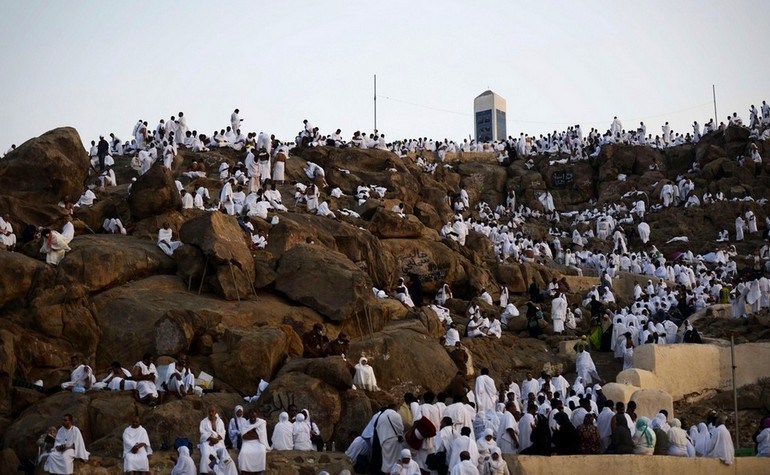
Khutbatul Wada’ or Prophet Muhammad’s (SAW) ‘last sermon’ was delivered on the 9th of Zulhijjah 10 A.H (632 C.E) on Mount ‘Arafat, Makkah.
Prophet Muhammad (SAW) is an example for all of humanity. He was always a remarkable man. He excelled in all walks of life by being a prophet, ruler, statesman, orator, soldier, husband, friend, father and a grandfather. He was a man of love, patience, courage, wisdom, generosity, intelligence and exemplary character who inspires over a billion lives throughout the world.
Allah says in the Quran that he was sent as a mercy for the people of the world: And We sent thee only as a mercy for all mankind. وَمَٓا اَرْسَلْنَاكَ اِلَّا رَحْمَةً لِلْعَالَم۪ينَ; Wama arsalnaka illa rahmatanlilAAalameen. (Surah Al Anbiya, Quran 21:107)
Shortly before his death, Prophet Muhammad (SAW) delivered a sermon during the Hajj, which came to be known as his “Final Sermon”. This sermon was not only a reminder to his followers, but also the ‘final admonition’; it also heralded the end of his Prophetic Mission. Historically, the Farewell Sermon of Prophet Muhammad (SAW) occupies an important place in Islam.
The sermon consisted of summarized exhortations reflecting some of the core teachings of the Quran and Sunnah. The sermon exemplifies the Quran’s assertion that the prophet was but a Warner: This was mentioned 57 times in the Quran.
Prophet Muhammad (SAW) undertook his farewell and only pilgrimage in the year 10 A.H. and it has since been the model for performing the fifth pillar of Islam, the Hajj.
The Final Sermon:
“O People, lend me an attentive ear, for I know not whether after this year, I shall ever be amongst you again. Therefore, listen to what I am saying to you very carefully and take these words to those who could not be present here today.
“O People, just as you regard this month, this day, this city as Sacred, so regard the life and property of every Muslim as a sacred trust. Return the goods entrusted to you to their rightful owners.
“Hurt no one so that no one may hurt you. Remember that you will indeed meet your Lord, and that He will indeed reckon your deeds. God has forbidden you to take usury (interest), therefore all interest obligation shall henceforth be waived. Your capital, however, is yours to keep. You will neither inflict nor suffer any inequity.
“God has Judged that there shall be no interest, and that all the interest due to Al-Abbas ibn Abd’el Muttalib shall henceforth be waived… Beware of Satan, for the safety of your religion. He has lost all hope that he will ever be able to lead you astray in big things, so beware of following him in small things.
“O People, it is true that you have certain rights with regard to your women, but they also have rights over you. Remember that you have taken them as your wives only under a trust from God and with His permission. If they abide by your right, then to them belongs the right to be fed and clothed in kindness. Do treat your women well and be kind to them for they are your partners and committed helpers. And it is your right that they do not make friends with any one of whom you do not approve, as well as never to be unchaste.
“O People, listen to me in earnest, worship God, perform your five daily prayers, fast during the month of Ramadan, and offer Zakat. Perform Hajj if you have the means. All mankind is from Adam and Eve. An Arab has no superiority over a non-Arab, nor does a non-Arab have any superiority over an Arab; a white has no superiority over a black, nor does a black have any superiority over a white; [none have superiority over another] except by piety and good action. Learn that every Muslim is a brother to every Muslim and that the Muslims constitute one brotherhood. Nothing shall be legitimate to a Muslim which belongs to a fellow Muslim unless it was given freely and willingly. Do not, therefore, do injustice to yourselves. Remember, one day you will appear before God and answer for your deeds. So beware, do not stray from the path of righteousness after I am gone.
“O People, no prophet or apostle will come after me, and no new faith will be born. Reason well, therefore, O people, and understand words which I convey to you. I leave behind me two things, the Quran and my example, the Sunnah, and if you follow these you will never go astray. All those who listen to me shall pass on my words to others and those to others again; and it may be that the last ones understand my words better than those who listen to me directly. Be my witness, O God, that I have conveyed your message to your people.”
Thus the beloved Prophet (SAW) completed his Final Sermon, and upon it, near the summit of Arafat, the revelation came down: “…This day have I perfected your religion for you, completed My Grace upon you, and have chosen Islam for you as your religion…” (Quran 5:3)
Perhaps it is more appropriate to present this ayat in proper context: “Forbidden to you (for food) are: dead meat, blood, the flesh of swine, and that on which hath been invoked the name of other than Allah; that which hath been killed by strangling, or by a violent blow, or by a headlong fall, or by being gored to death; that which hath been (partly) eaten by a wild animal; unless ye are able to slaughter it (in due form); that which is sacrificed on stone (altars); (forbidden) also is the division (of meat) by raffling with arrows: that is impiety. This day have those who reject faith given up all hope of your religion: yet fear them not but fear Me. This day have I perfected your religion for you, completed My favour upon you, and have chosen for you Islam as your religion. But if any is forced by hunger, with no inclination to transgression, Allah is indeed Oft-forgiving, Most Merciful.” (Quran Surah Al Ma’idah Verse 3)
Indeed the meanings found in this sermon are astounding and it could rightly be described as the Prophet’s last Admonition.
But how have we as his followers kept to his admonitions? We have kept to them in the breach: An incorrigible generation, hell bent on disobedience and trenchant iniquities, we kill our fellow men, we enslave our women in the name of Sunnah, we persecute people of other faiths and engage in terrorism and are unjust to peoples of other races and ethnic persuasions, we are intolerant and intemperate in our manners and speech and we are bigots and fanatical in our ways. We have gone against all the things in the admonitions. We are unjust, nepotic and consume usury; we even export hard drugs to the ‘House of God; child abuse, prostitution and other forms of iniquities that make Sodom and Gomorrah pale into insignificance.
What will we not do for money? We dispossess the orphans and maltreat the widows. Sexual inequality which the Prophet preached against is still the order of the day in most Islamic countries and Muslim communities; 1,387 years after the Prophet, the Arabs and their cohorts still treat women as chattels.
The Admonition talks about equality of men but the Arab Muslims did not remember that when they came to enslave Africans, especially from East Africa. A generation of vile men and human anacondas, we even attempt to bribe God, but He refused to be mocked. On the Day of Qiyamah they will reap their just recompense. Walahi! There will be much weeping and gnashing of teeth, but it will be too late.
Let us reflect on ourselves, take a step back, and revive the core teachings of our Prophet (SAW) in achieving an ethical and moral society, wherever we are, where no one inflicts harm or injustice upon others.
May Allah grant us the strength to become better Muslims and better human beings.
LA ILAHA ILLA ANTA SUBHANAKA INNI KUNTU MINAZ ZALIMEEN: “None has the right to be worshipped but You (O Allah)), Glorified (and Exalted) are You (above all that (evil) they associate with You). Truly, I have been of the wrong-doers.”(Quran 21:87)
Barka Juma’at, happy weekend and Eid Mubarak and Barka da Sallah.
Related
Islam
Friday Sermon: Facing Mount Arafat 2: The Pilgrims Progress
Published
1 month agoon
May 15, 2026By
Eric By Babatunde Jose
On Monday 25th May, the 9th day of Dhul Hijjah, the last month of the Islamic calendar, over 1.8 million pilgrims will converge on Mount Arafat for the annual Hajj festival.
Based on historical trends from 2023 to 2025, for 2026, Saudi authorities anticipate around 1.8 million pilgrims, maintaining a similar scale to recent years despite ongoing regional security concerns. This includes both domestic pilgrims and international arrivals from over 170 countries.
Gathering on the plains of Arafat is an important highpoint of the Hajj. Day of Arafat is the day Hajj is consummated. Pilgrims spend the afternoon there praying and supplicating to Allah to wash away their sins and make them whole again: Failure to be present on the Day of Arafat invalidates the Hajj: 15 years ago, my late sister, Dupe who was on admission in Mecca was conveyed to Arafat in a hospital ambulance in order to allow her fulfill the requirement of Hajj.
The Day of Arafat is therefore an essential part of Hajj, and Aisha (RA) reported that the Messenger of Allah (SAW) said: “There is no day on which Allah sets free more slaves from Hell than He does on the Day of Arafat”. (Muslim) It was on this special day in the afternoon of the Day of Arafat during his first and only Hajj that the Prophet (SAW) made his famous farewell speech to a crowd of over 120,000 Companions.
Hajj is mentioned in several ayahs in the Quran: ““And proclaim the Pilgrimage among men: they will come to thee on foot and (mounted) on every kind of camel, lean on account of journeys through deep and distant mountain highways;”(Quran 22:27) See also (Quran 2:125), (Quran 2:158), (Quran 2:189), (2:196-203) and (Quran 3:96-97)
Hajj attracts a very diverse multitude from all over the world, but it is important to clarify the largeness of the gathering as there has been a misconception on the part of many Muslims. Hajj is the second largest annual religious gathering.
Arba’een Pilgrimage is the world’s largest annual religious gathering that is held every year in Karbala, Iraq, at the end of the 40-day mourning period following Ashura, the religious ritual for the commemoration of martyrdom of the grandson of Prophet Mohammad (SAW) and the third Shia Imam, Husayn ibn Ali. The number of participants in the annual pilgrimage reached 25 million or more in 2026.
The Arba’een pilgrimage is non-obligatory compared to Hajj which is obligatory for those who can afford it. Secondly, the spiritual significance of the Arba’een trek is of limited Islamic significance as it is restricted to Shiites who are for all intents and purposes renegades in the mainstream of Islam. Thirdly, Islam recognizes only the Hajj as a fundamental pillar of Islam.
There is however a Nigerian connection to this Shia event. Pilgrims in West Africa who are unable to go to Karbala instead head toward Zaria in Nigeria to be addressed by the Shia leader Ibrahim Zakzaky. These include pilgrims from Nigeria as well as Ghana, Chad, Cameroon, Benin and Togo. The Shiite problem has since developed into a political conundrum with its leadership under detention and Zakzaky’s Islamic Movement of Nigeria proscribed and declared a terrorist organization.
However, the largest religious gathering of all time is the Kumbh Mela festival of the Hindus in India. According to the Economist, the attendance figures “implausibly imply that half of all Indians made the pilgrimage”. Attendance numbers were computed from a mix of manual counts, train arrivals, satellite imagery and camera footage. It is considered the largest peaceful gathering in the world, with devotees bathing in the sacred confluence of the Ganges, Yamuna, and Saraswati rivers to cleanse sins and seek spiritual liberation.
The Maha Kumbh 2025 witnessed millions of devotees participating making it the largest human congregation in history. The temporary city set up for the Mela covered 4,000 hectares, with 150,000 tents and extensive infrastructure to accommodate pilgrims.
The Uttar Pradesh government invested heavily in infrastructure, including: Roads and bridges: Over 450 km of roads and 30 pontoon bridges. 150,000 toilets, 10,000 sanitation workers, and river cleaning teams. 40,000 police officers, surveillance cameras, and underwater drones for safety. Medical facilities: Over 2,000 medical personnel deployed across the Mela area.
This leads to the contentious issue of government involvement in pilgrimage, its organization and logistics. This has been an issue in our religiously charged political firmament. It, however, need not be so as there are historical and contemporary facts to suggest that governments all over the world have always been involved in the affairs of their citizens who embark on pilgrimage in their tens of thousands.
In Britain, for instance, the Foreign and Commonwealth Office in 2000 helped fund the British Hajj Delegation to provide consular support and medical services for its citizens on the ground in Saudi Arabia.
Despite being officially secular, the French government posts a consul in Jeddah to help French nationals making the hajj.
Russia, which has over 14 million Muslim citizens; the largest population of any European country, has perhaps done the most to support its citizen-hajj pilgrims. Since the early 2000s, under the Putin government, Russia’s Muslims have enjoyed discounted flights to Jeddah during hajj season on Aeroflot, the state airline.
A state-created hajj liaison office arranges visas and transportation. And in another twist, after annexing Crimea from Ukraine, Russia offered Crimean Tatars generous Hajj subsidies ($1000 per person, about a third of the cost of an economy package tour).
Having inherited a hajj tradition with their colonial conquests, Europe’s imperial powers had to decide what to do with it. In the mid-nineteenth century, as hajj traffic between European colonies and Mecca began to grow, colonial officials nursed anxiety and fears of the hajj as a spreader of cholera and other infectious diseases; some even suggested banning the hajj.
This was especially true after 1865, the year a massive cholera outbreak in Mecca became a global epidemic, spread far and wide by dispersing crowds of hajj pilgrims. After this epidemic—which killed more than 200,000 people worldwide in cities as far away as New York—the European powers convened the first in a series of conferences that identified the hajj as a sanitary and security threat. But attempts to ban the hajj proved impossible: as a pillar of Islam, and a duty for Muslims, the hajj could not be easily banned or stopped.
By the end of the nineteenth century, and for various reasons all of the European powers began to sponsor the hajj. They subsidized travel between their colonies and Arabia during hajj season, opened foreign consulates along routes to Mecca, and passed new laws to protect pilgrims from physical harm and financial scams.
In order to ease transportation, the Ottoman Caliph organized the construction of the Hejaz Railway from Damascus to Medina in 1906; though it stopped operations after the First World War when the Ottoman Empire was defeated and its colonies divided among the victorious European powers.
In Jeddah, the Dutch had set up a multi-service “Hajj Bureau.” The British ran a medical dispensary out of their consulate: And European doctors and nurses staffed the two main quarantine facilities set up to screen hajj pilgrims in El Tor (at the bottom of the Sinai Peninsula) and on Kamaran Island (in the Red Sea). By sponsoring the hajj, European colonial powers were simply trying to control or contain the problems created by a mass, annual movement of people.
It is however very clear to all observers that the Nigerian State does not underwrite the pilgrimage of Muslims to Mecca: But our excesses in all things and proclivity for corruption often mar the good intentions. However, the government has a duty and responsibility in offering Consular service, medical aid and welfare to pilgrims and being involved in the logistics of moving over 100,000 of its citizens to a foreign land for pilgrimage: This is not strange or unknown to international best practice.
But sponsoring state officials, their wives, girlfriends, concubines, children, and friends of the state on a junket to the Holy Land is not only condemnable but spiritually sinful.
We therefore wish our pilgrims which include my favorite cousin Abdul Fatai Akintota Kekere-Ekun and his amiable wife, Justice Kudirat Olatokunbo Kekere-Ekun, CJN, Hajj Mabrur. May Allah accept their Hajj as acts of Ibadah.
Barka Juma’at and Happy weekend
Related
Islam
Friday Sermon: The Concept of Miracles and the Prophets of God
Published
2 months agoon
May 1, 2026By
Eric
Miracles are often seen as acts of divine intervention that demonstrate God’s power and control over the natural world. They serve various purposes, including confirming the truthfulness of God’s message, providing help to those in need, and bringing glory to God.
Islam defines a miracle as an extraordinary act or event that is contrary to the laws of nature and can only come about through the direct intervention of God Almighty Himself. The Arabic word for miracle is mu’jizah. In Islam, miracles are performed by the permission of God, by the Prophets of God.
God sent the Prophets and Messengers primarily to guide humankind. They were not gods, demi-gods or saints with divine qualities, rather they were mere mortals charged with a difficult task. They possessed exceptional characteristics because they were obligated to face extraordinary trials and tribulations in order to spread the message to worship God Alone.
Miracles are not magic, which is by definition a trick or illusion, nor is a miracle an event brought about by learned righteous people who are not Prophets of God. These events are called karamahs. Thus we find three distinct categories, miracles, karamahs and magic.
Unlike what we find in the world today, which is full of fake prophets, charlatans and purveyors of iniquity who deceive congregants with claims of speaking with God, anointed by God or being endowed with powers they do not possess.
Many years ago, my cousin’s office in Keffi was next to the abandoned bus terminal, which had turned into a crusade ground by some churches. One day he noticed some church people rehearsing miracle healing. They were practicing how to fall under the anointing. It was strange but an eye opener. Today we find self-declared prophets, telling their people to ‘give their phone number to kidnappers and watch how the kidnappers would die if they dare call his number. Or the one who claimed God changed the weather for him when he landed in a foreign country. No Sir, we are not concerned with self acclaimed miracle workers in this sermon.
Among the greatest miracles granted to Prophet Muhammad (SAW) was Al-Isra’ wal-Mi‘raj (the Night Journey and Ascension). This extraordinary journey occurred during the Year of Sorrow, when he lost his beloved wife Khadijah (RA) and his supportive uncle Abu Talib, leaving him under immense grief and social pressure. Allah took His Prophet (SAW) from Makkah to Jerusalem and then through the heavens, granting him the gift of prayer (the five daily prayers) and showing him signs of the unseen. This journey provided spiritual strength and guidance in a time of deep personal trial.
In addition, by Allah’s permission, the Prophet (SAW) performed miraculous healings, restoring sight to the blind, curing the wounded, and mending broken bones with a touch of his hand or a simple prayer. These miracles, both spiritual and physical, confirm that Muhammad (SAW) was truly the Messenger of Allah. His life and message remains a beacon of faith, guidance, and divine truth for every generation.
The holy books are replete with stories of miracles attributed to messengers and prophets. In the Bible we find in the Old Testament stories of God’s miracles. God blesses barren women with children. Sarah in Genesis 21:1-2 ; Rebekah, Genesis 25:21 ; Rachel, Genesis 3:22-24. Hannah, Samuel 1:19-20.
Old Testament prophets performed numerous miracles that demonstrated God’s power and authority, including significant events by Elijah and Elisha. Elijah proclaimed a drought as a judgment against King Ahab’s idolatry (1 Kings 17:1-5). After three years of drought, Elijah prayed, and rain returned to the land (1 Kings 18:41-45). And Elijah raised the widow’s son from the dead (1 Kings 17:22-23).
Elisha healed Naaman, a Syrian commander, of leprosy (2 Kings 5:1-14). Elisha raised the son of a Shunammite woman from the dead (2 Kings 4:32-37).
These miracles served to affirm the prophets’ roles as messengers of God and to demonstrate His power and compassion towards His people. Each miracle not only addressed immediate needs but also pointed to God’s sovereignty and faithfulness throughout Israel’s history.
The Miracles of Prophet Musa (Moses) were Signs of power and deliverance. Among the prophets chosen by Allah, few were granted as many powerful signs as Prophet Musa (Moses), peace be upon him. Sent to confront the mighty Pharaoh and to guide the Children of Israel, Allah supported him with miracles that left no doubt about his prophethood. Each miracle was a message of divine power and mercy, proving that truth always prevails over falsehood.
Perhaps the most famous of Musa’s miracles occurred when he and his followers were trapped between Pharaoh’s army and the Red Sea. As the people panicked, Musa turned to Allah for help. Allah commanded him: “Strike the sea with your staff.” Instantly, the waters parted into towering walls, forming a dry path for the believers to cross. When Pharaoh and his army pursued them, the sea closed back, drowning the tyrant and his forces. This event is another powerful example of the miracles in the Quran.
Among the prophets of Allah, Prophet Isa (Jesus), peace be upon him, was blessed with miracles that touched both the body and the soul. His mission was one of mercy, healing, and guidance — a call to return to the worship of the One True God. Each miracle he performed was a sign (ayah) from Allah, demonstrating divine power, not his own.
One of the greatest aspects of his prophethood was healing the sick. By Allah’s permission, Isa cured those who suffered from diseases that no physician could treat. He touched the eyes of the blind and restored their sight. He wiped his blessed hand over the skin of the lepers, and Allah cleansed them instantly. Because of this miraculous gift, people called him Al-Masih — “The Messiah,” meaning the one who wipes or anoints.
Even more astonishing were his miracles of giving life. With the permission of Allah, Isa (AS) called upon the dead — and they rose again, living proofs of divine power. He also shaped a bird from clay, then breathed into it, and by Allah’s command, it became a living creature that soared into the sky. These acts are among the remarkable miracles in the Quran, showing the divine power granted to Isa.
Isa, Jesus (peace be upon him) was also given knowledge of the unseen. He could tell people what they ate and what they stored in their homes — insights that reflected his connection to divine revelation.
Through every miracle, Prophet Isa’s message was clear:“I cure the blind and the leper, and I give life to the dead — by Allah’s permission.” (Surah Ali ‘Imran 3:49)
Prophet Ibrahim (Abraham), peace be upon him, is known as the father of prophets and a symbol of unwavering faith. His story is one of courage, conviction, and total submission to the will of Allah — even in the face of fire itself. This event is one of the remarkable miracles in the Quran, showing how Allah protects His true servants against impossible odds.
“Ask the biggest of them, if they can speak!” (Surah Al-Anbya 21:63)
His words struck them with truth — but their pride blinded them. Instead of accepting his message, they grew furious. Their anger turned into a plan of revenge: to make an example of him before the entire city.
They said,: “Burn him and support your gods — if you are to act!” (Surah Al-Anbya 21:68)
A massive fire was built, so fierce that even approaching it was impossible. Ibrahim was tied and catapulted into the blazing flames. But at that very moment, Allah intervened with a miracle that defied the laws of nature. Allah commanded the fire directly: “O fire, be coolness and safety upon Ibrahim.” (Surah Al-Anbya 21:69)
The flames obeyed their Creator. The fire that was meant to destroy became a place of peace and comfort. Ibrahim emerged unharmed — not a single hair burned, not a single mark on his skin. The people were astonished. The very element that should have consumed him became his protector by Allah’s command.
Prophet Nuh (Noah) – Prophet Nuh (Noah), peace be upon him, was among the earliest messengers sent by Allah to guide humanity. He called his people to worship Allah alone for nearly 950 years, yet only a few accepted his message. Despite his patience and dedication, the majority of his people mocked and rejected him, accusing him of falsehood and madness.
When they continued in their disbelief, Allah commanded Prophet Nuh to build a massive ark — a task that seemed absurd to his people, as there was no sea nearby. They ridiculed him as he built the ship on dry land, but Nuh (AS) carried out Allah’s command with unwavering faith.
Allah says in the Quran:“And construct the ship under Our observation and Our inspiration and do not address Me concerning those who have wronged; indeed, they are [to be] drowned.” (Surah Hud, 11:37)
When the appointed time came, the heavens poured rain and springs burst forth from the earth, joining together in a mighty flood that engulfed the land. Prophet Nuh was commanded to take a pair of every creature and his believing followers aboard the ark. This event is one of the most well-known miracles in the Quran, showing Allah’s power and mercy in protecting the faithful.
“So We opened the gates of heaven with rain pouring down, and We caused the earth to burst with springs, and the waters met for a matter already predestined.” (Surah Al-Qamar, 54:11–12)
As the waves rose like mountains, the ark floated safely by Allah’s command. Every disbeliever — including Nuh’s own son who refused to board — was drowned. When the flood ended, the waters subsided, and the ark came to rest upon Mount Judi, marking the victory of faith and obedience over arrogance and denial.
This story is not only a historical miracle but also a reminder that Allah’s help always reaches the believers, even when the world turns against them. The Ark of Nuh stands as a symbol of divine mercy, protection, and justice.
Prophet Salih (peace be upon him) was sent to the Thamud, a powerful and wealthy tribe who lived in carved stone houses in the valley of Al-Hijr. Despite their blessings and strength, they became arrogant and turned away from Allah’s worship, demanding tangible proof of Salih’s prophethood.
They mockingly said to him, as mentioned in the Quran: “They said, ‘O Salih, bring us a sign if you should be of the truthful.” (Surah Al-A‘raf, 7:73)
By Allah’s command, a great she-camel emerged miraculously from solid rock — a living sign no one could deny. Prophet Salih warned his people to respect the camel and let her drink freely from the well, sharing the water on alternate days.
“This is the she-camel of Allah, [sent] to you as a sign. So leave her to eat within Allah’s land and do not touch her with harm, lest there seize you a painful punishment.” (Surah Hud, 11:64)
Despite clear warnings, they hamstrung the camel and defied the Prophet’s message. Immediately after this act of disobedience, Allah’s punishment descended upon them — a powerful earthquake and a blast from the sky destroyed them all in an instant.
“So the earthquake seized them, and they became within their home [corpses] fallen prone.” (Surah Al-A‘raf, 7:78)
The story of Prophet Salih and the she-camel teaches a lesson about arrogance, disbelief, and the cost of rejecting divine signs. It shows that miracles are not just wonders, but warnings meant to guide hearts toward faith.
Every miracle was a sign for its time and people, yet its message remains timeless: Allah alone controls life, death, nature, and destiny.
Faly’abudoo rabba haazal-bait, Allazeee at’amahum min joo’inw-wa-aamanahum min khawf: Let them worship the Lord of this House, Who has fed them, from hunger and made them safe, from fear. (Surah Quraysh, 106:3-4)
Barka Juma’at and a happy weekend
Related




How I Made Buhari President in 2015 – Amaechi

Presidential Ambition: Is Donald Duke a Spoiler?

Insecurity: Why Tinubu Must Wake Up

The Stockholm Syndrome in the Delta

Bandits Invade Kwara Community, Abduct Scores, Set Emir’s Palace Ablaze

US Will Not ‘Rush into a Deal’ with Iran, Trump Declares
