Connect with us

Opinion

The Oracle: Unending Boko Haram Insurgency and Failed Propaganda (Pt. 2)

Published

on

By Mike Ozekhome

INTRODUCTION

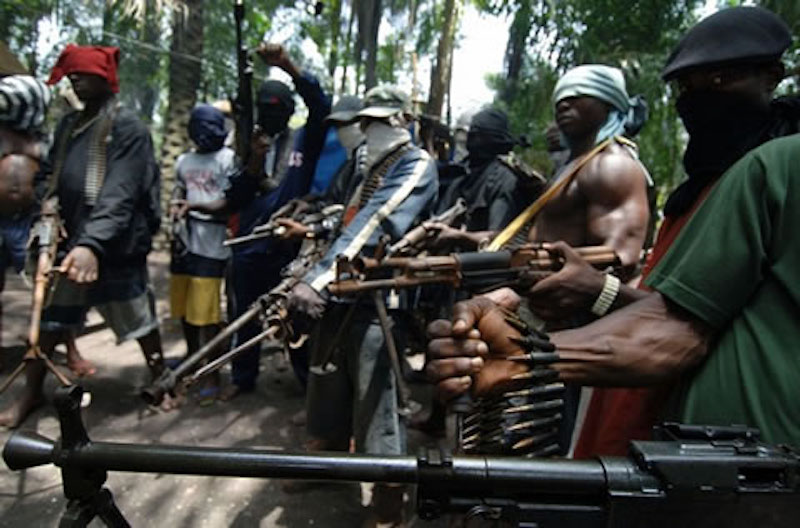
Last week, we saw how this government has severally promised to deal a death blow on Boko Haram insurgency, but has instead exacerbated the security situation with the addition of armed bandits, rampaging herdsmen, vampirous kidnappers, killer squads, etc. Nigerians are in a quagmire. What next: Many Senators and others had waded in. today, we continue the search for solutions.
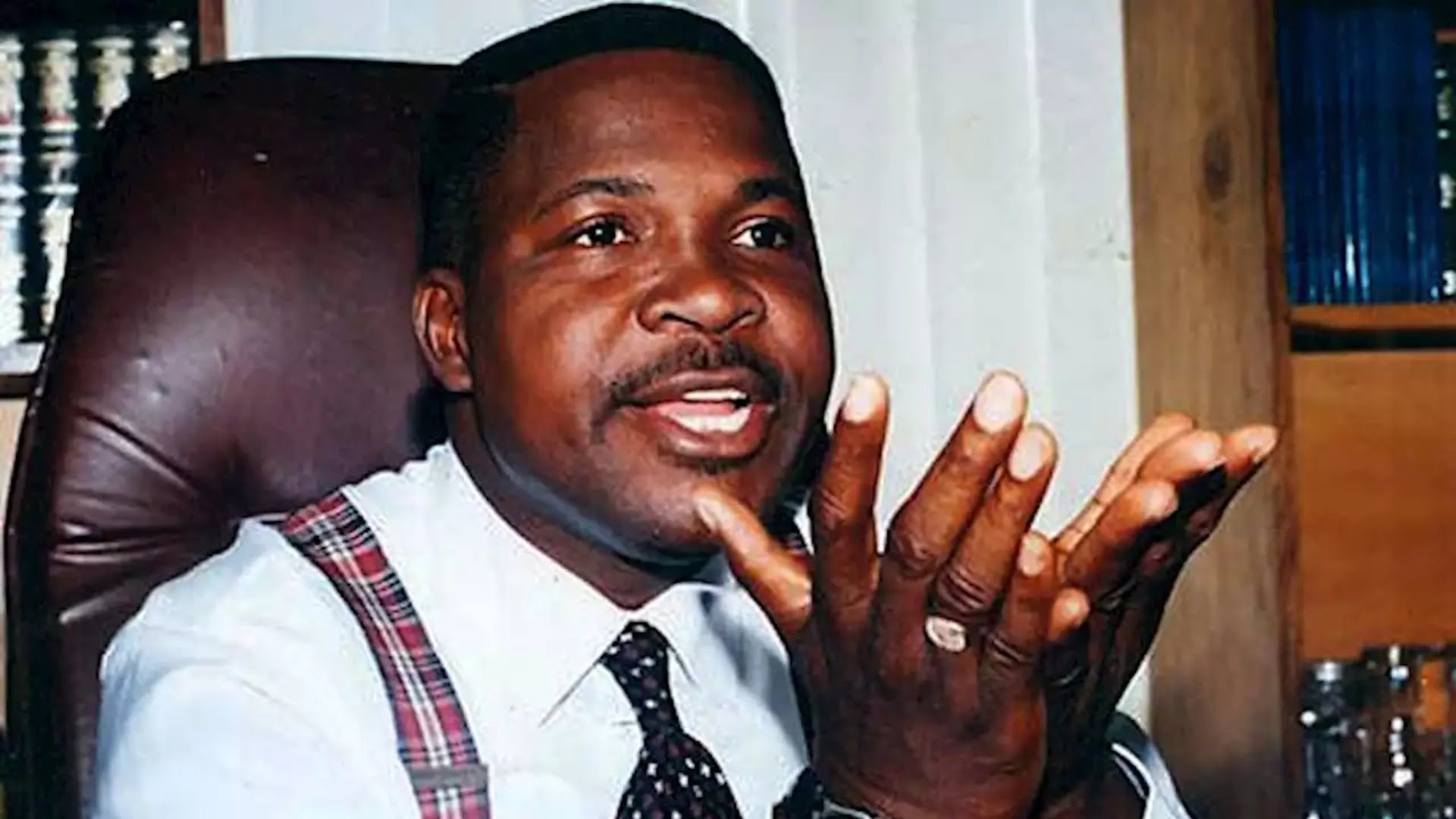
Former Senate Leader, Mohammed Ali Ndume, contributed to the debate by saying troops lack modern arms and were hardly provided with support. He said people in Borno State were paying ransom to Boko Haram before being allowed to go to their farms or move around in their villages. Indeded, Boko Haram are said to have audaciously mounted checkpoints and road blocks in most LGAs, collecting toks and levies. Can you believe that? Fello Nigerians, can you now see why GEJ deserves to be garlanded? Trust Ndume. He shot from all cylinders, when he called for the hiring of mercenaries.

“I can tell you that people fighting war are sharing ammunitions. They have no arms or proper kits. I have a not seen a Nigerian soldier holding a new AK47, Last week, some people came to me in Abuja and they asked for money to help them pay their dues to Boko Haram terrorists before they can harvest their crops. If government is serious, this terrorism can be stopped in six months.

America engage mercenaries. Why can’t we get that? We will be failing in our responsibility if we fail to do the right thing. In his contribution, former Kebbi governor, Mohammed Adamu Aliero, wondered why Buhari has refused to visit Borno after the attacks. “President Buhari should have gone to Borno State and not to send a delegation.”

RESOLUTIONS OF THE SENATE
The upper chamber later urged federal and state governments to address issues fueling insecurity. It similarly called for massive recruitment into the military and Nigerian police force.

President of the Senate, Ahmed Lawan, was blunt for once, even against his appointers. He warned that excesses will no longer be tolerated. He Said the resolutions of the Senate must be implemented by the Executive.
Lawan must have shocked his benefactor when he said, “this is not the first or second case of insecurity in the country. We will take additional steps and insist that our resolutions are implemented. These are recommendations the Executive must implement because they are frivolous. This is one thing that will gladden the hearts of Nigerians when implemented. Enough of any excuses. Those who have nothing to offer in terms of securing the country, should be shown the way out. We need people who can do the job. Nothing is more important than to Nigerians than their lives”. The security of Nigerians should take the centre stage. Time has come to find solution”.
This was not all. Further reactions poured in:

RESIGN NOW IF YOU CAN’T GUARANTEE SECURITY OF NIGERIANS, CLERICS TELLS BUHARI

Two clerics, Adewale Giwa and Pastor Ebenezer Ologunowa, told President Buhari point blank to resign if he cannot guarantee security of lives of Nigerians.
Giwa, senior Pastor of Awaiting the Second Coming of Christ Ministry, Akure, Ondo State, however urged Nigerians to stay strong despite the challenges confronting them, saying “it’s unfortunate that we have a president who doesn’t listen to the yearnings of his people”.
He claimed the president’s highhandeness has set to Nigerian in all ramifications.

“If they could kill a first class monarch in Ondo state, who is now safe in this country? If the wife of Ondo state Chief of staff could be kidnapped easily, who knows who is next? As of now, God is our security. Even Buhari is not safe not safe in Aso rock because the citizens are not happy”.

On his part, Pastor Ologunowa, who is the leader of Christ Sanctuary of Praise Gospel Church, Akure, said President Buhari should be honourable enough to resign if he cannot manage the nation’s security:

“They never promised us that our people will be killed like animals. Buhari’s sense of sight ought to have advised him quit instead of staying in office without any meaningful contribution to the development of Nigeria”.

Sultan of Sokoto, tested General (rtd), His Eminience Muhammad Sa’ad Abubakar III, has twice within one week, lamented, the dire insecurity situation of the country, and warned the government to stop paying lip service to it. He described insecurity-ravaged North as the worst place to live in Nigeria. He even called for specialist prayers five times daily. He noted that bandits now rule some communities and set rules that must be obeyed. The Sultan noted the paradox of the common man is “now caught in between two contending phenomena. When he goes to the farm, he gets killed and when he stays at home, he dies of hunger”. He urged the Buhari government to go beyond mere lip service and the traditional condemnation and do something concrete. The Nigerian Governors Forum (NGF) obviously alarmed, later resolved to meet Buhari, contending that the military is overstretched.

Is this the same military that ferociously went after #EndSars peaceful protesters at the Lekki Toll gate? So, President Buhari has also finally agreed to honour the House of Representatives’ invitation over the wanton killings, the first time ever since 2015? Ha, wonders shall never end!

But, trust Buhari government. Ever incorrigible, it sets its exams, marks them, and awards mark to itself. It blames everyone, everything and everyone, but itself.

Thus, in a swift reaction on Arise TV, Presidency spokesman, Garba Shehu, said sacking the service chiefs was not the solution to the security challenges. Oh, really? Even after they have since outlived their welcome and usefulness?

Hear more: “The clamour for the sack is out of place considering that the President is not subject to the oppositional political party which has clamoured for this all the time.
It is entirely his (Buhari) determination; he decides who he keeps as his service chiefs and for how long”. This was in obvious reference to President Muhammadu Buhari who has been under intense pressure from opposition leaders, lawmakers, traditional Rulers, as well as civil society organisations, to rejig the entire security architecture, starting with the sacking of the military heads.
But, Shehu said the appointment and sack of service chiefs were not tied to public demands. Hear his logic:
“I am not aware that the tenure of service chiefs is subjected to any law or regulation that is clearly stated. They serve at the pleasure of the president and (if) the president is satisfied with their performance, he keeps them. The buck stops at his table- with due respect to the feelings of Nigerians”. I think Garba is not getting the point. No one is wrestling with Buhari about his obvious powers to appoint or sack service chiefs. But, he is being reminded to sack them since they have failed the country. Is Garba saying the President is not answerable to the Nigerian people? Is he Louis XIV of France? By saying “with due respect to the feelings of Nigerians”, it means Garba is aware that the Nigerian people want the service chiefs out. But Buhari would not do so because he is “not aware that the tenure of the service chiefs is subject to any law or regulation”. Ob blomey!

MASSACRE WILL CONTINUE UNTIL BUHARI REPLACES SERVICE CHIEFS-NORTH
Garba must be alone in a frolic of his own. This is because concerned stakeholders from the Northern states have warned that there may not be an end in sight if the current service chiefs remained in the saddle.

Specifically, they called on President Buhari to replace all of them without further delay, to remediate the worsening security situation in the country, especially in the North.

Stakeholders who headed different groups and coalitions had made the call at an emergency meeting in Kaduna.
Part of the 11-point communiqué read: “We say enough is enough of these killings of innocent and unarmed civilians in Borno State, brought about by the seeming inability of the nation’s troops stationed in the state to hgelp avoid this kind of massive attacks and killings.

“We categorically call on President Muhammadu Buhari to immediately sack the service chiefs for their inability to save the nation this tragically-embarrassing experience that has dire consequences to our international image.
“There is also need for not only total overhaul of the security architecture in Borno but also the out-dated intelligence-gathering method.

It is our conviction that until a major paradigm shift in the security architecture is promptly applied by President Muhammadu Buhari, we will continue with this bad and alarming rounds of a tragic and embarrassing situation.
“The time to end this madness is now; the nation can’t afford to wait any longer.
This is good music to my ears and those of many Nigerians, especially since the Buhari’s most ardent devotees who worship him like a deity, have finally seen his light.

But, who is to blame when Muhammadu Buhari cannot see beyond his nepotic enclave to rejig his security architecture? Now, read the following by an avid reader who exposed the dangers of nepotism, sectionalism, favouritism and tribalism in appointing people from only ones section of the country, a most horrific scenario in a pluralistic, multi-ethnic, multi-linguistic and multi-religious country like Nigeria. This is how he put it.

“INSECURITY IN NIGERIA: WHO IS TO BLAME?
President Muhammadu Buhari (Katsina); Senate President: Ahmad Lawan (Yobe); Deputy Speaker: Ahmed Idris (Polateau); Defence Minister: Bashir Salihi Magashi (Kano); Chief of Army Staff: Major-General Tukur Yusuf Buratai (Borno); Chief of Air Staff: Sadique Abubakar (Bauchi); National Security Adviser: Babagana Monguno (rtd.) (Borno); Director-General of DSS: Yusuf Magaji Bichi (Kano); Minister of Police Affairs: Mohammed Maigari Dingyadi (Sokoto); IGP: Mohammed Adamu (Nasarawa); Comptroller-General of Customs: Hamid Ali (Bauchi); Commandant- General NSCDC: Abdullahi Gana Muhammad (Niger); Director NIA: Ahmad Rufa’I Abubakar (Katsina); Comptroller-General of prisons: Aloh. Ja’afaru Ahmed (Katsina), SGF: Boss Gidahyelda Mustapha (Adamawa); Chief of Staff: Ibrahim Agboola Gambari (Kwara)”.
“CHAIRMEN OF SENATE COMMITTEES
Army: Ali Ndume, (Borno); Airforce: Bala Ibn Na’Allah, (Kebbi); Defence: Aliyu Wamakko, (Sokoto); National Security and Intelligence: Abdullahi Gobir, (Sokoto); Police Affairs: Dauda Jika, Abubakar Tambuwal (Bauchi).

CHAIRMEN OF HOUSE OF REPRESENTATIVES COMMITTEES
Army: Hon. Abdurazak Namdas (Adamawa); National Security and Intelligence: Hon. Sha’aban Sharada, (Kano); Navy: Hon Gagdi Yusuf (Plateau); Police Affairs: Hon. Kumo Bello (Gombe)”.
So, who is to blame? That is the big question. Nigerians, do you know? (The end).

FUN TIMES

“Don’t buy groundnut and garri from the same shop, they will know you want to drink garri”.

THOUGHT FOR THE WEEK
“In situations of military conflict, civil strife, lawlessness, bad governance, and human rights violations, terrorists find it easier to hide, train and prepare their attacks”.
(Gijs de Vries).


Continue Reading
Click to comment

Leave a Reply

Your email address will not be published. Required fields are marked *

Opinion

GLO and the Democratization of Communication in Nigeria

Published

on

By

By Dr. Sani Sa’idu Baba

Glo, the “Digital Oxygen” of Nigeria’s Democracy

As Nigeria marked Democracy Day on June 12, it is important to celebrate not only our democratic journey as a nation, but also institutions whose values and contributions reflect the very essence of democracy.

In Nigeria’s telecommunications industry, Glo stands out as arguably the most democratic network. Democracy thrives on inclusion, accessibility, equal opportunity, participation, and the empowerment of the people. Since its inception, Glo has consistently demonstrated these ideals through its commitment to making communication affordable and accessible to millions of Nigerians.

By pioneering competitive tariffs, affordable data services, and innovative products tailored to the needs of ordinary citizens, Glo helped break barriers to communication and brought connectivity within reach of people across different social and economic backgrounds. In doing so, it democratized access to information, knowledge, and opportunities in an increasingly digital world.

This commitment has been tested in recent times. Following the Nigerian Communications Commission’s approval of a 50 percent tariff adjustment across the telecommunications industry in 2025, operators were compelled to review their pricing structures. Yet Glo’s response reflected a people-first philosophy even amid economic pressure. Through generous data bundles, rollover benefits, value-back offers on MiFi devices, and bonus data packages, the company sought to cushion the impact on subscribers. While the industry generally moved toward higher costs, Glo worked to ensure that communication remained within the reach of ordinary Nigerians, staying true to the democratic principle that access should never be reserved for a privileged few.

Glo’s democratic approach extends beyond pricing to infrastructure development. Its 2025–2026 network modernization programme, which involved the deployment of over a thousand new 4G LTE sites, spectrum expansion, and the reconstruction of critical fibre routes, has been particularly noteworthy for its focus on underserved rural communities as well as densely populated urban centres such as markets and educational institutions. Democracy is not merely about serving those already at the centre of power; it is about extending opportunity to those at the margins. By expanding connectivity to communities that have historically been overlooked by telecommunications infrastructure, Glo has quietly been democratizing not only communication but also access to the digital future.

A key pillar of any true democracy is the protection and promotion of freedom of speech and expression. Through its reliable and affordable network, Glo has empowered millions of Nigerians to express their views, share ideas, engage in public discourse, and connect with others without being constrained by cost or access. This is not an abstract principle. It is reflected daily in the WhatsApp groups, Facebook communities, online forums, and citizen-led conversations that increasingly shape Nigeria’s political and social discourse. From grassroots town hall engagements to real-time reactions during elections and national debates, Glo provides a platform through which citizens exercise one of the most fundamental rights in a democratic society.

Furthermore, Glo’s unwavering support for local content, Nigerian talents, sports, entertainment, and entrepreneurship reflects its belief in creating opportunities for people to succeed and contribute meaningfully to national development. From its long-standing sponsorship of football competitions to its investment in Nigerian music, Nollywood, and homegrown entrepreneurial initiatives, Glo has consistently amplified Nigerian voices and celebrated Nigerian excellence. This commitment to empowering individuals mirrors the democratic principle of broad participation and shared progress.

As we honour the heroes of June 12 and reflect on the sacrifices that paved the way for democratic governance in Nigeria, Glo deserves recognition as a corporate institution that has consistently advanced the values of inclusion, accessibility, empowerment, and freedom of expression. In many respects, Glo has done for communication what democracy seeks to do for governance: place power in the hands of the people.

As Nigeria celebrates Democracy Day, Glo stands not merely as a telecom provider but as a symbol of inclusion, accessibility, and empowerment. In connecting millions of Nigerians to one another and to the world, it has helped deepen democratic participation and amplify the voices of ordinary citizens. It is more than a network. It is more than “unlimited.” It is “digital oxygen” that keeps Nigeria’s democratic conversation alive.

Happy Democracy Day, Nigeria.

Continue Reading

Opinion

A SILEC Voice Against the Tide by Kwame Jamal

Published

on

By

The morning sun streamed through the stained-glass windows of the Anglican Church of Transformation Hall, casting patches of amber and gold across the gathered crowd. Mothers clutched small bouquets—it was Mother’s Day—and children fidgeted in their seats, unaware that history was about to be made in their midst.

At the podium stood Sunny Irakpo, his hands steady on the lectern, his voice carrying the weight of nearly two decades of quiet war. Not a war of soldiers or bombs, but one fought with pamphlets, school visits, rehabilitation talks, and now—something far greater.

Before him sat bishops in clerical collars, doctors in tailored suits, community leaders in colorful Nigerian attire, and ordinary men and women who had crossed oceans for a better life. They had come to witness the unveiling of the SILEC International Magazine (SIM)—the first global media platform dedicated exclusively to reporting drug-related issues across Africa, the United States, and beyond.

“Just like a SIM device is important to a phone,” Sunny began, his voice warm yet resolute, “imagine one with a sophisticated phone without a SIM. Such a phone will be useless. Therefore, SIM is a solution provider—an enabler designed to bring value, reset mindsets, and create a global platform bold enough to revolutionize the media ecosystem.”

The room leaned in.

Three hours earlier, Revd. Canon Paul Obike had opened the ceremony with a prayer and a smile. The anchor Venerable Shola Ogbedebi , He looked out at the sea of faces—mothers, especially, whom he thanked for their invisible labor of raising children in a world saturated with temptation.

“Sunny Irakpo,” Ogbedebi had said, “is a courageous young man with strong passion and zeal, championing a worthy cause that has taken the lives of many promising youth in Nigeria, the United States, and across the globe. He is a trailblazer. A strong voice that keeps shaping policy direction.”

The audience had applauded, some wiping tears. They knew the statistics. They had buried nephews, cousins, sons.

Now, as Sunny continued his address, he moved from metaphor to mission.

“SILEC International Magazine is not just a publication,” he said. “It will drive awareness, create employment opportunities for young people, and support underprivileged students—particularly in Nigeria, where more than twenty million children remain out of school due to financial hardship.”

He paused, letting the number settle.

“Twenty million.”

A murmur rippled through the hall.

Sunny spoke of the vision conceived years ago, held in his heart like a pregnancy carried through contraction and pain. “When a child eventually escapes the womb, the mother leaps for joy,” he said. “Today, I stand in solidarity as a mother—not by pregnancy, but by conception of ideas that could help proffer solutions to the many problems confronting mankind. This is my joy: that baby SIM is birthed to the world today, in a country where dreams come through.”

He invoked Habakkuk 2:2—write the vision and make it plain—and reminded the gathering that a child’s raising belongs not only to its parents but to the entire community. “So it is for this newborn, named SIM,” he said. “I call for your collective nurturing.”

The statistics he shared were stark.

A United Nations report from 2025 stated that 316 million people worldwide were affected by drugs. Nearly half a million deaths annually. Twenty-eight million healthy years of life lost. In 2023, only one in twelve people with drug use disorders received any treatment.

In the United States, over one million people between the ages of eighteen and forty-five had died from drugs.

But it was Africa that Sunny named as the emerging frontline. “The new market,” he said quietly. “Seventy percent of young people. In Nigeria, according to UNODC, 14.4 million people aged fifteen to sixty-four abused drugs and substances as of 2018—significantly higher than the global average. Those aged eighteen to thirty-nine remain the worst users today.”

He did not shout. He did not need to. The numbers screamed for themselves.

Then came the moment the room had been waiting for.

The Chairman of the occasion, The Rt. Revd. Dr. Augustine Unuigbe—Coordinating Bishop of the Church of Nigeria North America Mission and Managing Director of Rapha Medical Group—rose from his seat. He was a tall man with gentle eyes and the steady hands of a physician.

“As a medical doctor,” Bishop Unuigbe said, stepping to the podium, “I have seen firsthand cases of drug overdose. I have watched young people slip away on hospital beds, their parents wailing in corridors. The drug problem and overdose deaths in the United States are underreported—for reasons I cannot ascertain. But time has come for the message to be louder.”

He turned to look directly at Sunny.

“My path and Sunny Irakpo crossed on social media,” the bishop continued. “I did not know Sunny from Adam. What brought us together is divine connection. In 2021, met him physically when the Primate of All Nigeria, the Most Rt. Dr. Henry Chukwudum Ndukuba, invited Sunny to present a paper at the Standing Committee meeting—the highest decision-making body of the Church of Nigeria, Anglican Communion. His presentation on ‘The Monster of Drug Addiction: A Battle for the Future’ was educative, revealing, and commendable.”

The bishop’s voice deepened. “My association and endorsement of SILEC Initiatives is based on the credible platform and the carrier of the message—Sunny Irakpo—who has shown serious commitment for nearly two decades. This young man deserves all the support and encouragement to propagate the message farther.”

He placed his hand on a tablet connected to a large screen. “I now unveil the SILEC International Magazine—electronically, with Artificial Intelligence tools for the campaign ideology—to the glory of God and benefit of humanity.”

The screen flickered to life. The magazine’s website appeared: crisp, modern, alive with stories. A video montage played—interviews with recovered addicts, profiles of resilient entrepreneurs, reports from Nigerian villages where schoolrooms stood empty. The audience watched in rapt silence.

Then they rose. They clapped. Some wept.

Dr. Inua Momodu, President of the Nigerian Community in Atlantic County, New Jersey, seized the moment. “Drug abuse affects almost every household,” he said. “Everyone must be involved in this fight to save the lives of young people. The Nigerian community under my leadership will continue to support SILEC Initiatives with effective collaboration.”

Distinguished guests nodded firmly from the front row. Besides, Angels In Motion ably represented by Laura Rhodes whispered to a colleague: We need to partner with them.

Before closing, Sunny Irakpo turned to the mothers in the room. It was, after all, their day.

“Dear mothers,” he said, “your roles in family and nation-building cannot be overemphasized. Sadly, in the cause of my advocacy, I have seen women deeply engaged in drug abuse and illicit trafficking. The most despicable act is using their most revered private parts to conceal drugs. One out of four females is now a drug abuser.”

The room grew very still.

“We urge our mothers to hold firm the values that help shape society. Tighten the home front. Help prevent our wards from this destructive path.”

He paused, and his voice softened.

“In loving memory, I remember today the sacrifices of my late parents—Pa Christopher Ewomarevia and Mrs. Victoria Adiheji Irakpo—for the value of education and godly parenting they implanted in me. They started this vision of SILEC with me in 2010. It pleased God that they did not witness this very important occasion. But I give God all the glory. May their kind souls continue to rest in peace.”

The ceremony ended with Reverend Ohio Simire offering the vote of thanks, followed by closing prayers from Bishop Unuigbe. As the crowd filed out into the New Jersey afternoon, phones buzzed with notifications—the live stream had reached thousands across three continents.

Outside, a young woman approached Sunny Irakpo. She was perhaps twenty-two, her eyes red-rimmed.

“My brother overdosed last year,” she said quietly. “He was nineteen.”

Sunny placed a hand on her shoulder. “Then we do this for him,” he said. “And for all the others.”

She nodded, and for the first time that day, she smiled.

Somewhere, a SIM card connects a phone to the world. And somewhere else, a newborn magazine called SIM began connecting broken stories to hope—one page, one life, one truth at a time. Oh, what a magazine you must get with just a click from your phone at www.sim.silecinitiatives.org.ng . SILEC is rising, SILEC International Magazine, the global light.

Article contributed by Kwame Jamal

Continue Reading

Opinion

When Architecture of Policy Meets Architecture of Connection

Published

on

By

By Shakirat Akintola

For many political observers, the proposition of an Atiku-Momodu ticket represents a fascinating answer to Nigeria’s complex governance puzzle. The conversation is rapidly moving past the two personalities involved, evolving into a broader debate about national cohesion, credibility, and the precise qualities required to steady a fractured nation.

Atiku Abubakar, having recently emerged as the presidential candidate for the African Democratic Congress (ADC) following a fiercely contested and highly scrutinized nationwide primary election, remains one of the most resilient figures in Nigeria’s democratic journey. His institutional memory is vast. As the Vice President who chaired the National Economic Council during one of Nigeria’s most consequential eras of economic restructuring and privatization, he understands the levers of state policy.

Yet, in a nation fractured along regional, religious, and generational lines, policy blueprints alone are no longer enough. The opposition faces a distinct hurdle: Nigerians already know who Atiku is. The challenge is not building recognition, but establishing a genuine, empathetic connection with the deep frustrations of the grassroots. This is precisely where Aare Dele Momodu enters the equation.

To view Momodu strictly through the glamorous lens of Ovation International is to misunderstand the deliberate philosophy behind his media empire. While critics might initially mistake his chronicling of high society for elite insulation, his career has actually functioned as a masterclass in breaking down walls. For decades, Momodu did not just document success; he demystified it, bringing the corridors of power and privilege directly to the gaze of the ordinary citizen. More importantly, this deep social capital was forged in the fires of grassroots defiance. Long before he was a celebrated publisher, Momodu was a pro-democracy activist who faced detention and forced exile during the dark days of the Abacha regime for standing with the masses. His ability to navigate corporate boardrooms today is not a sign of detachment from the struggle, but a powerful asset. It means the opposition gains a communicator who can walk into spaces of immense privilege, speak truth to power in their own language, and channel that access directly back into the service of Nigeria’s markets, classrooms, and farming communities.

A Referendum on Lived Realities

The ongoing security and economic trials illustrate exactly why a balance of institutional experience and cultural reach matters. For a parent deciding between school fees and healthcare, or a trader calculating the risks of interstate highways, governance is not a theoretical debate.

The next election will not be won by campaign slogans or aggressive social media strategies. It will be decided by trust. While the ruling party scrambles to convince a strained populace that their sacrifices will yield future rewards, the opposition must present a credible, steady, and comforting alternative.

Nigeria’s future will ultimately be shaped by leaders who look beyond political echo chambers and actively listen to the markets, classrooms, and farming communities. As the country continues its difficult search for stability, the political figures capable of building a bridge between sound policy and genuine human empathy will inevitably command the attention of a nation eager to move forward.

Continue Reading

Trending