By Eric Elezuo
The common refrain and slogan across the nation is ‘Nigeria is bleeding’, and as the days turn into weeks and months, the wound gets larger. Then from bleeding, the blood is now flowing.
Across all strata of endeavours, all the regions and not a few communities, insecurity of the highest order has enveloped on a very large scale, a nation that once thrive in brotherliness, interstate movements without fear, and camaraderie. The fear of the unknown has completely eclipsed social life, excursions, traveling within the country, and funnily enough staying in your own house. In the Nigeria of today, nowhere is safe anymore; not event the comfort of one’s home; not even the sacredness of holy places; not even the respected academic environment. Terrorists and bandits attack anywhere and from anywhere. And with impunity.
In the Nigeria of today, everyone leaves in fear. No one knows who the next target is as terrorists, bandits, Fulani herdsmen and other miscreants have overran the nooks and crannies of the Nigerian existence, prompting the question, where’s Nigeria’s chief security officer? And the answer that he must wake up and face squarely the insecurity challenges that is fast tearing the nation to shreds.
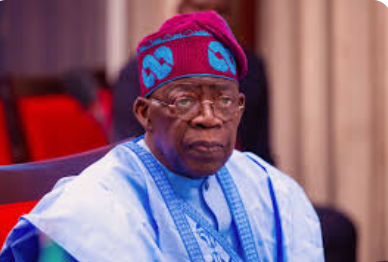
With the 2027 election fast approaching, the Nigerian administrative apparatchnik led by President Bola Tinubu, appears to have completely lost focus of the security of the people. The country is been thoroughly run down by activities of terrorists, who are no longer hiding their nefarious and heinous activities as they boldly put on air the victims abducted and process of execution. This daring moves are a challenge to the government and security agencies, yet no criminal is in custody yet and victims are still unaccounted for with most of them cruelly deleted, and bodies mangled.
It is worthy of note that while the nation is still gambling with the rescue efforts for the teachers and pupils kidnapped from Oyo communities schools about 12 days ago, suspected bandits have reportedly struck again, invading the Yashikira community in Baruten Local Government Area of Kwara State, early on Monday morning, setting the Emir’s palace ablaze and abducting several residents, including women and children.
Reports gathered from Channels Television say that the attack occurred late at night when the heavily armed assailants stormed the community, firing sporadically.
The medium, quoting sources in the area, stressed that the gunmen attacked the palace during the invasion, setting parts of the royal residence on fire before whisking away multiple victims.
Residents said the attackers operated for hours without resistance, leaving behind destruction and fear in the border community.
Another local source described the incident as terrifying, noting that villagers were caught unaware as the gunmen invaded the town under the cover of darkness.
Sources say Security forces have launched immediate rescue operations to free victims of the Yashikira abduction, which occurred on Sunday night.
Military and police operatives have established a cordon in the area as part of the efforts to rescue about 10 persons who were reportedly taken from the community in an overnight attack on the palace of the Emir of Yashikira.
The attackers also sought to raid the local police stations but were reportedly repelled.
As at press time, the police were yet to issue an official statement on the incident.
The invasion is one development too many this 2026 alone, and has been a recurring decimal in the Tinubu-led administration. This is taking for granted that the incident is following the heels of bandits, who on Saturday night invaded a prayer ground at Ori-Oke Ajaiye, on the outskirts of Ikiran village in Ekiti Local Government Area of the same Kwara State, killing three worshippers and abducting 15 others during a vigil.
The stories and tales of woe are inexhaustible. There’s no morning and no evening where Nigerians are not presented with gory narratives of one abduction and killing or another, creating fear and apprehension among the populace. The general notion is hinged on Tinubu’s control loss of the fabrics of the nation including the economy, power and every other mention-able sector.
It is worthy of note that like every other failure still staring Nigerians in the face, Tinubu also inherited insecurity. However, three years into his administration, and consequent upon available indices, the Nigerian leader seems to have tripled the effects of insecurity. This is counting the boldness with which the insurgents operate, the magnitude of each operation, the casualties involved, the deliberate bloodletting and the huge ransom paid in exchange. The circle has continually continued, and there seems to be no hiding place for Nigerians, especially the vulnerable masses.
On May 17, 2026, the world woke to the chilling news of the killing and beheading of the school teachers, abducted from Oyo communities. He was Michael Oyedokun.
Oyedokun was one of the teachers abducted from Community High School, Ahoro-Esinele in Oriire Local Council of Oyo State, a few days before his gruesome killing.
The killing threw residents of the area into mourning and heightened fears over worsening insecurity in the state, and the nation at large, which the government of President Bola Tinubu has found a herculean to handle.
In a video reportedly released by the captors on Sunday, May 17, 2026, the gunmen claimed responsibility for the killing of the Maths teacher, sparking panic across the community.
The incident followed a series of coordinated attacks launched by armed men on Friday, May 15, targeting multiple schools within the Ogbomoso axis, including Baptist Nursery and Primary School, Yawota; Community Grammar School; and L.A. Primary School, Esiele.
During the attacks, the assailants reportedly shot dead a classroom teacher and a commercial motorcyclist who resisted attempts to seize his motorcycle.
The attackers also abducted the school principal, vice-principal, another staff member, and an unspecified number of pupils before fleeing into the forest. Later reports put the number of abductors to 39.
Governor Seyi Makinde had earlier confirmed that seven students were abducted from Community Secondary School, while 18 pupils and seven teachers were kidnapped from First Baptist Primary and Nursery School.
He also confirmed that one person was killed during the attack, a school teacher, Joel Adesiyan. Further reports confirm that a bike rider was also killed, when he refused to let go of his motorcycle.
The incident triggered widespread panic in Ogbomoso and surrounding communities, with many parents rushing to schools to withdraw their children over fears of further attacks.
Some schools were also forced to shut down temporarily following rumours of bandits infiltrating the Ladoke Akintola University of Technology, an allegation the institution’s management later dismissed as false.
Reacting, the Amnesty International Nigeria accused the Federal Government of failing to adequately respond to Nigeria’s worsening wave of abductions targeting school children, rural communities and internally displaced persons, saying at least 1,100 people were kidnapped between January and April 2026.
The organisation made the allegation in a statement shared on its official X handle, amid renewed public concern over mass abductions in Oyo, Borno and other states, which left dozens of students, teachers and residents affected.
In the statement, Amnesty International said, “President Bola Tinubu and his government have failed to address the country’s shocking spate of abductions targeting school children, rural communities and internally displaced persons across the country.”
It added, “At least 1,100 people have been abducted – from January to April 2026,” describing the trend as a continuing failure of protection for vulnerable populations.
The group’s criticism comes days after gunmen abducted 39 students and seven teachers in an attack on schools in the Ahoro Esinele community in Oriire Local Government Area of Oyo State, an incident that also left teacher Michael Oyedokun reportedly beheaded.
Amnesty also referenced another attack in Borno State, where 42 students and pupils were abducted from Mussa Primary and Junior Secondary School in Askira/Uba Local Government Area during a Boko Haram assault.
Survivors of similar abductions, according to the rights group, have described being subjected to starvation and torture, including beatings, flogging and sexual violence, raising further concerns about the conditions victims face in captivity.
The organisation said the pattern of repeated school attacks shows a long-running crisis that authorities have yet to resolve, stressing that “over a decade is enough time for the Nigerian authorities to find a solution to this horrifying problem,” but insisting that “the reality shows the government has neither the will nor the commitment to end rampant abductions and attacks on children and their schools.”
It urged authorities to meet their obligations under both national and international law, particularly regarding the protection of children’s rights to education, safety, and protection from violence and ill-treatment.
The latest incidents have intensified national concern over school security, especially following the Oyo and Borno attacks, which occurred within the same period and involved the abduction of dozens of children and teachers.
Weeks earlier, there was a failed kidnapping attempt along the Ibadan-Ijebu road corridor, which reportedly left a traveller dead, raising fresh concerns over insecurity of great proportion hitting the southwest of the region.
According to Global Centre for the Responsibility to Protect report, between 2014 and March 2026, ‘over 2,000 children have been abducted or kidnapped, largely in mass abductions targeting schools. Armed extremist groups, including Boko Haram and ISWAP, as well as local bandits, are implicated in many cases, often using kidnappings to generate ransom or to recruit children.
The report noted that in 2024 alone, at least 580 civilians, primarily women and girls, were kidnapped across several states, noting that the figures might be higher. Not only are most victims killed during these attacks or while in custody, survivors live the rest of their lives in poverty, trauma, stigma and utter abandonment.
The funniest part, according to a social analyst, who crave anonymity, so-called repentant terrorists and bandits are treated with kid gloves, ‘rehabitated’ in luxury and given huge financial lifeline as they are released back into the sane society while their victims are left to wallow in neglect. It would be recalled that the National Security Adviser, Mallam Nuhu Ribadu, described the terrorists as ‘our brothers’, who should not be killed just as the Chief of Defence Staff, General Oluyede equated the rerrorists to the biblical ‘prodigal son’, who should welcomed with warmth and affection. These two national officers have silent on the treatment for their traumatized victims and their bereaved loved ones.
The question on the lips of majority of Nigerians, has remained what President Tinubu is doing about the extreme insecurity in the country beyond offering condolences and suggesting a now known refrain of ‘It won’t happen again’ while it continues to happen over and over again.
On two known occasions, President Tinubu was expected to visit victims and sites of violent killings and abductions in Benue and Plateau states. On the two known occasions, Tinubu fell short in the advertised visitations. He never made it to the locations.
Following the June, 2025 killings in Yelwata, Benue State, Tinubu was programmed to have an extensive state visit to site of massacre and the government house where a townhall meeting was scheduled.
It was agreed that upon his arrival, the President will first proceed to Yelewata in Guma Local Government Area, the epicentre of the attack that claimed over 100 lives.
He was scheduled to meet with families of victims, displaced persons and community leaders directly impacted by the violence.
From Yelewata, the President was supposed to visit the hospital where several persons injured from the attack were recuperating, and then proceed to the Benue State Government House Banquet Hall in Makurdi, where he would preside over a town hall meeting with critical stakeholders.
Much as the Benue State government under Hyacinth Alia commandeered very young pupils to wait unprotected for the President under a heavy rain, the President never made it to Yelwata nor interfaced with the victims and bereaved families. His journey ended in the comfort of the government house. Analysts observed that the townhall was turned into political jamboree.
Tinubu had blamed heavy rains, flooding and impassable roads for his inability to visit the scene of the crisis in Yelewata. Over 3000 residents were displaced in addition to tens of deaths recorded.
Also, following the April 2 Palm Sunday attack in Plateau State, Tinubu scheduled a visitation to commiserate with the victims and bereaved families, but like the Benue visit, Tinubu did not even enter the town, he ended his visit at the Jos Airport.
Consoling a mourning mother, identified as Mrs Rhoda, at the airport Tinubu said, “I know the pain. I see in the video how you buried your loved ones and the pain and agony in your heart.
“But it’s only God who can give you joy and hope. No amount of money can pay all of you back. Yes, as a government, we will try our best to comfort you, to work with you,” he said while directing security chiefs present, including the Inspector-General of Police, Chief of Defence Staff, and Minister of Defence, to unearth and apprehend those responsible for the killings.
Defending the President, his aides noted that Tinubu couldn’t his visit beyond the airport because of tight schedule and absence of navigational equipment for night movements. A statement by Bayo Onanuga, said it was difficult to reschedule a pre-arranged meeting with the Chadian Leader. This is even as the President had canceled an earlier visit to Ogun State for the Plateau visit.
But with the President concentrating more on his reelection in 2027, Nigerians are calling on his administration to take a further cursory of the insecurity status of the nation to prevent more deaths and displacement, and more importantly prevent his being booted out of office by very fed-up Nigerians, whose means of livelihood and other social engagements have been unapologetically cut off.
Nigeria is bleeding and Nigerians are angry at its leadership. Tinubu just have to wake up to his responsibilities beyond condolence messages.