Opinion
Panorama: Proposed Pump Price Hike: Nigeria No Longer in Safe Hands?
Published
5 years agoon
By
Eric
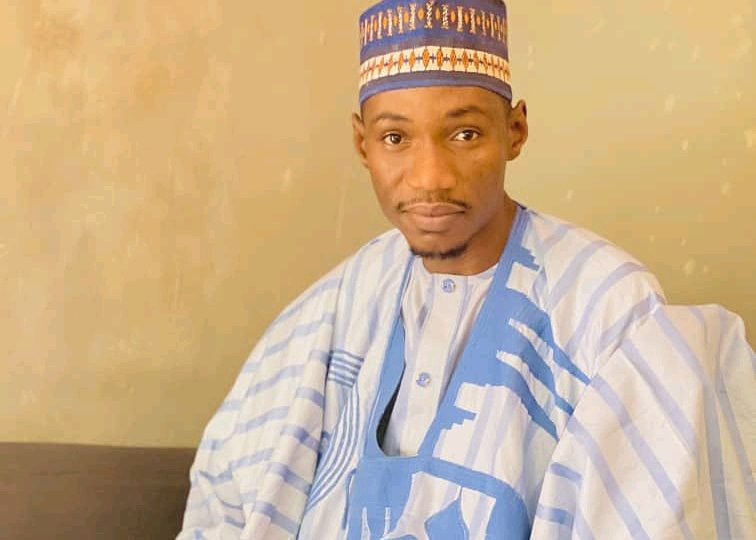
By Sani Sa’idu Baba
My dear country men and women, permit me to state categorically that our dear country is no longer in safe hands. That the country is in a serious dilemma is no longer in doubt. My fears are not unfounded. My fears are rooted in the unpopular proposed or rather planned fuel price hike, expected to skyrocket from the present yet affordable N165 to about N340 by the federal government. Of course, it is the duty of any government to churn out good policies that will favour the country in its entirety not only those in the corridors of power, and also not add salt to people’s festering injury. But the contrary is the case in today’s Nigeria. And that explains the deficit of trust and the dividing line between the leaders and the led.
Although I was quite young back in 1999 I could vividly remember the hopes expressed that the socio-economic problems of the nation would be tackled by the incoming civilian administration. The hope has since faded as the problems persist. A grim picture pervades the economic skyline and the average Nigerian has a uniformed description: poor, under-nourished, poorly sheltered, unemployed and where employed, poorly remunerated. It is the same story every day. Bad policies that are directly in opposition to popular wishes have always been initiated and prioritized, and the ultimate looming fuel price increase is just one out of a lot. This will occupy the centre of my discussion today.
It does not require a degree from Harvard or Oxford, or a career at the World Bank or in the banking and petroleum industries to be able to draw the conclusion that in an economy where provision of basic services and products depends on operation of petro-based generators to produce electricity needed; that in such an economy any increases in the prices of petroleum products, much less doubling of current prices, will have a serious, sustained, and deleterious effect on the livelihoods of tens of millions of residents, and a calamitous if not clear catastrophic impact on the economy and social wellbeing of the country and her citizens. Public policy is infested with special interest groups and private interests, and a policy that is sold as a public interest policy may not, in fact, be in the public interest; moreover, a policy that is, in fact, in public interest may be subverted against public interest.
You can imagine if a whooping N180 which is about 120% is added per liter of a petrol at once without adding a Kobo to workers’ salaries, or finding alternatives to joblessness? You can imagine the pain? You can imagine the impact? More painful is the ridiculous claim by the finance minister that they will pay N5,000 to Nigerians for 6 months to a maximum of one year as compensation. The problem of the fuel hike will affect all Nigerians. Not only those that owns a car, tricycle or a generator, but everyone must buy food, pay for hospital bills and transportation. This policy will only open doors to more corruption and impunity that has engulfed this government, and greatly worsened the socio-economic conditions of already long-suffering Nigerians. There is no doubt that the performance of an administration can be assessed not by relying on the propagandistic effusions of its spokespersons, but by critically examining the results or outcomes of the policies and programmes implemented by the administration, and how these have impinged on the welfare of the citizenry. The truth is, President Buhari’s policies so far have to a large extent brings hardships and endless sufferings to his people!
The present socio-economic condition of an average Nigerian is far worse than the situation caused by the previous fuel hike alone. Of course insecurity, poverty and ignorance are other highly interconnected factors that are directly affected by any action that will promote poverty and hardship, the fuel hike is certainly of them. In addition to the challenges listed above, excruciating hardship, hunger (starvation in some cases), misery and unprecedented high cost of living, among others, have become the key pillars of Nigeria’s socioeconomic architecture. Indeed, to say that Nigerians are economically hurting at this moment is no exaggeration. To state that most Nigerians have never had it this economically difficult in their lifetime is not an over-statement; the fact that most Nigerians are out of work and go to bed hungry now is no longer news. The pains are palpable in the voices and faces of everyday Nigerians on the streets and in the work and market places across the land.
Many years before the emergence of the current Buhari-led administration, things were not alright but not as today. After he became president, the economy had not improved, and that poverty was becoming so entrenched that many could not feed their families well. Food has assumed such a big space in our national psyche that anyone who is able to manage three square meals is considered to have performed a feat. That was over 6 years ago; today, due to the astronomical costs of goods and services, one decent meal in a day has become a very rare phenomenon in most homes in Nigeria. The self-dignity of most Nigerians has been grossly attenuated by the policies and programmes of those who run the Nigerian state; for a person who cannot properly feed himself/herself is not worthy of the epithet “man/woman”.
My write up today also draws attention to the fact that by further increasing the price of petrol – through the total withdrawal of government subsidy, President Muhammadu Buhari, his government and his party (All Progressive Congress) have failed to fulfil one of the major promises they made to Nigerians during the campaign for the 2015 General Elections. During the campaign, Buhari had pledged to reduce the cost of petrol by 50%; in January 2015 just before the elections, Buhari, while reacting to the pump price of petrol in the country, said: “it is disturbing that in spite of the fall in the global price of crude oil, Nigerians still buy petroleum products at pump prices as if the global price of crude oil had remained at $100(USD) per barrel”. In 2015, President Buhari reportedly said: “I have received many literatures on the need to remove subsidies, but much of it has no depth”; he continued: “when you touch the price of petroleum products, that has the effect of triggering price rises on transportation, food and rents. That is for those who earn salaries, but there are many who are jobless and will be affected by it”. GOD bless the soul of late Umaru Musa Yar’adua who against all odds had never been merciless to masses.
In a national address to mark his government’s one-year anniversary, President Buhari declared: “for too long, ours has been a society that neglects the poor and victimizes the weak. A society that promotes profits and growth over development and freedom…” (www.punchng.com/text-president…). But the huge increase in the pump price of petrol by the government not only neglects and emasculates the poor, it also compounds their misery. Moreover, the policy promotes and enhances the profits of oil dealers and other actors in Nigeria’s oil industry and dwarfs the economic potentials and fortunes of the masses. President Buhari and Nigeria’s political elites need to realize that in the words of John Fitzgerald Kennedy, “a society that cannot care for the many who are poor cannot save the few who are rich.”
By the manner and magnitude of the increase in the pump price of petrol, President Muhammadu Buhari appeared to be telling Nigerians that since his predecessors (especially Obasanjo, Babangida and Abacha) made life difficult for them, he’s determined to make living in Nigeria a terribly nightmarish experience. Every day in Nigeria is worse than the previous day, and there is no hope in sight. The current situation in the country has been caused mainly by the policies of the Buhari-led administration, one of which is the fuel subsidy removal. In January 2012, the regime of Goodluck Jonathan elevated official wickedness and sadism to higher levels by raising the price-per litre of petrol from sixty-five naira (N65) to one hundred and forty-one naira (N141); but in May 2016, Muhammadu Buhari callously increased the pump price of petrol from eighty-seven naira (N87) to one hundred and forty-five naira (N145) per litre. The fact that this act has had devastating effects on the lives of the majority of the Nigerian masses cannot be overemphasized. So if successful, Buhari would have added the pump price about four times in 7 years.
Unfortunately, there was no notable nationally-organised resistance to this insensitive and draconian policy of the Buhari-led government. The Trade Union Congress (TUC) and the Nigerian Labour Congress (NLC) with a largely compromised and ideologically bankrupt leadership failed to respond in any significant way to the government’s insincere actions at the time. And I don’t think their action will lead to anything fruitful this time, unless a miracle happens. Even if there is any attempt to resist through peaceful demonstrations, the Northern-Southern dichotomy phenomenon will immediately take effect. The religious clerics in the North will climb pulpit as usual to preach against people seeking their right, simply because the president is a Muslim from the North.
My honest opinion is that if government would suddenly decide to double the pump price, then it should immediately consider declaring free access to health care, free education and tax reduction, but not the proposed payment of N5,000 to ghost Nigerians that will further open doors to corruption in the system. I believe they should learn from the failed payment of palliatives by the Ministry of Humanitarian Affairs during the pandemic.
Nigeria, in all honesty, is no longer in safe hands!
Related
You may like
By Boma Lilian Braide Esq.
The water remembers. It remembers when we were queens and kings of the creeks, when our voices carried across the rivers like thunder, and when no external force could dictate the terms of our existence.
Today, as a daughter of the Ijaw nation, I look at our political landscape and my heart breaks into a thousand pieces. The recent withdrawal of Pastor Tonye Cole from the political race reopened a wound that never properly healed. I immediately texted him a single, urgent question: “Why?” His response was a resigned, familiar phrase; “It is well.” At that exact moment, my thoughts were screaming so loudly inside my head, “Not again!” It felt like a brutal repetition of an old script. Every single time, without fail, they treat the Ijaw man badly, pushing him out of the room where decisions are made.
This leadership class continually trades our birthright for political crumbs, leaving me with a profound sadness I cannot shake. Every four years, we are forced to watch the same exhausting, predictable cycle play out. We have become the laughing stock of the Nigerian politics. We roar like lions in the morning, only to allow ourselves to be led like sheep to the slaughter house by nightfall. This pattern is not merely a string of tactical errors. It is a structural and psychological condition that has calcified into our political culture. We begin every election season with unparalleled bravery, massive energy, clarity, and a list of demands. We mobilise, we protest, we declare our rights. Yet at the decisive moment we fold. We trade collective power for personal gain. We accept crumbs while the harvest is taken from our lands allowing our leaders to be used as mere pawns, chess pieces, and foot soldiers on a board completely controlled by outsiders.
Call it what it is, a political Stockholm syndrome. When a people are held hostage by extractive systems for generations, they can begin to see the captor as a provider. When political actors poison our rivers, burn our gas, and extract our wealth, then return during elections with token gifts, the damaged political imagination can mistake those gifts for benevolence. A motorcycle, a solar lamp, a bag of rice, or a ten thousand naira note becomes a substitute for structural justice. We applaud the giver and forget the theft.
This is not a partisan indictment. The major parties have all participated in this system. From the coastal edges of Ondo and Edo, through Rivers and Bayelsa, to the riverine communities of Delta and Akwa Ibom, the script is the same. Political machines arrive with cash and spectacle. They leave with votes. They do not stay to build roads, to clean oil spills, to fund health care, or to restore fisheries. They do not invest in education or in the infrastructure that would make our communities resilient. They know they do not have to. They know that the combination of poverty, fragmentation, and short-term survival instincts will deliver the votes they need.
The spectacle in Rivers State is instructive. The conflict between an incumbent and a predecessor is not only a personal rivalry. It is a mirror of a deeper structural problem. An Ijaw son may occupy the governor’s office, but the expectation of loyalty to an external power broker remains. When disagreements arise, the Ijaw polity does not close ranks. Instead, it fractures. Elders, youth groups, and political actors align with different external centres of power. We tear ourselves apart while the larger system remains intact.
Delta State offers another painful example. The region produces a disproportionate share of the oil wealth that sustains the state and the nation. Yet Ijaw communities are routinely relegated to secondary roles in governance. The highest offices are often out of reach. When an Ijaw candidate shows real ambition, the pressure to step down, to accept a consolation prize, or to be bought off intensifies at the last minute. The result is a steady stream of symbolic representation and token appointments that do not translate into structural change.
Even Bayelsa State, our most homogenous political home, has not been immune. The state has been turned into a dependent outpost. Political life there is often conducted under the shadow of Abuja. During elections, communities are militarized. Young people are paid paltry sums to snatch ballot boxes and intimidate their neighbours. The leaders who emerge from such processes rarely prioritize environmental remediation, health care, or education. They prioritize survival within the national political economy.
Why do we accept this? Part of the answer lies in a minority complex that has been cultivated over generations. We have been taught to believe that because we are numerically small and geographically dispersed across several states, we cannot set national terms. That belief is false. Our geographic position along the southern maritime border gives us leverage. Nigeria’s economy cannot function without the peace of our creeks. Yet we negotiate from a position of weakness because we lack a unified, non-partisan political command structure.
Other major ethnic blocs in Nigeria have developed cultural mechanisms that protect collective interests across party lines. They maintain consensus on key strategic questions and punish those who betray the collective. The Ijaw political house, by contrast, is fragmented. We are divided into Western, Central, and Eastern blocs. Internal jealousy and rivalry consume us. When an Ijaw son or daughter rises to prominence, it is sometimes their own people who are recruited to pull them down. This internal sabotage is a major reason we are treated as expendable by national political machines.
Our representatives in national assemblies and federal boards are often the most silent and compliant. They vote for policies that harm our region because they want to protect their personal seats and committee positions. We have forgotten the intellectual foundation of our struggle. Our fathers did not rely on muscle alone. They fought with logic and strategy.
Harold Dappa Biriye used constitutional arguments to demand minority rights during the pre-independence conferences. Isaac Adaka Boro presented a detailed economic manifesto during the twelve-day revolution, exposing the systematic underdevelopment of the Delta. The Kaiama Declaration of 1998 linked environmental justice with true federalism in a way that remains a model for strategic political thinking. Today, that intellectual tradition has been eroded by a culture of thuggery, praise singing, and the pursuit of quick money.
The social and economic costs of our political submission are visible everywhere. Schools sink into the mud. Primary health centres lack basic medicines. Women die in childbirth because there are no functional boats to transport them to urban hospitals. Rivers that once sustained us are coated with crude oil. Gas flares burn day and night, releasing toxins that cause cancers and respiratory diseases. In any functioning democracy, such environmental devastation would provoke electoral punishment. But our people accept ten-thousand naira, wear party uniforms, and return the same leaders to office.
This pattern is not only morally wrong. It is strategically suicidal. The global energy transition is underway. The world is moving away from fossil fuels. In a few decades, crude oil will no longer be the primary driver of the global economy. When that happens, the Nigerian state’s willingness to distribute minor rents, amnesty stipends, and pipeline contracts will evaporate. If we remain politically domesticated and economically dependent, we will be discarded once our resources lose value. We will be left with a ruined environment and a population unprepared for the modern economy.
Breaking this cycle requires a radical transformation of our political behaviour. It requires both immediate reforms and long-term institution building.
First, we must refuse to sell our votes for temporary relief. If politicians bring money during elections, take it because it is a fraction of your stolen wealth, but enter the voting booth and vote fiercely against them if they have not delivered real, systemic progress. The act of taking money and voting against the giver is not a moral ideal. It is a pragmatic tactic that recognizes the reality of survival while asserting political agency.
Second, we must create a culture of community accountability. Any Ijaw politician, elder, or youth leader who sells out the collective interest for personal gain must face social consequences. They should be stripped of traditional honours, excluded from community gatherings, and greeted with public disapproval rather than celebration. The cost of betrayal must be made higher than the reward offered by external actors.
We must also institutionalize our collective strength. The Ijaw nation needs a permanent, non-partisan political and economic council composed of our finest minds. This council should include intellectuals, legal experts, economists, and community builders from across the globe. Its mandate would be to define a multi decade Ijaw National Agenda that transcends party lines. Any Ijaw person entering politics should be bound by that agenda. Any external political force seeking our cooperation should be required to commit to its verifiable execution.
Again, we must build strategic alliances with other coastal minority groups. From Calabar to Badagry, the coastal communities share common interests in environmental protection, maritime economies, and regional development. A unified coastal voting bloc would create a political force that no national party can ignore. Such an alliance would also strengthen bargaining power for federal resource allocation and environmental remediation.
Fifth, we must shift our economic focus from pipelines to the blue marine economy. Our future lies in the ocean. We must invest in community owned industrial fishing fleets, deep sea shipping logistics, local shipbuilding yards, and aquaculture networks. We must develop port infrastructure and maritime training centres. Economic independence is the foundation of political courage. When our communities can fund their own schools, hospitals, and water systems through independent marine enterprises, we will no longer beg for crumbs.
Sixth, we must invest in education and leadership training. Political courage is not loud rhetoric. It is disciplined strategy. We must train a new generation of leaders who understand constitutional law, public finance, environmental science, and international trade. We must teach negotiation skills, coalition building, and institutional design. The Ijaw struggle must be intellectualized and professionalized.
Seventh, we must reclaim our narrative. For too long our story has been told by others. We must document our history, our legal claims, and our environmental evidence. We must use the courts, the media, and international forums to hold polluters and complicit officials accountable. We must turn our lived experience into verifiable claims that can be litigated and publicized.
Finally, we must practice disciplined solidarity. Political unity does not mean uniformity of opinion. It means a shared commitment to core strategic objectives. It means agreeing on red lines that cannot be crossed. It means supporting candidates who commit to the Ijaw National Agenda and sanctioning those who betray it.
The hour is late. The cost of our political naivety is visible in every polluted river, every jobless youth, and every broken promise. We cannot enter another election cycle with the same broken playbook. We must reject transactional politics and demand structural change. We must hold our leaders accountable and refuse to celebrate personal appointments that bring no collective benefit.
We must heal ourselves of this political Stockholm syndrome. We must stop loving the systems that destroy us and begin the difficult work of building lasting political infrastructure. The future of the Ijaw nation depends on our ability to transform our pain into strategic power. The water is watching. The spirits of our ancestors who resisted colonial domination are watching. We must rise, cleanse our minds of dependency, and stand with dignity. The era of last minute surrender must end. The time for strategic, sovereign Ijaw political courage has arrived.
Related
Opinion
Leadership in Africa: Forging a New Era of Self-Reliance, Unity and Global Relevance (Pt. 3)
Published
1 month agoon
May 23, 2026By
Eric
By Tolulope A. Adegoke
“True leadership in Africa is not the pursuit of power, but the courage to serve — to turn the pain of yesterday into the promise of tomorrow, to bind broken hearts into one destiny, and to raise a continent where every son and daughter can stand tall, not by pulling others down, but by lifting one another higher.” – Tolulope A. Adegoke, PhD
Building upon the foundational principles and practical pathways discussed in Parts 1 and 2, this continuation explores the deeper implementation strategies, institutional reforms, cultural shifts, and long-term vision required to translate African leadership into tangible, sustainable transformation. It addresses the realities on the ground while offering forward-looking, actionable recommendations that can help Africa move from potential to performance on both regional and global stages.
Institutional Reforms as the Backbone of Transformative Leadership
Visionary leadership without strong institutions is like a beautiful dream without a foundation. Africa’s progress depends on building institutions that are resilient, transparent, and people-centred.
Leaders must prioritise civil service reform, judicial independence, and anti-corruption mechanisms that are not only punitive but preventive. For example, Rwanda’s use of performance contracts (imihigo) for public officials has created a culture of accountability and results. Similarly, Ghana’s strong electoral commission and relatively independent judiciary have helped sustain democratic stability. These models show that when institutions are strengthened, leadership becomes less about individual charisma and more about systemic effectiveness.
Regional institutions such as the African Union, ECOWAS, SADC, and the East African Community must also be reformed. They need greater financial autonomy, faster decision-making processes, and clearer enforcement mechanisms. The African Union’s current efforts to reform its Peace and Security Council and operationalise the African Standby Force are steps in the right direction, but they require consistent political will and adequate funding from member states.
Cultural and Mindset Transformation
Leadership that builds Africa must also transform mindsets. Many of the continent’s challenges are rooted in colonial-era thinking, dependency syndromes, and a culture of short-termism.
Progressive leaders should invest in cultural renewal programmes that celebrate African excellence, innovation, and resilience. This includes supporting the creative industries — Nollywood in Nigeria, Afrobeats music, and contemporary African literature — which are already projecting positive African narratives globally. Educational systems must move beyond rote learning to foster critical thinking, ethical reasoning, and entrepreneurial spirit.
Youth leadership development is particularly crucial. With over 60% of Africa’s population under the age of 25, the continent’s future depends on preparing young people not just for jobs, but for leadership. Initiatives like the African Union’s Youth Agenda and national youth service programmes should be expanded and made more impactful.
Economic Transformation and Self-Reliance in Practice
True self-reliance requires deliberate economic restructuring. Leaders must champion value addition in agriculture, mining, and natural resources. Instead of exporting raw cocoa, cotton, or crude oil, African countries should invest in processing facilities that create jobs and capture more value domestically.
The African Continental Free Trade Area (AfCFTA) offers a historic opportunity. When fully implemented, it can boost intra-African trade, reduce dependence on external markets, and create new industries. Leaders who actively remove non-tariff barriers, harmonise standards, and invest in cross-border infrastructure will be remembered as the architects of Africa’s economic renaissance.
Public-private partnerships (PPPs) should be strengthened, with clear frameworks that protect national interests while attracting responsible investment. Countries like Morocco and Ethiopia have shown how strategic industrial policies can attract foreign direct investment while building local capacity.
Global Relevance: Africa as a Solution Provider
Africa must stop seeing itself solely as a recipient of global solutions and begin positioning itself as a contributor. The continent’s vast renewable energy potential, youthful population, and rich biodiversity give it unique advantages in addressing global challenges such as climate change, food security, and digital innovation.
Leaders who understand this will invest in research and development, patent African innovations, and engage confidently in global forums. The success of African pharmaceutical companies during the COVID-19 pandemic and the growth of African tech unicorns demonstrate that the continent can compete and lead when given the right environment.
A Balanced and Hopeful Conclusion
Africa stands at a historic crossroads. The challenges — poverty, inequality, climate vulnerability, and governance gaps — are real and significant. Yet the opportunities — a youthful population, abundant natural resources, cultural richness, and growing regional integration — are even greater.
Leadership remains the decisive variable. When leaders rise above narrow interests to serve the collective good, Africa does not just survive — it thrives and offers the world new models of resilience, innovation, and inclusive growth.
The path forward requires a new covenant: between leaders and citizens, between nations and regions, and between Africa and the global community. This covenant must be rooted in trust, mutual accountability, and shared vision. With the right leadership — courageous, ethical, inclusive, and strategic — Africa can forge a new era of self-reliance, unity, and global relevance.
The question is not whether Africa can rise. The question is whether its leaders, supported by an awakened citizenry, will summon the will, wisdom, and courage to make that rise unstoppable. The world is watching, and history is waiting to record the choices made in this decisive decade.
Africa’s story is still being written. With visionary leadership, it can become one of triumph, dignity, and global excellence.
Dr. Tolulope A. Adegoke, AMBP-UN is a globally recognized scholar-practitioner and thought leader at the nexus of security, governance, and strategic leadership. His mission is dedicated to advancing ethical governance, strategic human capital development, resilient nation building, and global peace. He can be reached via: tolulopeadegoke01@gmail.com, globalstageimpacts@gmail.com
Related
Related


How I Made Buhari President in 2015 – Amaechi
Presidential Ambition: Is Donald Duke a Spoiler?
Insecurity: Why Tinubu Must Wake Up
The Stockholm Syndrome in the Delta
Bandits Invade Kwara Community, Abduct Scores, Set Emir’s Palace Ablaze
US Will Not ‘Rush into a Deal’ with Iran, Trump Declares