Business
Dangote’s 650,000bpd, Modular Refineries to Drive Nigeria’s Huge Demand for Petroleum Products – Kyari
Published
5 years agoon
By
Eric
The 650,000bpd Dangote Petroleum Refinery, Nigerian National Petroleum Corporation (NNPC) as well as other modular refineries are expected to be the major drivers of Nigeria’s demand for petroleum products, which is projected to grow massively in the nearest future.
Speaking at the 15th Oil Trading and Logistics (OTL) Africa Downstream Week in Lagos, the Group Managing Director of NNPC, Mallam Mele Kyari, said NNPC Refineries’ 445,000 barrels-per-day (BPD), Dangote Refinery’s 650,000 BPD and the 250,000 BSD expected to come from the Condensate Refineries through the private sector partnership respectively would supply the requirement of Premium Motor Spirit (PMS) needs in Nigeria.
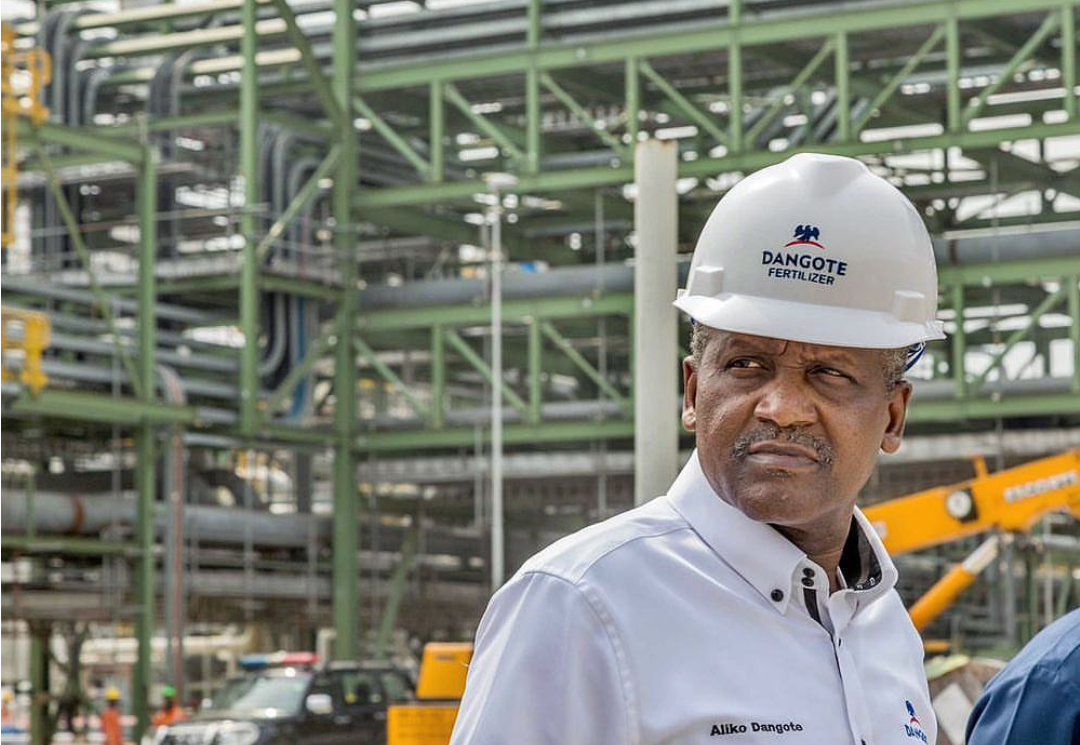
Kyari’s position only corroborated that of President of the Dangote Group, Aliko Dangote who said he was dissatisfied with the fact that Nigeria is a leading oil producer but imports all her petroleum needs.
Dangote who was speaking on his mega refinery project in Lagos said it was the unsavoury situation the nation found itself that made him to take up the challenge to embark on the construction of the gigantic refinery project, which he said is one of the biggest in the world.
According to him some 29,000 Nigerians would be employed in the refinery when completed and that would also help in the employment generation drive of the federal government.
Kyari, who was represented by the Group Executive Director, Downstream, NNPC, Adeyemi Adetunji, explained that the diversification of NNPC’s portfolio through acquisition of 20 per cent equity valued at $2.6 billion in the 650,000 bpd Dangote Refinery located in the Lekki Free Trade Zone would ensure national energy security and guarantee market for Nigeria’s 300,000 bpd.
He stated, “NNPC is adding 215,000 BPD of refining capacity through private sector driven co-location at the existing facilities in Warri Refining and Petrochemical Company (WRPC) and Port Harcourt Refining Company (PHRC) respectively. Modular refineries are also adding capacities such as the 5,000 BPD Waltersmith refinery, which will be upgraded to 50,000 BPD.
“Additional 250,000 BPD is expected to come from the Condensate Refineries through the private sector partnership. The co-location and Condensate refineries will close the PMS supply-demand gap and create positive returns to the investors,” the NNPC helmsman added.
He said the Corporation has progressed with the Refineries Rehabilitation Programme to boost its participation in the oil & gas value chain by awarding the $1.5 billion Port Harcourt rehabilitation contract with the commitment to deliver on Warri and Kaduna Refineries.
On gas commercialisation effort, Kyari said the Federal Government has declared 2021-2030 as the decade of gas development in Nigeria.
Kyari said the demand for natural gas could grow about four times over the next decade, increasing from 4.8 billion cubic feet per day (bcf/d) in 2020 to between 10 – 23 bcf/d in 2030.
He said currently, supply to the domestic market was about 8bcf/d to power, 0.77 bcf/d to industries, and about 54 bcf/d was flared, while 3.2 bcf/d was for export gas through the LNG and the West Africa Gas Pipeline (WAGP).
According to him, achieving this growth in demand would be occasioned by increasing the dispatchable capacity of existing power, in line with the Presidential Power Initiative, which is less than 1.4 bcf/d).
He added that the growth would be achieved through assuring delivery of major fertiliser projects (Dangote, Brass) 5 bcf/d), and enabling industrial demand for natural gas in the northern axis of the country (1.2 bcf/d).
On the global oil market outlook, Kyari said, “Some $10.4 trillion global stimulus in response to the COVID-19 pandemic has led to the rebound in consumers’ spending while incentives for long-term investments in hydro-carbon have waned.”
He stated that hydrocarbon would continue to be relevant in the global energy mix for the next two decades, quoting the recent data by the Organisation of Petroleum Exporting Countries (OPEC).
On the issue of downstream in transition, the NNPC boss noted that the Nigerian oil and gas industry has been in transition prior to the passage of the Petroleum Industry Bill (PIB), in response to the global energy transition and decarbonisation initiatives.
Kyari maintained that it would be difficult to discuss the transition in the downstream sub-sector in isolation from the overall evolution that was happening in the industry. He said NNPC had diversified its portfolio over the years, transiting to an energy company with new investments in gas, power, and renewables, pointing out that key pipeline projects are ongoing to assure delivery of gas to the demand nodes.
He stated, “The OB3 project, which brings gas from East to West, is nearing completion. The 614km Ajaokuta, Kaduna, Kano (AKK) project, which was launched by Mr. President in June 2020, is progressing very well. These could add up to $40 billion to annual GDP and create additional six million jobs.
“The corporation has progressed with the Refineries Rehabilitation Programme to further boost its participation in the Oil and Gas value chain by awarding the $1.5 billion Port Harcourt rehabilitation contract with the commitment to deliver on Warri and Kaduna Refineries.
“The rehabilitation of critical downstream infrastructure comprising of major pipelines, depots and terminals through the Build, Operate and Transfer (BOT) financing model is on course,” he added.
Kyari explained that the transition in Nigeria’s oil and gas sector was being driven by the global decarbonisation efforts to switch to renewables in response to environmental concerns.
As investments in hydrocarbon continued to wane due to energy transition and geopolitics, Kyari said the world economy faced shortages, high energy prices, rising inflation and sluggish growth.
Related
You may like
Business
Elumelu Named Chairman, Okon CEO in Landmark Seplat Energy Leadership Shake-Up
Published
2 days agoon
June 11, 2026By
Eric
By Shakirat Akintola
Seplat Energy Plc, one of Africa’s leading independent energy companies, has announced a sweeping overhaul of its top leadership. Billionaire investor Tony O. Elumelu, CFR, was named the company’s next Chairman while veteran energy executive, Engr. Effiong Okon will take over as Chief Executive Officer.
The dual-listed company (NGX: SEPLAT, LSE: SEPL) filed the notice on Tuesday, mapping out a comprehensive corporate succession plan designed to shepherd the energy giant into its next phase of growth under its ambitious “Roadmap 2030” strategy.
The New Guard: Back-to-Back Transitions
The changes will unfold in two distinct phases over the coming months to ensure strict governance continuity:
August 1, 2026: Engr. Effiong Okon will assume office as CEO and Executive Director, following the retirement of long-serving CEO Roger Brown on July 31, 2026.
<span;><span;>* January 1, 2027: Mr. Tony O. Elumelu will formally take over as Chairman of the Board, following the retirement of current Independent Chairman, Senator Udoma Udo Udoma, CON, on December 31, 2026.
End of a Transformational Era for Brown and Udoma
The outgoing leadership leaves behind a massively expanded corporate footprint. Outgoing CEO Roger Brown caps off a 13-year legacy with the firm, having served initially as CFO during Seplat’s landmark dual listing in Lagos and London in 2014, and subsequently as CEO for six years.
Under Brown’s stewardship, Seplat executed game-changing consolidations—most notably the 2019 acquisition of Eland Oil and Gas, and the 2024 blockbusting acquisition of Mobil Producing Nigeria Unlimited (MPNU).
Similarly, outgoing Chairman Senator Udoma Udo Udoma, who took the helm in April 2024, is credited with successfully stabilizing the board, steering the complex integration of the MPNU assets, and codifying the company’s 2030 corporate blueprint.
“Roger has been ever-present in Seplat Energy’s journey… he leaves us well-placed to continue to deliver for all our stakeholders,” Senator Udoma stated in the release.
Inside the Profiles of the Incoming Leaders
The incoming leadership pairs deep, hands-on operational grit with unparalleled pan-African macroeconomic influence.
Engr. Effiong Okon brings over 35 years of global energy experience to the CEO role. A former Shell heavyweight who managed major deepwater and shallow-water offshore assets, Okon is intimately familiar with Seplat, having previously served as its Operations Director and New Energy Director. Most recently, as Managing Director of the ANOH Gas Processing Company, he successfully steered the critical infrastructure project to its historic “first gas” milestone in January 2026.
Mr. Tony Elumelu, the Chairman-elect, stepped onto Seplat’s board in January 2026 after his investment firm, Heirs Energies, executed a landmark $500 million transaction to acquire a 20.07% stake in the company—cementing Heirs as Seplat’s single largest shareholder. As the Chairman of United Bank for Africa (UBA) and Transcorp Group, Elumelu brings a legendary track record of institutional building and value creation to the table.
Looking Toward 2030
The restructuring signals Seplat’s aggressive pivot toward domestic gas infrastructure development and carbon reduction. Incoming CEO Effiong Okon emphasized that his immediate priority would be “ensuring the Company executes the 2030 Roadmap” to unlock the raw value of its recently expanded portfolio.
For Elumelu, the appointment aligns with his core economic philosophy of Africapitalism—the belief that the private sector must lead the continent’s development through long-term investments.
“I firmly believe in the critical role indigenous resources play in the economic transformation of Nigeria and Africa,” Elumelu noted, signaling that under his chairmanship, Seplat will likely push harder to dominate the regional energy transition landscape.
The markets will be watching closely as the transition begins on August 1st.
Related
Business
UBA Foundation Marks World Environment Day 2026 with Tree-Planting Initiative
Published
5 days agoon
June 8, 2026By
Eric
In commemoration of World Environment Day 2026, the UBA Foundation, the Corporate Social Responsibility arm of United Bank for Africa (UBA) Group, has reinforced its commitment to environmental sustainability through a tree-planting exercise at two of Lagos’ most historic educational institutions – King’s College, Lagos, and CMS Grammar School, Bariga.
The exercise marks the commencement of the Foundation’s 2026 Tree Planting for Sustainability Initiative, which is being implemented across selected schools in Nigeria to promote environmental consciousness among young people and encourage climate-positive action.
Observed annually on June 5 and coordinated by the United Nations, World Environment Day is the world’s leading platform for environmental awareness and advocacy. The 2026 theme, “Inspired by Nature. For Climate. For Our Future,” underscores the urgent need for collective action to address climate change and environmental degradation.
Speaking during the exercise at CMS Grammar School, Managing Director/CEO, UBA Foundation, Bola Atta, described the initiative as a strategic investment in the future.
“We want young people to understand that the environment needs our collective support and protection. Through initiatives like this, we are encouraging the next generation to embrace sustainable practices that will help create healthier communities and a better future for all,” she said.
Now in its fourth year, the Tree Planting for Sustainability Initiative is designed to instill environmental responsibility in students by integrating sustainability practices into school communities and empowering young people to become environmental ambassadors.
Atta explained that the choice of King’s College and CMS Grammar School was deliberate, reflecting both institutions’ rich heritage and their capacity to sustain the initiative over time.
“These are iconic institutions with deep historical significance. CMS Grammar School is Nigeria’s oldest secondary school, while King’s College has been shaping leaders for more than a century. We wanted schools where these trees will be nurtured and allowed to flourish for generations to come,” she noted.
The initiative comes at a time when rapid urbanisation has continued to reduce green spaces across many Nigerian cities, highlighting the need for sustained environmental restoration efforts.
“Over the years, development has often taken precedence over environmental preservation, leading to the loss of many trees and green areas. However, there is no better time than now to begin restoring our environment and making a lasting impact,” Atta added.
The exercise forms part of UBA Group’s broader commitment to Environmental, Social and Governance (ESG) principles.
Speaking at the event, UBA’s Group Chief Risk Officer, Awele Ajibola, emphasized the importance of proactive environmental stewardship in addressing climate-related risks.
“At UBA, initiatives like this demonstrate our commitment to the environment and the communities we serve. Climate change presents real and growing risks, and as a responsible financial institution, we recognise our role in driving positive environmental action and sustainable development,” Ajibola stated.
The tree-planting exercise is one of several activities being implemented by the Group to commemorate #WED2026. Other activities include UBA’s inauguration as a member of the Finance Taskforce for Plastic Action in Nigeria, Green Talk sessions with customers across branches, the launch of Sustainability Clubs in participating schools, environmental awareness campaigns across the Bank’s communication platforms, and a month-long Green Challenge designed to encourage environmentally responsible behaviour.
Commending the initiative, Principal of CMS Grammar School, Revd. Jacob Ayokunle Ogunyinka, described the exercise as a practical extension of environmental education.
“Our students learn about the importance of trees and environmental conservation in the classroom. Seeing these principles demonstrated in practice deepens their understanding and inspires greater responsibility towards protecting the environment,” he said.
Similarly, Principal of King’s College, Magaji Zachariah, expressed appreciation to UBA Foundation for selecting the institution as one of the beneficiaries of the programme and for investing in environmental education.
Beyond planting trees, the Foundation engaged students in discussions on environmental stewardship, encouraging responsible practices such as proper waste disposal, water conservation, recycling, and energy efficiency.
Referencing the famous words of Nobel Laureate and environmentalist Wangari Maathai, Atta reminded participants of the importance of immediate action: “The best time to plant a tree was twenty years ago. The second-best time is now.”
UBA Foundation is the Corporate Social Responsibility arm of United Bank for Africa (UBA) Group. The Foundation is committed to the socio-economic development of communities across Africa through strategic interventions focused on education, environmental sustainability, economic empowerment, and special projects.
Related
Business
ESG in Africa: The Questions Defining the Future of Sustainable Business
Published
2 weeks agoon
June 1, 2026By
Admin
Across Africa, Environmental, Social, and Governance (ESG) conversations are no longer limited to multinational corporations or sustainability departments. ESG has become a strategic issue influencing investment decisions, regulatory expectations, organizational reputation, operational resilience, and long-term business sustainability.
As African economies continue to evolve, organizations are under increasing pressure to align profitability with environmental responsibility, social impact, ethical governance, and climate resilience.
This growing urgency is one of the reasons Audit, Advisory, Assurance & Assessment Services Ltd (A4S) continues to organize ESG trainings and professional development programs aimed at equipping African organizations and professionals with the knowledge, tools, and frameworks needed to navigate the future responsibly.
This article is based on a conversation with Edith Ugochukwu, Chief Operating Officer of Audit, Advisory, Assurance and Assessment Services Ltd (A4S).
1. Why is ESG becoming increasingly important for organizations in Africa?
For many years, ESG was often perceived in Africa as a “global trend” primarily relevant to large international corporations. However, the business landscape has changed significantly.
Today, investors, development finance institutions, regulators, customers, and global supply chains increasingly expect organizations to demonstrate responsible environmental practices, ethical governance systems, social accountability, and sustainability commitments.
African organizations are now operating in an environment shaped by: Climate-related risks, rising stakeholder expectations, Governance scrutiny, Youth unemployment concerns, Social inequality, Environmental degradation, Global sustainability standards, Responsible investment requirements
As a result, ESG is no longer optional, it has become a strategic business necessity.
Organizations with strong ESG systems are increasingly better positioned to:
- Attract investors and international funding
- Access global markets and partnerships
- Improve stakeholder trust
- Strengthen brand reputation
- Enhance operational resilience
- Reduce long-term risks
- Improve governance and accountability
- Support sustainable growth
One key message consistently emphasized in A4S ESG trainings is that ESG should not be treated as a public relations exercise. Effective ESG implementation must be integrated into organizational strategy, leadership decision-making, risk management, and operational culture.
In Africa particularly, ESG also presents an opportunity for organizations to contribute meaningfully to economic transformation, social inclusion, and sustainable development while remaining competitive globally.
2. Why do many African organizations still struggle with ESG implementation?
One of the biggest misconceptions about ESG is that awareness automatically translates into implementation. Across many African organizations, there is growing awareness of ESG concepts, but practical implementation remains a significant challenge.
Several factors contribute to this gap.
First, many organizations still lack a clear understanding of what ESG truly entails. ESG is often misunderstood as merely environmental compliance or corporate social responsibility (CSR). In reality, ESG is broader and includes:
- Climate management
- Ethical leadership
- Governance structures
- Human rights considerations
- Workplace practices
- Diversity and inclusion
- Risk management
- Sustainability reporting
- Community impact
- Supply chain responsibility
Another challenge is limited technical capacity. Many organizations lack trained professionals who can design, implement, measure, monitor, and report ESG initiatives effectively.
There are also concerns around: Data availability and quality, Inadequate reporting systems, weak governance culture, Limited sustainability policies, Short-term business focus, Regulatory inconsistencies, Funding limitations
In some cases, organizations approach ESG reactively, implementing initiatives only when required by regulators, investors, or international partners.
A4S ESG trainings aim to bridge this implementation gap by helping professionals understand not only the theory behind ESG, but also the practical strategies required to integrate ESG into real organizational systems and operations within African contexts.
The trainings emphasize practical application, African realities, case studies, risk-based thinking, governance alignment, and sustainability integration rather than abstract global concepts alone.
3. Why is ESG particularly critical for Africa’s future development?
Africa faces a unique combination of economic, environmental, and social challenges that make ESG especially important for the continent’s future.
The continent is highly vulnerable to climate change despite contributing relatively little to global carbon emissions. Many African countries are already experiencing:
- Flooding
- Desertification
- Food insecurity
- Water scarcity
- Extreme weather events
- Energy challenges
- Environmental degradation
At the same time, Africa has one of the world’s youngest populations, creating urgent demands for: Employment opportunities, Inclusive economic growth, Social equity, Ethical leadership, Sustainable infrastructure, Long-term development planning
This is where ESG becomes highly relevant.
Strong ESG systems can help organizations and institutions build more resilient economies by promoting: Sustainable business practices, Responsible resource management, Transparent governance, Ethical leadership, Community impact, Workforce wellbeing, Climate adaptation, Long-term value creation
A4S recognizes that Africa cannot simply copy ESG models developed in other regions without adapting them to African realities. This is why the organization continues to create platforms, trainings, and professional conversations focused on contextualizing ESG implementation for African organizations.
The objective is not merely compliance with global expectations, but building sustainable systems capable of supporting Africa’s long-term economic and social transformation.
4. What role does governance play in successful ESG implementation?
One of the most overlooked components of ESG discussions is governance, yet it is often the foundation upon which environmental and social performance depends.
Without strong governance systems, ESG initiatives frequently become inconsistent, unsustainable, or performative.
Governance within ESG includes: Leadership accountability, Ethical decision-making, Transparency, Risk management, Board oversight, Internal controls, Anti-corruption practices, Regulatory compliance, Organizational culture, Stakeholder engagement
Many organizations focus heavily on environmental or social activities while neglecting governance structures that ensure sustainability and accountability.
The reality is that poor governance undermines ESG performance.
For example:
- Weak governance can lead to environmental negligence.
- Lack of transparency can damage stakeholder trust.
- Poor accountability structures can increase compliance and reputational risks.
- Ineffective leadership commitment can prevent ESG initiatives from succeeding.
A4S ESG trainings consistently emphasize that ESG must be leadership-driven rather than department-driven. Boards, executives, and senior management teams must understand that ESG is not only about sustainability reporting, it is about how organizations are governed, managed, and positioned for long-term resilience.
Strong governance creates the structure necessary for meaningful ESG integration.
5. Why does A4S continue to organize ESG trainings for African professionals?
A4S recognizes that Africa’s sustainable future will depend heavily on the capacity of its professionals, institutions, and organizations to manage emerging ESG realities effectively.
The ESG landscape is evolving rapidly. Regulatory frameworks, investor expectations, sustainability standards, climate disclosures, and stakeholder demands continue to change globally. Many organizations across Africa are still trying to understand how these changes affect their operations and long-term sustainability.
This creates a growing need for practical ESG education and professional development.
A4S organizes ESG trainings to:
- Build ESG competence across industries
- Equip professionals with practical implementation skills
- Promote responsible governance practices
- Strengthen sustainability leadership
- Encourage integrated thinking
- Improve organizational resilience
- Prepare organizations for future regulatory and investor expectations
- Facilitate African-focused ESG conversations
The trainings are also designed to encourage collaboration among professionals from different sectors including: Manufacturing, Energy, Financial services, Education, Consulting, Oil and gas, Public sector institutions, Sustainability and compliance functions
Most importantly, A4S believes ESG conversations in Africa should move beyond trends and buzzwords toward practical action, measurable impact, and sustainable systems that address African realities.
As ESG continues to shape the future of business globally, African organizations that invest early in sustainability competence, governance maturity, climate resilience, and responsible business practices will likely be better positioned for long-term success.
The future of ESG in Africa will not be built by policies alone — it will be built by informed professionals, responsible leadership, and organizations willing to transform how business is done across the continent.
Related


Sowore ‘Slumps’ Amid Police Teargas During Abuja Protest
Friday Sermon: Terrorism the Curse of Islam 2
Senate Orders DSS, Police to Hunt Bandits Flaunting Crime on Social Media
Global Stage, Local Heart: Davido Champions Justice for Kidnapped Oyo Schoolchildren at FIFA Concert
June 12: Tinubu’s Govt Killing Democracy in Nigeria, Atiku Warns
Reps Pass State Police Bill
N210trn Audit Query: Senate Orders Arrest of NNPC Ex-GMD Mele Kyari
All White Service of Songs As Celebrities Bid Alex Ekubo Farewell
Lessons from 2019, 2023 Elections: Why Atiku Abubakar Needs Dele Momodu As Running Mate
UBA Foundation Marks World Environment Day 2026 with Tree-Planting Initiative
The Dark Link Between the Forest Cartels and the Ballot
Voice of Emancipation: Oyo Kidnapping: Another One Too Many
Why Dele Momodu May Be Atiku’s Smartest Running Mate Option Yet
Tech and Humanity: The Long Walk to School
Trending
-
Entertainment2 days agoAll White Service of Songs As Celebrities Bid Alex Ekubo Farewell
-
Opinion5 days agoLessons from 2019, 2023 Elections: Why Atiku Abubakar Needs Dele Momodu As Running Mate
-
Business5 days agoUBA Foundation Marks World Environment Day 2026 with Tree-Planting Initiative
-
Opinion5 days agoThe Dark Link Between the Forest Cartels and the Ballot
-
Voice of Emancipation6 days agoVoice of Emancipation: Oyo Kidnapping: Another One Too Many
-
Opinion4 days agoWhy Dele Momodu May Be Atiku’s Smartest Running Mate Option Yet
-
Tech and Humanity5 days agoTech and Humanity: The Long Walk to School
-
Opinion4 days agoThe Bridge Nigeria Needs: Reflections on Leadership, National Unity, and the Ati-Dele Conversation