
Headline
Who is Afraid of Aliko Dangote?

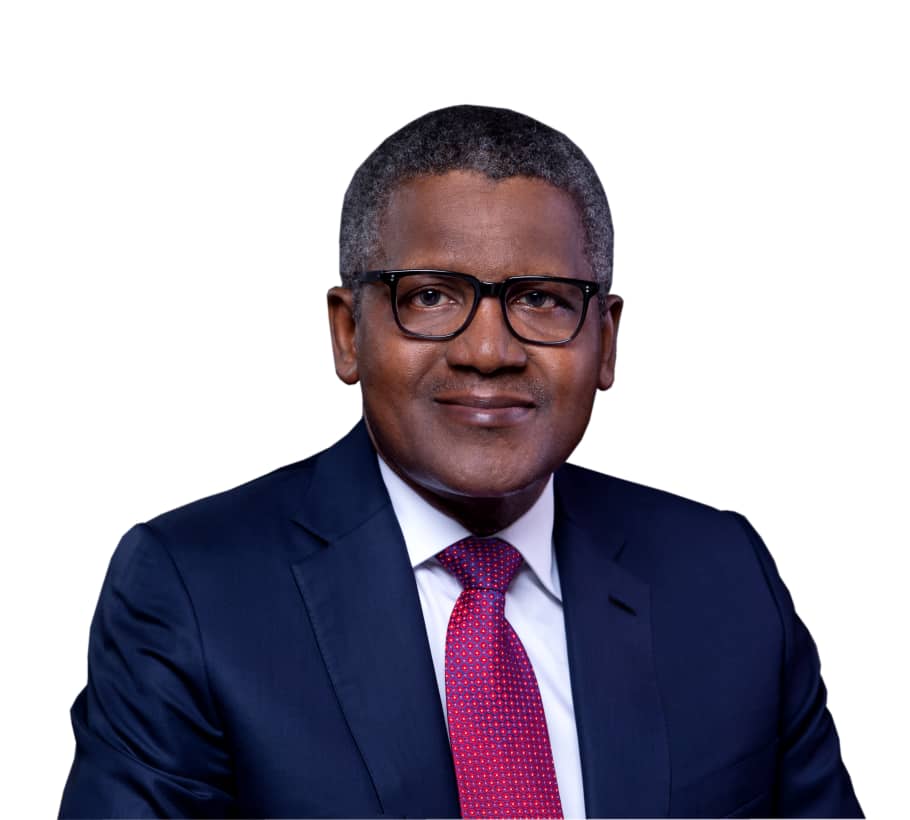

By Eric Elezuo
He has remained Africa’s richest man for as long as anyone can remember, and in many quarters, his business acumen has been applauded. It is therefore, not a fluke that the President of Dangote Group and Africa’s richest man, Alhaji Aliko Dangote, was able to concentualise and brought to fruition the gigantic oil refinery and fertilizer plant projects, domiciled at the Lekki axis of Lagos State, Nigeria.
The refinery which has neared its completion has already started to draw attention of investors chiefly among them the government of Nigeria through the Nigeria National Petroleum Corporation (NNPC). The Corporation has come up with a plan to acquire 20 per cent of the refinery, which according to it, is for the purpose of making the product accessible and available to Nigerians. The plans brought forward by the NNPC opened a vista of questions on whether the entity among others, is intimidated at the growing fortunes of Dangote and his chain of industries, the refinery inclusive.
Without any shadow of doubt, Dangote Refinery was built with the future in mind and that is why as part of the project a residential facility to accommodate its staff was constructed.
So far, accommodation for over 30,000 workers is ready as well as those for 2,000 Managers. In addition, site offices, warehouses and lay-down areas have been completed. It is a massive project.
This forward-thinking policy of Dangote Group helped the company in no small measure during the COVID-19 lockdown of 2020. Because it had these accommodation facilities in place, it was able to safely monitor and house many of its staff which ensured that the disruption to its operations was minimal.

The Refinery Project will definitely have tremendous benefit to the country.
The benefits include: Technology transfer, employment, power generation, professional development, production of petrochemicals, increased demand for domestic crude. unhindered availability of the product, development of local area and ancillary industries, availability of high quality products (Euro V Grade), annual Foreign Exchange earnings from exports of USD 5.5 billion and annual Foreign Exchange Saving from import substitution of USD 7.5 billion.
It is therefore, not a surprise that NNPC is indeed interested in a piece of the action as the refinery unfolds, and begins operations in no distant time.


The Dangote Petroleum Refinery has the capacity to meet 100% of the Nigerian requirement of all refined products (Gasoline, 57 million litres per day; Diesel, 27 litres per day; Kerosene, 11 million litres per day and Aviation Jet, 9 million litres per day) and also have surplus of each of these products for export.
The 400 MW Power Plant in the Refinery alone will be able to meet the total power requirement of Ibadan DisCo of 860,316 MWh covering five States including Oyo, Ogun, Osun, Kwara and Ekiti. A Captive Power plant comprising three Steam Turbine Generators of 40 MW capacity each, making a Total of 120 MW is also part of the package.
In addition, the Refinery will create market for $11 billion per annum of Nigerian Crude. Interestingly, the facility is designed for 100% Nigerian Crude with flexibility to process other crudes. Of course, its strategically located marine infrastructure for Crude receipts & product trade is an added advantage.
Also part of this humongous project is the Dangote Fertilizer Plant which will have two of the World’s Largest Fertilizer Trains – Three Million Tonnes per Annum capacity at 1.5m per train. It is bigger than the 1.4 million tonnes per annum of the former champion, Indorama Fertilizer Limited.
The Fertilizer Project is the largest Granulated Urea Fertilizer complex coming up in the entire fertilizer industry history in the world, with an investment of $2 Billion (Two billion US Dollars).
Why NNPC is following in the footsteps of Saudi Aramco
Following the massive impact of Dangote Refinery, the NNPC is following in the footsteps of successful National Oil Companies (NOCs) in acquiring stakes in refineries across the world.
Saudi Aramco has been buying up stakes in refineries outside its shores as part of its plan to boost its refining capacity to up to 10 million b/d in the long term from around 5 million now. The company currently owns and has stakes in four refineries abroad with a total refining capacity exceeding 2 million b/d.
In 2019, Saudi Aramco started talks to acquire a 20% stake in Mukesh Ambani group’s oil refining unit (Reliance). Reliance has a refining capacity of 1.2 million barrels per day. The deal was delayed due to the fallout of the pandemic but talks have recently restarted.
In 2017, Rosneft (an oil company controlled by the Russian Government), acquired a 49% stake in India’s Essar refinery. The Essar refinery has a capacity of 400 thousand barrels per day.
One might wonder why such leading NOCs are embarking on acquisition of refining capacity across the world. Well the answer is simple – the structure of the oil industry shifted in 2014, from supply tightness to supply surplus. This was due to the boom in the production of shale oil in the US. The industry is facing further structural shifts as the world embarks on an energy transition away from oil in order to reduce carbon emissions. With this demand shift, it is increasingly vital for oil producers to have a guaranteed buyer for their crude and this is where the refineries come in. In periods of stress, oil producers can be left with stranded cargoes looking for buyers as happened in 2020. With a refining capacity of 10m barrels across the world, Saudi Aramco is assured of a buyer for their crude oil production. With an acquisition of a 20% stake in the Dangote refinery, NNPC is embarking on a similar journey.
Secondly, when the PIB eventually gets passed, NNPC will transition from a parastatal to a private company owned by Nigerians. The new NNPC will go to the capital market to source for capital to fund its investments and will have to deliver adequate returns to sustain its operations. It is therefore forward thinking from the NNPC management to get in early and acquire a stake in a very attractive investment opportunity like the Dangote refinery.
Dangote Refinery at a Glance
• The Dangote Petroleum Refinery is located in the South-East of the Lekki Free Trade Zone (FTZ) in Ibeju-Lekki, Lagos, covering a land area of approximately 2,635 hectares (six times the size of Victoria Island). The following projects are within the Lekki FTZ:
• Largest Single Train Petroleum Refinery in the World – 650,000 barrels-per-day (more than enough to meet Nigeria’s petrol needs and for export)
• Two of the World’s Largest Fertilizer Trains – 3 Million Tonnes per Annum (It is bigger than the 1.4 million tonnes per annum Indorama Fertilizer Limited).
• Largest Sub-Sea Pipeline Infrastructure in any country in the World – 1,100 kilometres to handle 3 Billion Standard Cubic Foot of gas per day.
• The 400 MW Power Plant in the Refinery alone will be able to meet the total power requirement of Ibadan DisCo of 860,316 MWh covering five States including Oyo, Ogun, Osun, Kwara and Ekiti.
• Dangote Petroleum Refinery can meet 100% of the Nigerian requirement of all refined products (Gasoline, 57 million litres per day; Diesel, 27 litres per day; Kerosene, 11 million litres per day and Aviation Jet, 9 million litres per day) and also have surplus of each of these products for export.
• $12 Billion Investment estimated by Dangote.
• Creates market for $11 billion per annum of Nigerian Crude.
• Designed for 100% Nigerian Crude with flexibility to process other crudes.
• Strategically located marine infrastructure for Crude receipts & product trade.
Concrete Requirement Quantity, m3
Concrete for Piling (105,000 piles including expansion) 460,000
Residual Catalytic Cracking sub-structure 400,000
Residual Catalytic Cracking sub-structure 100,000
Pavement in Plant Areas 150,000
Buildings (Plant & Non Plant) 90,000
Infra Works (Roads, Drains, etc) 610,00
• At thickness of 9 inches, 16 metres wide, the concrete required for the Refinery project is enough to pave the entire Federal Roads in Lagos (720KM).
Over Dimensional Cargo (ODC) Dangote has brought in several over dimensional cargoes due the size of the refinery project. Two weeks ago, the company took delivery of Crude Distillation Column, a piece of equipment which has the length of a soccer field and the weight of 320 large elephants.
Building Local Capacity
• Dangote has employed over 10,000 Nigerian personnel on site. Employment by the various contractors and subcontractors at the site is 7,500. The current ratio of Nigerians to Expatriates is 93% Nigerians to 7% Expats.
• A total of 900 Nigerian Engineers to be trained in design, engineering and design of the refinery. There are currently other Engineers currently under-going training.
• The company recently completed the training of 200 artisans selected from the host communities in the areas of Masonry, Carpentry, AC Electricians, Plumbing, Welders, Iron-benders and Auto Mechanics. This was achieved in collaboration with the Nigerian Directorate of Employment and Nigerian Content Development and Monitoring Board. (This is one of Dangote Refinery’s Corporate Social Responsibility programmes within the host communities).
Benefits of Refinery in Nigeria
• Technology.
• Employment.
• Generation of power.
• Professional development.
• Production of petrochemicals.
• Increased demand for domestic crude.
• Unhindered availability of the product.
• Development of local area and ancillary industries
• Availability of high quality products (Euro V Grade).
• Annual Foreign Exchange earnings from exports of USD 5.5 Billion.
• Annual Foreign Exchange Saving from import substitution of USD 7.5 Billion.
Site Accommodation & Other Infrastructure
• 63,000 – Peak manpower is estimated to complete the scope.
• Site office, Warehouse, Laydown Areas completed
• Accommodation for 16,000 workmen has been made ready.
• Accommodation for 20,000 work men and 2,000 Managers is ready.
• Local accommodation is available in plenty around Lekki Free Trade Zone.
• Lots of large housing complexes have come up in last 4 years considering Project demand.
Dangote Fertilizer Plant at a Glance
Dangote Industries Limited is constructing the largest fertiliser Plant in West Africa.
• Dangote Fertilizer Project is the largest Granulated Urea Fertilizer complex coming up in the entire fertilizer industry history in the world, with an investment of USD 2.0 Billion capacity of 3 Mil TPA.
• The Dangote Fertilizer complex consists of Ammonia and Urea plants With associated facilities and infrastructure to produce 3 MMTPA Urea, the complex envisages:
• 2 x 2,200 MTPD Ammonia Plants based on Halder Topsoe technology
• 2 x 4,000 MTPD Melt Urea Plants based on Snamprogetti technology
• 2 x 4,000 MTPD Urea Granulation Plants based on Uhde Technology
• A Captive Power plant comprising of 3 Steam Turbine Generators of 40 MW capacity each, making a Total of 120 MW
East-West Offshore Gas Gathering System (EWOGGS)
• For decades, Nigeria has been accused of polluting the atmosphere by flaring gas while the country itself has been facing shortage of gas.
• EWOGGS pipeline project will unlock significant gas supply for industry and will considerably reduce flaring
• Power Plants, Fertilizer, Refinery and Petrochemical Projects and others will benefit from this gas supply
• Pipeline Dimensions, 2 x 38” x 550 kilometre
• Pipe Capacity, 2 x 1,512 Million Standard Cubic Feet/day Benefits of EWOGGS
• Gas will be readily available for commercial use. This nullifies the need for future gas import • Leads to diversification of Nigeria’s economy.
• Ensures increased government revenue (and meet demand for domestic petrochemical products)
• Increase in FX from exports.
• Creation of direct and indirect jobs
Dangote Assures Tanzania
Dangote has continued to maintain a larger than life image, striding the African continent like a colossus, and meeting the day to day needs of African nations and people. During the week, the billionaire businessman was in Tanzania, where he assured the new President, Samia Suhulu that Dangote group will increase its investment in the country and inform investors all over the world, that Tanzania is now a place to invest. Dangote currently has invested about $770million in Tanzania.
He lauded the new President investors’ friendly policies since she assumed office and insisted that while the Government’s role is to provide a conducive environment for investment, it is the role of private sectors to create jobs that will eventually lead to the growth and development of any nation.
Dangote said: “I congratulate her for the shift changes that she is doing here in Tanzania and also to assure her that we will continue to invest in Tanzania to help create jobs, wealth and prosperity for the people of Tanzania. I think she needs that support and we have reassured her that we will continue to establish here in Tanzania to support what she is doing…she can only do policies, it is not the job of government to create jobs. We will help her to invest and create jobs in Tanzania. We are looking at other areas, maybe fertilizer and other investment opportunities here in Tanzania but you can be rest assured that, with the discussion that we had with her, we will look for other opportunities to help her to make sure that this her vision and dream will come through.”
Promising to be a talk to investors about the prospects in Tanzania, Dangote said “I think the business environment here has changed dramatically, I mean, things are opening up and I can assure you that not only here in Tanzania, but I will now be the champion of Tanzania wherever I go and tell people that things have changed and that everybody should come back and invest heavily here in Tanzania.”
Dangote’s 3.0Mta plant in Mtwara – about 400km from Dar es Salaam – was commissioned in December 2015 and is the largest cement factory in Tanzania. With about 500 million tonnes of limestone reserves, enough for 149 years, the plant is capable of producing large amounts of high-quality 32.5 and 42.5 grade cements to meet local market needs at competitive prices, as well as surrounding export markets by sea.
In 2019 Dangote cement company was able to sustain 54,000 jobs in four African countries, where the company has its operations. The countries are: Nigeria, Ethiopia, Senegal, and South Africa.
It is not by chance that Dangote Group is said to be the highest employer of labour in Nigeria, outside the Federal Government, and with its Refinery project upcoming, the company will have more than 100,000 Nigerians under his employment.
Dangote Fertilizer Trains Farmers in South East
Again, Dangote Fertilizer has promised to train farmers in the South East geopolitical zone on better ways of farming to obtain bumper yields, and this has received commendations from the Enugu Chamber of Commerce, Industry, Mines and Agriculture (ECCIMA).
A representative of Dangote Fertilizer, Mr. Ekene Obiefuna, in his presentation at the 2021 Enugu International Trade fair said that with the training on the best ways of applying fertilizer, farming will become very lucrative and attract more people to embrace it as a means of livelihood.
He explained that the fertilizer company which has commenced operations has the capacity to meet and exceed the domestic demand for fertilizer across the country. According to Obiefuna, farmers in the country especially in the South East are to benefit immensely from the company as there will be soil tests to determine the appropriate fertilizer type and quantity to be applied as to produce a bumper harvest.
President of Council, ECCIMA, Mr. Emeka Nwandu said that the entrepreneur had through his company, Dangote Group, added a lot value to the nation’s economy, operating in almost every sector of the economy.
Nwandu was represented by a council member Mr. Nonye Osakwe, said the company had showed “great level and high degree of vision, creative thinking, research, innovation, doggedness, handwork and industry.
“Today, Dangote business and entrepreneurship indulgence has spread to many parts of African continent, employing thousands of people across the world of which not less than 85 per cent are Nigerians.
“As we look forward to Dangote Refinery coming on stream, we believe it will go a long way in addressing the challenges and problems associated with availability and cost of refined petroleum products in Nigeria.
“I have no doubt that in the years to come, Dangote Group will become not just a big industrial player in Nigeria and Africa, but also the entire globe, deepening the creation of wealth and employment generation”, he added.
The ECCIMA President then gave the assurance that the council would continue to partner with the industry to be endearing as well as grow from strength to strength.
Speaking on behalf of Dangote Industries Limited, Bankole George, promised to maintain the partnership with ECCIMA to stimulate economic activities in the South East.
Dangote Refinery Will Sell Refined Crude in Naira, Says Emefiele
One of the beautiful stories emerging from the refinery project is the fact that refined petroleum products would be sold in Naira when it commences production. The Central Bank of Nigeria (CBN), governor, Mr. Godwin Emefiele, gave the assurance during an inspection tour of the sites of Dangote Refinery, Petrochemicals Complex, Fertiliser Plant and Subsea Gas Pipeline projects at Ibeju Lekki, Lagos.
The CBN governor noted that the 15 billion dollar projects being constructed by the Dangote Group would save Nigeria from expending about 41 per cent of its foreign exchange on importation of petroleum products.
“Based on agreement and discussions with the Nigerian National Petroleum Corporation and the oil companies, the Dangote Refinery can buy its crude in naira, refine it, and produce it for Nigerians’ use in naira,” Mr Emefiele said.
“That is the element where foreign exchange is saved for the country becomes very clear. We are also very optimistic that by refining this product here in Nigeria, all those costs associated with either demurrage from import, costs associated with freight will be totally eliminated.’
The apex bank governor explained that this will make the price of Nigeria’s petroleum products cheaper in naira.
“If we are lucky that what the refinery produces is more than we need locally you will see Nigerian businessmen buying small vessels to take them to our West African neighbours to sell to them in naira,” Mr Emefiele said.
In his remarks, Chair of Dangote groups, Aliko Dangote, said that the fertiliser and petrochemicals plants were capable of generating 2.5 billion dollars annually while the refinery would serve Nigeria and other countries across the world.
Mr Dangote said the projects would create jobs for Nigerians and build their capacity in critical areas of the oil and gas industry.
“During the coronavirus, you will remember that we had one or two cases when it started and everybody ran away from site but right now we are beginning to bring people back and we have about 30,000 people now.
“The good part of it is that we have learnt a lot also and there are a lot of Nigerians that just need small training and they are doing extremely well. So now we only need a small number of people coming from abroad just to give that training.”
It is therefore not surprising that anyone would be interested in this sweet pie called Dangote Group, and so the question again, who is afraid of Aliko Dangote, who is afraid of the Dangote Group
However, a lot will still be put in place to make the refinery the power house it is meant to be and that includes the speedy passage of the Petroleum Industry Bill currently before the National Assembly to maximise the opportunities in the Nigerian oil and gas sector.
The coming days look good for Nigeria with Dangote Group doing what they know best.
The Aliko Dangote Foundation and Impacts
Aliko Dangote Foundation (ADF) is the private charitable foundation of Alhaji Aliko Dangote. Incorporated in 1994, as Dangote Foundation, with the mission to enhance opportunities for social change through strategic investments that improve health and wellbeing, promote quality education, and broaden economic empowerment opportunities. 20 years later, the Foundation has become the largest private Foundation in sub-Saharan Africa, with the largest endowment by a single African donor.
The primary focus of ADF is child nutrition, with wraparound interventions centered on health, education and empowerment, and disaster relief. The Foundation also supports stand-alone projects with the potential for significant social impact.
The Foundation works with state and national governments and many highly reputable international and domestic charities, non-governmental organizations and international agencies to advance its humanitarian agenda.
In one of its biggest collaboration to date, Aliko Dangote Foundation started working in partnership with the Bill and Melinda Gates Foundation and key northern State Governments in Nigeria from 2013 to eradicate polio and strengthen routine immunization in Nigeria.
His commitment to the health and wellbeing of the world is second to none, and it is on record that his CSR in the health sector has transcended numerals. The ADF, beyond the health sector, has made landmark achievements in the field of education, where it has affected the development of educational infrastructures of many tertiatiary institutions including Ahmadu Bello University, Zaria; Bayero University Kano; Kano State University of Science & Technology, Wudil and University of Ibadan. The construction of a N1.2 Billion Dangote Business School, Bayero University Kano, Kano State, construction of a N1.2 Billion Dormitories in Ahmadu Bello University, Zaria, Kaduna State, construction of Dormitories and provision of power supply to Kano University of Science and Technology, Wudil, Kano State at the cost of N500 Million, construction of Dormitories in Crescent University, Abeokuta, Ogun State, and construction of Aliko Dangote Complex within the premises of University of Ibadan Business School, Ibadan, Oyo State, are just few examples.
Additionally, the ADF has engaged in Economic Empowerment at various levels through the Aliko Dangote Foundation Micro-grant programme, which is a N10 Billion national programme, launched in 2011, and designed to provide a N10,000 one-off grant to at least 1,000 vulnerable women, and in some cases, youths, in each of the 774 LGAs across Nigeria.
Worthy of praise is the fact that for the past seven years, the Foundation has spent over N7 Billion in the course of feeding, clothing and the general welfare of the Internally Displaced Persons in the Northeast. Dangote’s efforts at providing relief has drawn a lot of accolades.
Aliko Dangote Foundation was there in 2014 to help the government to contain the Ebola virus outbreak as well as when there ethnic crisis in Ife in 2017.
Rightly addressed as an international philanthropist, Dangote’s interventions are felt across the world. Some of the are building and equipping of Children’s hospital in Abidjan, Grand Heart Foundation – Chad, ONE Campaign, Emergency response to meningitis outbreak in Niger Republic, Donation of mobile clinics to serve 5 counties in Kenya, Emergency response to victims of earthquake in Nepal, Global Business Coalition for Education, and Sustainable Development Goal – Center for Africa – Rwanda.
More CSRs by the Dangote Group
To make his host communities feel at ease, and the impact of his presence, Dangote has embarked on an initiative to provide further support to improving educational systems in Ibeju-Lekki and Epe locality. The educational support initiative is a tripartite programme consisting of scholarship, capacity building for teachers and school infrastructure projects.
In addition, Scholarships have been awarded to 52 secondary school students whilst some financial support was provided to their parents and/or guardians. Tertiary students will be included in the next batch of the scheme.
Furthermore, about 100 teachers, principals and school administrators were trained in teaching techniques for the 21st century. After which they were monitored in class on how they were using the skills acquired.
Still on education, the company plans to renovate existing structures, building new schools, donating school furniture and equipment etc. This component of the education support initiative is on the verge of taking off.
Already, it has constructed a block of 6 classrooms with restroom facilities and staff rooms. This was handed over at a formal ceremony in December 2020.
Youth development was also an area it took seriously. 400 local youths have been trained in two batches of 200 beneficiaries per batch. They are being trained on acquiring vocational skills such as plumbing, masonry, welding, iron bending, auto mechanics and electrical works. First batch of trainees graduated in September 2020 and some of them have been engaged; 2nd batch of trainees will graduate in February 2021.
It also organized programmes to build the capacity of local institutions such as the Community Development Committee (CDC), Project Implementation Committee(PIC), local leaders, youth leaders etc. on various subject areas such as stakeholder engagement, advocacy, networking, conflict resolution and negotiation, presentation skills, influx and impact of influx etc.
There is hardly any sector that has not felt the milk of human kindness running through Aliko Dangote; the military, media, politicians, governments across boards and more.
Dangote is surely an asset to this world!





Senate Passes Bill Establishing State Police in Nigeria

US Govt Releases Names of Terrorism Financiers Amid Growing Insecurity

How I Made Buhari President in 2015 – Amaechi

Presidential Ambition: Is Donald Duke a Spoiler?

Insecurity: Why Tinubu Must Wake Up

The Stockholm Syndrome in the Delta


