Opinion
Opinion: Green in their Eyes by Mayor Akinpelu
Published
6 years agoon
By
Eric
The recent developments in the ruling All Progressives Congress (APC) have created a storm. The former chairman of the party, Comrade Adams Oshiomhole failed to learn from the age-long advice that a good General does not fight on all fronts. Those who refused in history to heed this advice had always had cause to regret their decisions.
Napoleon Bonaparte and Adolf Hitler, two of the greatest military strategists learned the hard way.
Adams Oshiomhole had many enemies in APC, especially the governors led by the chairman of Governors’ Forum, Dr. Kayode Fayemi, the governor of Ekiti State. Though efforts were made in the past to remove Oshiomhole from office, he survived it until he decided to wrestle in the mud with his godson, Governor Godwin Obaseki of Edo State. Naturally, the disagreements, suspensions and court battles threatened to destroy the party.
However, in order to save the party, the president, Muhammadu Buhari succumbed to the pressure from the governors and a national executive committee meeting of the party was convened at the Villa. At that meeting, major decisions were taken, one of which was the dissolution of the party’s national working committee (NWC) and an interim committee put in place which is to organize an emergency convention. That was how Oshiomhole became history.
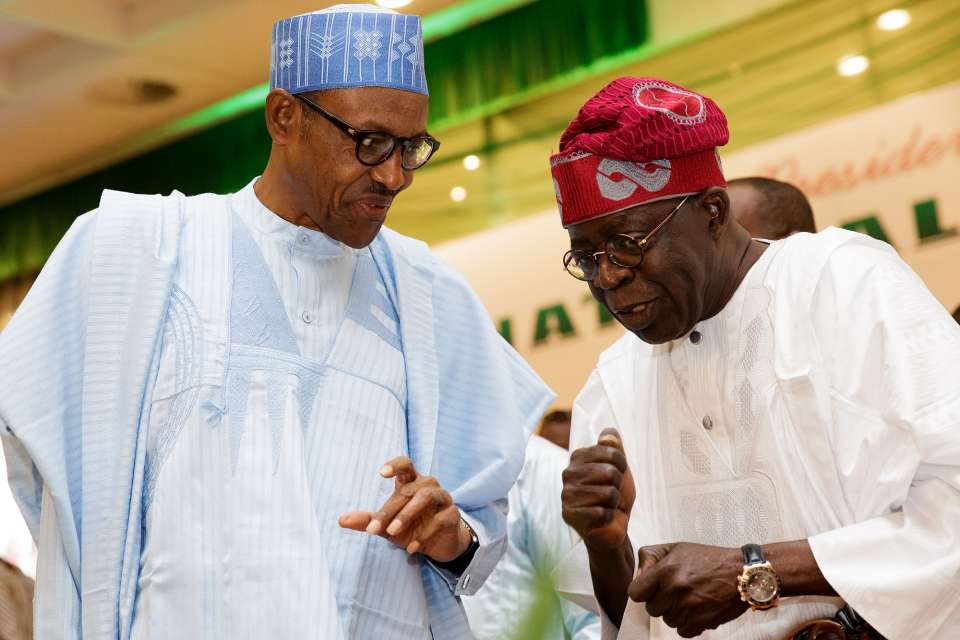
Though Oshiomhole lost his chairmanship of the party, many believed the national leader of the party, Asiwaju Bola Ahmed Tinubu was the big loser in that power game. In fact, many commentators believed he was the target of that coup and that the battle for the soul of the party as it concerns the 2023 presidential elections has begun.
Leading the criticisms against Tinubu was former minister of Aviation, Femi Fani-Kayode. In an open letter to Tinubu, Fani-Kayode advised Tinubu to quit politics. He said he warned him that the northern political establishment could not be trusted and that they would use him and dump him. He argued that Tinubu had been humiliated.
Another critic was a respected Yoruba elder, Pa Ayo Adebanjo, an Afenifere chieftain. Adebanjo also said he warned Tinubu not to go into alliance with President Buhari, that the Fulanis could not be trusted. He then advised that to salvage whatever remains of his pride, Tinubu should resign from APC.
The Aare Onakakanfo of Yorubaland, Iba Ganiyu Adams is another critic. In an interview that went viral in the media, Gani criticized Tinubu for not believing in the Yoruba cause and that he is only interested in what he can benefit. He said what has happened to Tinubu in the APC is poetic justice.
Are these personalities justified in their arguments? No. If you ask Tinubu to resign from APC or leave politics altogether, what is the alternative? Is it to join the PDP, form a new party? I beg to disagree.
Political party is a vehicle to capture power. What was the situation of things in Yorubaland before APC was formed? Despite the fact that Tinubu’s party, the Action Congress of Nigeria (ACN) supported former President Goodluck Jonathan at the time, the Yorubas were shut out from the government that was formed afterwards. I cannot recall any major position held by a Yoruba man, or woman in that government.
So, Tinubu had no choice but to go into alliance if he was to get involved at the centre.
We should also remember that the Yorubas as a political bloc have always desired power at the centre which had eluded them. The late Chief Obafemi Awolowo made efforts to be at the centre, he did not succeed. Late MKO Abiola who won election was not allowed to benefit from the mandate given to him by Nigerians. Another top Yoruba man, Chief Olusegun Obasanjo who became president was installed by the northern political interest, not by his people. It is instructive to note that Obasanjo lost his ward in the first election in 1999 because he was not the candidate of his people. Chief Olu Falae was the Yoruba candidate in that election. If Asiwaju Tinubu was serious about seizing power from PDP, it was obvious he had to go into alliance or he would remain a regional champion. So, his going into alliance with the General Muhammadu Buhari-led Congress for Progressive Change (CPC) made political sense.
Buhari had always won majority votes in the north. What he needed was a strategic partner who could get him across the line. Tinubu’s ACN, along with some elements in the All Nigeria Peoples Party (ANPP) and the New PDP came together and defeated Goodluck Jonathan to seize power at the centre.
Were there benefits therefrom? Several.
The Yoruba moved freely into the mainstream and were adequately rewarded, especially in the first four years of the Buhari government. They were given strategic positions in government including the vice presidency and a super minister who was in charge of three key ministries. The ministry budget of the former Lagos State governor, Raji Fashola (SAN) who was in charge of power, works and housing was more than the budget of many states. The Yorubas were also appointed into various positions across board. So, how could joining that alliance be a mistake? What was the position of things before the alliance? It is always good to put things in proper perspective.
It was true that Chief Odigie Oyegun as chairman of APC did not protect Asiwaju Tinubu’s interest. What happened in Ondo during the primaries that brought out Governor Rotimi Akeredolu and how Tinubu’s candidate in Kogi was not allowed to be governor of that state proved that point. It was common knowledge that Tinubu fought for the removal of Chief Oyegun and played a prominent role in making Oshiomhole chairman of APC. As we move towards 2023, whoever is in control of the party is at an advantage. So, Oshiomhole not being the chairman of the party is a major setback for Tinubu, no doubt. But that is not enough reason to write him off.
Tinubu is a master strategist. I witnessed his brilliance in this regard first hand. In 2003 when he was seeking reelection as governor of Lagos State, I was privileged to be the co-chair of the media committee for his reelection. President Olusegun Obasanjo of PDP approached Pa Abraham Adesanya, the Afenifere leader for an agreement. Obasanjo said that as a Yoruba man, the southwest should support him in the presidential election while they would support the ACN governors to retain their seats in the southwest. The Afenifere leadership agreed. However, Tinubu saw through that deal and refused to support it. He said it was a ruse and that we should continue working, there was no agreement. The leadership of Afenifere felt slighted that Tinubu didn’t go along with them. They publicly endorsed other southwest governors except Tinubu, telling him he was on his own. And what happened afterwards? A political tsunami swept through the southwest geo-political zone. All the governors elected on the ACN platform except Tinubu lost their reelection bid. Tinubu was the lone survivor.
The journey to get into the mainstream started when Tinubu was the Lagos State governor. The first person he sent forth was his then chief of staff who is now minister of Information, Alhaji Lai Muhammed. Lai Muhammed resigned as chief of staff and ran for governorship in Kwara State. Though he was not successful at the time, the seed of what made it possible to take Kwara from PDP in the 2019 general elections was sown at that time. The next person in that project was Ogbeni Rauf Aregbesola who was his commissioner for Works. Like Lai Muhammed, Aregbesola started the Oranmiyan project to take over Osun State from PDP. He succeeded and became two-term governor of Osun State.
So, Tinubu should not be written off. His ability to make himself relevant despite numerous coups against him is commendable. For somebody who left power since 2007 to still be relevant means there are certain things that he is doing right. I think it is because he is different from most politicians around.
The hallmark of a good leader is the ability to recognize talent. Tinubu is a talent hunter. He surrounds himself with brilliant people who get things done for him. And he rewards loyalty. Many who follow him have no cause to regret. His foot soldiers are everywhere in the political space. He is also a Machiavellian leader. There is no doubt who is in charge and he would move against you big time if you step out of line.
So, all the criticisms about him leaving the party or politics because he has been used and dumped is hogwash. It is sheer jealousy.
Despite several controversies that seem to follow his trail, he is undoubtedly the most powerful politician in Yorubaland today. Despite the fact that a former president, Olusegun Obasanjo, a distinguished Yoruba man is alive and well, Tinubu is the most powerful Yoruba politician around. Yet he left power 13 years ago!
Even if Tinubu does not become president in 2023, his place in history is assured. In politics, you win some, you lose some. There is no doubt that removing Oshiomhole as chairman of APC is a huge setback for Tinubu, However, it is premature to write him off politically.
Those criticizing him only have green in their eyes.
Related
You may like
Opinion
Packed Centres and Penalty Heartbreak: How UCL Final Captured the City’s Imagination
Published
1 day agoon
June 6, 2026By
Eric
By Shakirat Akintola
The undeniable magnetic pull of elite European football was on full display as thousands of local enthusiasts filled viewing hubs, sports lounges, and open-air centers across Cities to witness the 2026 UEFA Champions League Final. The high-stakes encounter between Paris Saint-Germain and Arsenal effectively transformed standard weekend spots into arenas of intense passion and collective suspense.
Long before the 8:00 PM kickoff, popular viewing venues across the municipality were already recording unprecedented turnouts. Seats were fully booked hours in advance, prompting operators to arrange auxiliary seating, while latecomers lined the perimeters just to catch a glimpse of the screens. The crowd represented a vivid cross-section of the local football community: dedicated Arsenal supporters hopeful for a historic continental crown, and a vocal contingent of rival enthusiasts eager to witness the drama unfold.
The atmosphere fluctuated sharply through 120 minutes of grueling football, punctuated by the sharp commentary and spirited debates characteristic of local match-day culture. When Arsenal’s Kai Havertz opened the scoring in the 6th minute, the ensuing roar was deafening, momentarily uniting strangers in celebration. However, the equilibrium shifted completely when PSG’s Ousmane Dembélé converted a 65th-minute penalty, elevating the tension to a fever pitch as the game stretched into a exhausting period of extra time.
With local power infrastructure traditionally tested during peak weekend hours, venue operators relied heavily on heavy-duty backup generators to ensure uninterrupted transmission of the broadcast. Ultimately, the pinnacle of European club football was decided by a tense penalty shootout, culminating in a 4-3 victory for PSG after a 1-1 aggregate draw.
While the final whistle dealt a heavy emotional blow to the local Arsenal faithful, it triggered immediate celebrations among neutral observers, capping off an evening of unparalleled community engagement.
“The turnout yesterday surpassed our expectations,” noted a prominent sports lounge manager in the area. “We had to expand our seating capacity outdoors to accommodate the crowd. Win or lose, an event of this magnitude serves as the ultimate weekend anchor for our people.”
Beyond the tactical display on the pitch in Budapest, Saturday’s massive turnout underscored a broader reality: in our communities, European football finals are no longer merely televised sports events—they have evolved into vital social rituals that define the weekend landscape.
Related
Opinion
The Trials of Leadership in National Security: Lessons, Challenges and Enduring Solutions
Published
1 day agoon
June 6, 2026By
Eric
By Tolulope A. Adegoke
“True leadership in security is not measured by the strength of weapons or the reach of intelligence, but by the courage to protect the vulnerable, the wisdom to unite the divided, and the integrity to build systems that endure beyond fear — transforming the trials of today into the foundations of a safer, more just tomorrow.” – Tolulope A. Adegoke, PhD
Leadership in security matters is among the most demanding responsibilities any head of state or government can bear. It requires balancing the protection of lives and property with respect for human rights, navigating complex political pressures, managing limited resources, and responding to both visible and invisible threats. In many nations, especially in Africa, the trials of leadership in this domain reveal deep structural, historical, and human challenges. Yet, they also offer profound opportunities for authentic leadership to emerge — leadership that is ethical, strategic, inclusive, and people-centred. This write-up examines these trials through the lenses of Nigeria, broader Africa, and the wider world, before proposing comprehensive, viable, and sustainable solutions that can safeguard lives, properties, businesses, and national stability without compromising democratic values or human dignity.
The Nigerian Experience: Leadership Under Fire
Nigeria presents one of the most complex case studies of leadership trials in security. As Africa’s most populous nation and largest economy, it faces multiple, overlapping threats: Boko-Haram insurgency in the Northeast, banditry and kidnapping in the Northwest, farmer-herder conflicts in the Middle Belt, separatist agitations in the Southeast, and urban crime in major cities, which cut across the entirety.
Successive Nigerian leaders have grappled with these challenges under intense public scrutiny. The Buhari administration (2015–2023) prioritised military offensives against Boko-Haram, achieving territorial gains, but struggling with asymmetric warfare, intelligence gaps, and humanitarian consequences. The current Tinubu administration has emphasised a “whole-of-government” approach, combining kinetic operations with socio-economic interventions. However, persistent challenges such as corruption in security procurement, poor coordination between agencies, inadequate funding for intelligence, and the politicisation of security appointments continue to undermine effectiveness.
The trials here are multifaceted: limited political will in some quarters, ethnic and religious dimensions that complicate responses, inadequate technological infrastructure for modern policing, and the sheer scale of the country’s geography and population. Leadership in Nigeria’s security space has often been reactive rather than proactive, with short-term military solutions sometimes overshadowing long-term governance and development strategies.
Broader African Context: Patterns and Variations
Across Africa, leadership trials in security share common threads but manifest differently. In the Sahel region (Mali, Burkina Faso, Niger), military coups have complicated counter-terrorism efforts, with new juntas struggling to balance sovereignty concerns with the need for international support. In the Horn of Africa, Ethiopia’s leadership faced the devastating Tigray conflict, highlighting how internal political disputes can rapidly escalate into humanitarian catastrophes.
The Democratic Republic of Congo continues to battle armed groups in the East, where weak state presence, illegal mineral exploitation, and regional interference create a vicious cycle. South Sudan and Somalia illustrate the immense difficulty of building security institutions from near-zero capacity after prolonged conflict.
What unites these cases is the tension between sovereignty and effectiveness, limited state capacity, and the challenge of addressing both immediate security threats and underlying drivers such as poverty, youth unemployment, and governance deficits. Leadership that succeeds tends to combine military resolve with political inclusion and development-focused interventions. Failures often stem from over-reliance on force, exclusionary politics, or inability to coordinate national and regional responses.
Global Perspectives: Universal Lessons
Globally, leadership trials in security are equally evident. The United States has faced challenges in balancing domestic security with civil liberties, particularly in the post-9/11 era. Colombia’s long struggle against FARC and drug cartels showed how sustained leadership, institutional reform, and international partnerships can eventually yield results. Sri Lanka’s post-civil war experience highlights both the possibilities of reconciliation and the dangers of majoritarian policies that alienate minorities.
These global cases reinforce a key lesson: authentic security leadership is never purely military. It requires integrating intelligence, law enforcement, justice, development, and diplomacy. Leaders who ignore any of these elements often achieve temporary calm at the cost of long-term instability.
The Hallmarks of Authentic Leadership in Security
Authentic leadership in security matters is defined by several non-negotiable traits:
- Strategic Foresight: Anticipating threats through robust intelligence and early warning systems.
- Ethical Balance: Protecting citizens without violating their rights.
- Inclusive Approach: Ensuring security policies do not disproportionately target specific ethnic or religious groups.
- Institutional Building: Investing in professional, well-equipped, and accountable security agencies.
- Transparency and Accountability: Regular public reporting and independent oversight.
- Regional and International Cooperation: Recognising that no nation can secure itself in isolation.
Comprehensive Solutions and the Way Forward
To overcome these trials, the following integrated solutions are recommended:
For Nigeria: Building a Cohesive National Security Architecture
- Creation of a National Security and Development Council: This high-level body should bring together security agencies, economic ministries, state governors, traditional rulers, and civil society to align security strategies with socio-economic interventions. Regular town hall meetings should be institutionalised to incorporate grassroots perspectives.
- Community-Oriented Policing and Intelligence Reform: Strengthen community policing by recruiting and training local officers who understand cultural dynamics. Establish neighbourhood watch systems with legal backing and technology support (CCTV, drones, and data analytics) to improve early warning and response.
- Youth Empowerment and Deradicalisation Programmes: Launch a National Youth Security and Prosperity Initiative targeting at-risk youths with vocational training, entrepreneurship grants, mentorship, and psychological support. Partner with faith-based organisations and traditional leaders for culturally sensitive deradicalisation efforts.
- Security Sector Reform and Professionalisation: Increase funding for training, welfare, and modern equipment while introducing performance-based promotions and independent oversight boards to reduce corruption and improve accountability.
- Judicial and Legislative Strengthening: Fast-track security-related cases through specialised courts and ensure adequate funding for the justice system to reduce impunity.
For Africa: Continental and Regional Solutions
- Strengthening the African Peace and Security Architecture (APSA): The African Union should fully operationalise the African Standby Force with dedicated funding and rapid deployment protocols. Regular joint exercises with Regional Economic Communities (RECs) will improve interoperability.
- Establishment of an African Security Academy: A continental institution to train a new generation of ethical, professional security leaders in modern intelligence, counter-terrorism, cyber security, and human rights-compliant operations.
- Harmonised Migration and Border Management Framework: Develop clear, humane policies that facilitate legal labour mobility while strengthening border controls against criminal networks. Joint border posts and shared intelligence platforms between ECOWAS, SADC, and IGAD would reduce irregular migration pressures.
- Economic Integration as Security Strategy: Accelerate the African Continental Free Trade Area (AfCFTA) implementation with special focus on youth employment, women’s economic empowerment, and cross-border value chains. Shared prosperity reduces the desperation that fuels conflict and migration.
Global and Systemic Solutions
- Responsible International Partnerships: Global partners should shift from short-term military aid to long-term capacity building in governance, justice, and economic development. Support should be conditioned on transparency and human rights compliance.
- Diaspora Engagement Frameworks: African governments should create structured programmes to harness the skills, capital, and networks of the diaspora for national development and peacebuilding.
- Global Norms on Arms Control and Conflict Financing: Strengthen international cooperation to curb the flow of small arms and illegal minerals that fuel African conflicts.
Building a United Africa Mindset: Cultural and Educational Transformation
Sustainable security requires changing how citizens think. A genuine United Africa mindset can be cultivated through:
- Pan-African Education Curriculum: Teach shared African history, Ubuntu philosophy, and success stories of regional cooperation from primary school onwards.
- Youth and Cultural Exchange Programmes: Expand scholarships, sports tournaments, arts festivals, and technology bootcamps that connect young Africans across borders.
- Media and Storytelling Initiatives: Support content creators who highlight positive intra-African collaboration and shared identity.
- Citizen Diplomacy Platforms: Encourage town twinning, joint community development projects, and people-to-people initiatives between different African nations.
Conclusion: Leadership as the Bridge to Enduring Security
The trials of leadership in security matters reveal both the fragility and resilience of states. In Nigeria, Africa, and the wider world, the challenges are immense, but they are not insurmountable. Authentic leadership — courageous, ethical, inclusive, strategic, and people-centred — remains the most reliable bridge between threat and safety, between division and unity, between fragility and resilience.
The way forward demands a fundamental shift: from reactive security to proactive peace-building, from militarised responses to holistic development, and from narrow national interests to enlightened regional solidarity. When leaders embrace this higher calling, they do not merely manage crises — they transform societies.
Africa, and indeed the world, does not need perfect leaders. It needs honest, committed, and visionary ones who understand that the ultimate measure of security leadership is not the number of weapons acquired, but the number of lives protected, dignities restored, and futures secured. The time for such leadership is now.
Dr. Tolulope A. Adegoke, AMBP-UN is a globally recognized scholar-practitioner and thought leader at the nexus of security, governance, and strategic leadership. His mission is dedicated to advancing ethical governance, strategic human capital development, resilient nation building, and global peace. He can be reached via: tolulopeadegoke01@gmail.com, globalstageimpacts@gmail.com
Related
Opinion
Nigeria’s Persistent Insecurity Challenge and It’s Stark Realities
Published
2 days agoon
June 5, 2026By
Eric
Prof Soji Adejumo
As Nigeria continues to battle insecurity from all fronts, an alarming trend has surfaced. The strategic kidnapping of school children and teachers portend grave dangers for the progress and development of Nigeria. By making schools and religious worship sites lethal targets, the foundation of educational development and habitat of faith based ethical codes and moral instructions for societal development are under existential threats. What is more alarming is the apparent inability of state and national security forces to dislodge the terrorists from their strongholds. No nation can survive in an environment of insecurity, fear and wanton destruction of lives without any hope of a robust response by government forces.
A situation where terrorists and bandits dictate bizarre and humiliating terms of negotiations to Government and state actors will ultimately force government to go on its knees to appease these _bestiae in carne humana_ or animals in human skins.
The recent abduction of school pupils and teachers in Oriire Local Government of Oyo State and brutal killing of some teachers has shown how seriously weakened the national security architecture is. The most relevant question now is: “Quis custodiet ipsos custodes?” (who Guards the guards?). When the national security apparatus is headed and commanded by elements from the same tribes and ethnicity as the tormentors, a clear approach to security salvation is very dim and becomes a mental puzzle.
Insecurity in this 21st century cannot be solved by field permutations alone but by a combination of force and cutting edge technologies. We have watched the USA and Iran war and seen at first hand how both sides have deployed highest technologies to counter and demolish enemy strongholds.
We have seen how America extracted downed pilots from deep enemy territories using technologies with pinpoint accuracy just to save three precious American lives. Security is all about surveillance, threat detection and prevention. High level surveillance requires dedicated live satelite and internet communication. America leads the world with over 10,000 satelites in low and deep space with about 250 satelites dedicated to defence. Iran operates about 31 satelites in low orbit and has cross links with satelites of some allied countries. Nigeria struggles with 3 or 4 non dedicated satelites. How then do we monitor terrorists right from their bases to when they are in motion? Satelites that can track and report suspicious movements are totally out of Nigeria’s direct influence. Nigerian security probably depends on the same satelite communication that the terrorists and bandits bandits also use and deploy perhaps with better coordination. Nigerians conservatively, spend about 2 to 3 million Dollars on Elon Musk’s SpaceX every month and the terrorists and bandits are also active subscribers of the same Satelites via SpaceX STARLINK.
A query sent to an AI chatbot on the use of Elon Musk satellites to identify bandits in Nigeria brought startling responses. I will quote portions here: “Satellites from Elon Musk’s companies can be used to track bandits, but in practice, it is difficult and complex. One of the early customers of Elon Musk’s Starlink internet are terrorists and criminal elements involved in kidnapping. Nigerian military and government face a frustrating paradox: while the technology exists to track these devices, bandits are actively exploiting Musk’s Starlink for secure communication, making them harder to find. Starlink provides high-speed, portable internet to deep forests and remote areas where traditional cell towers don’t exist. This has unfortunately become a tool for non-state actors to coordinate and communicate with encrypted signals without detection.Tracking Difficulties:
The Nigerian Presidency has cited that security agencies cannot easily trace or block internet activities from bandits using Starlink because the terminals operate directly from space, complicating standard IP-address tracking used for local networks. Tracing a bandit’s connection often requires SpaceX’s direct assistance to pinpoint the exact locations.
Aside from internet hardware, private commercial imaging satellites (like SpaceX’s partner imagery networks or services such as Planet Labs and Maxar) can capture high-resolution imagery of bandit camps and movements. However, because they are constantly orbiting, they only provide periodic snapshots rather than real-time tracking, requiring coordination with on-the-ground intelligence to be truly actionable”.
Nigeria does not have to be at a digital Cross roads here. All Internet devices have unique and real time IP Addresses to function and be maintained. These devices are on regular subscriptions and have to be maintained by renewal of their subscriptions. The bandits have hundreds of these devices and the Nigerian military have captured and confiscated more than 500 of these from terrorists camps. Thats a good way of tracing the pattern of purchase, registration and physical location and movements of these devices.
The Federal Government cannot allow foreign satelite operators to run business in the country without active regulation. Recently Elon Musk expressed worries about the ise of its satelites by the Trump Administration for defence but thats all he can do. The American Government has powers to determine how much of SpaceX can be used by American enemies. Bandits can easily afford satelite technologies access as it is less than N1,500 a day per device and they make far more than that from ransom payments. Nigerian security forces should lace up their boots and force satelite access providers to locations identified as terrorists bases to suspend or shut down such service at least temporarily to allow federal forces have full intelligence coordination of such locations. It does not require rocket science to do this. I know certain European countries that have a central headquarters monitoring ALL GSM communications in the country through specialised Algorithms and codes silently scanning and digitally listening to all audio calls and chats and flagging off suspicious communication trails for further processing monitoring and investigation. These are very complex and time consuming security architectures and networks but the results improve national security tremendously. All the huge monies paid out as ransom could have been better utilised to build this architecture. However it is doubtful if this can ever be done as long as the same ethnicity responsible for kidnapping and associated crimes are allowed to manage the national security architecture.
This is again where the failure of our national educational system is very glaring. Universities are centres of national development through cerebral and intellectual research and pursuits. I am not aware of any university in Nigeria running programmes or research aimed at developing appropriate software and hardware designs that can be used for National Security. I am not aware of any direct or indirect link, synergy or partnership between our universities and national security installations.
Most of the critical intellectual components are probably still outsourced outside the country from Universities with less imposing physical infrastructure compared to our Universities but far more superior intellectual content. There are 12 National Universities Commission (NUC) approved universities in Oyo state and not a single can make any intellectual contribution to the fight against insecurity and terrorism by way intellectual support in Internet and Communication Technologies. Our Universities curriculum should be totally overhauled for International relevance and not just be national monuments of white washed sepulchres.
Prof Soji Adejumo (Ajiroba of Ibadanland) writes from Ibadan, Nigeria.
Related


Voice of Emancipation: Oyo Kidnapping: Another One Too Many
How We Rescued Adelabu’s Sister and Her Twin Sons from Kidnappers – Police
The Death of Nuance by Adeoye Inioluwa
First Lady’s Cars Distribution to APC Women Amid Oyo Kidnapping Crisis, Outrage or Applause?
Packed Centres and Penalty Heartbreak: How UCL Final Captured the City’s Imagination
The Trials of Leadership in National Security: Lessons, Challenges and Enduring Solutions
Adding Value: Run Your Race with Your Mates by Henry Ukazu
Re: BD Lawal’s Racist Attack on Atiku Abubakar
Fayose Accuses Makinde’s Govt of Orchestrating Oyo Kidnap to Blackmail Tinubu
Friday Sermon: Terrorism: The Curse of Islam 1
Davido to Perform at FIFA World Cup 2026 Concert in Los Angeles
Packed Centres and Penalty Heartbreak: How UCL Final Captured the City’s Imagination
Nigeria’s Persistent Insecurity Challenge and It’s Stark Realities
How We Rescued Adelabu’s Sister and Her Twin Sons from Kidnappers – Police
Trending
-
Opinion5 days agoRe: BD Lawal’s Racist Attack on Atiku Abubakar
-
News5 days agoFayose Accuses Makinde’s Govt of Orchestrating Oyo Kidnap to Blackmail Tinubu
-
Islam3 days agoFriday Sermon: Terrorism: The Curse of Islam 1
-
Entertainment4 days agoDavido to Perform at FIFA World Cup 2026 Concert in Los Angeles
-
Opinion1 day agoPacked Centres and Penalty Heartbreak: How UCL Final Captured the City’s Imagination
-
Opinion2 days agoNigeria’s Persistent Insecurity Challenge and It’s Stark Realities
-
Featured17 hours agoHow We Rescued Adelabu’s Sister and Her Twin Sons from Kidnappers – Police
-
Featured1 day agoFirst Lady’s Cars Distribution to APC Women Amid Oyo Kidnapping Crisis, Outrage or Applause?