
Featured
Is Murtala Mohammed Int’l Airport Truly International


By Eric Elezuo
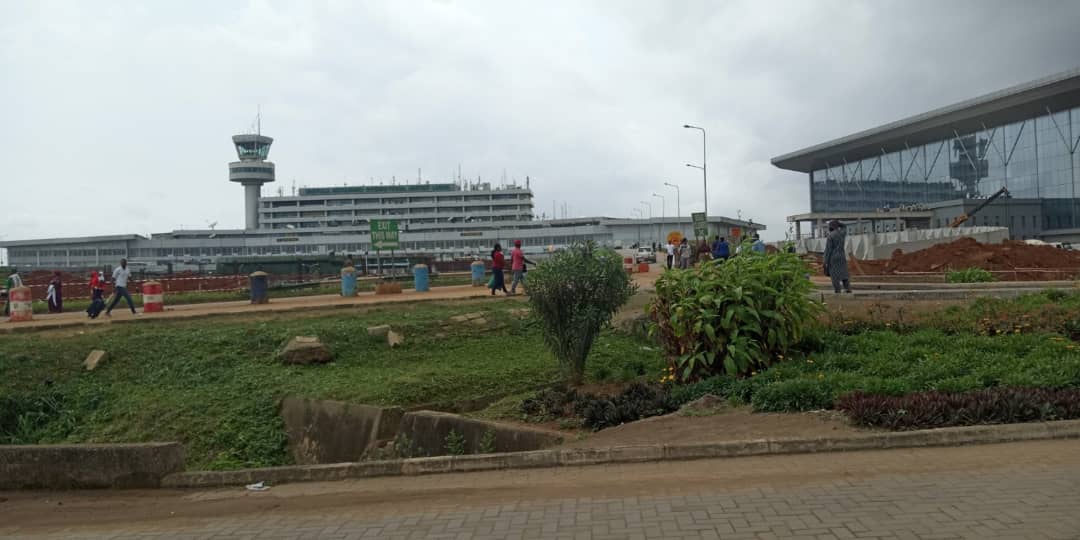
The Murtala Mohammed international Airport located in the heart of Ikeja, Lagos, is probably Nigeria’s most important airport. Not only that; it is Nigeria’s pioneer airport, and has played the big brother role ever since it was officially public in 1979 by the General Olusegun Obasanjo administration. But many years after, the airport is still struggling to find its feet among the league of prolific international airports across the world.
Originally known as Lagos International Airport, it was renamed in the mid 1970s, during construction of the new international terminal, after a former military head of state Murtala Mohammed. The international terminal was modelled after Amsterdam Airport Schipol. The new terminal opened officially on 15 March 1979.
The airport which occupies a massive land space could be described as just a massive edifice that is just there, a typical example of a whited sepulcher which somehow presents an atmosphere of activity from the outside while the inside of full of rot and smelly flesh.
The MMA as it is popularly known has had its fair share of notoriety. From 1992 through 2000, the US Federal Aviation Administration posted warning signs in all US international airports advising travelers that security conditions at Lagos Airport did not meet ICAO minimum standards. In 1993, the FAA suspended air service between Lagos and the United States.

The FAA ended its suspension of direct flights to Nigeria in 2001 in recognition of certain security improvements. By 2010, the FAA granted the airport its highest safety rating. These were laudable achievements, but how far have they sustained.
The frustrations of a would-be passenger or a visitor to the airport is developed once he decides his trip, and is heightened as he embarks on the trip to the large expanse of land. The feeling becomes real as he makes a gradual entry into space.

Dilapidated walkway
If you are driving your own car, you are inundated with the depression that comes with moving up to the arrival or departure section depending on whether you are boarding or coming to ‘pick up’. On the other hand, if you are chauffeured in a public transport, the driver transfers the aggression to the passenger as his constant sighing and complaints get to the nerve. He follows it up with the hike of the fares with the excuse that ‘shebi you don see how much time I don waste here’.
At the garage, one is face with the fact that only one shuttle bus is functional among the lot, consequently, it is either you excruciating time waiting or take the inglorious option of trekking the distance. More often than not, the later had been the most preferred the loads one is carrying not withstanding.

The walkway to and fro the halls of the airport are quite a sight to behold. It appears clean but not neat. It can be compared to a footpath connecting two remote villages with the green-netted fence like heaps of unkempt and overgrown grass. The roof of the walkway has carved in, leaving people at the mercy of the elements even as they are supposedly under a shade. A handful of cleaners are also sighted attempting to do a job, but they more the brushes and brooms touch the floor, the more discomfort everyone around becomes. This is because each contact the broom makes with the ground raises lots of sandy dust, constituting serious health hazard.
At the entrances, one is confronted by the presence of agile, able looking security operatives, but you will be surprised to discover that they are just on duty but never alert. Their routine is just ordinary as there is no gadget to ascertain the eligibility of the one entering the airport halls. You are checked for identification, your baggage thrown into the electronic roller, and you are good to go.
Inside, there is a plethora of forlorn looking faces, either at the departure hall where they are checking in to jet out or at the arrival hall where the returnees are making an entry into the Nigerian world. Passengers complained of long hours of queuing before any activity is initiated. While most of them said there is a marked improvement irrespective of the shabby treatment, ‘considering how it used to be in the past’ others agreed that ‘we are just going round and round a circle’.

Non functioning lifts
If you would want to move upstairs, you had better be strong enough to climb the staircase, as the lift ‘is not working’. It has been closed for sometime, and little effort is being made to put them to work again. However, to the average Nigerian, who has little knowledge of the airport facilities, especially as they are in countries in Europe, America and other parts of the world, the toilets look clean. But the Murtala Mohammed toilets are actually far from clean
A passenger, Friday Omorogbe, who was traveling to Belgium recounted nasty experiences he had with security guards at the airport concluding that they were selective in the search, and only needed someone to give them money.
“When I was coming to Nigeria from Belgium, I was hushed to a rude stop by the guards. The surprising fact was that a lot of white folks had passed before me and were still passing; but none of them was disturbed until it got to my turn. They rudely set me apart, asked silly questions about what I was carrying and even searched. All they wanted me to do was give them money. Why did they have to single us out, blacks, for such harsh treatment and accord the whites free passage? Not even in Belgium, but here in Nigeria,” he said.

Interior floors
Omorogbe noted that the ‘only thing that makes this place an airport is the fact that planes land and take off here’, stressing that facilities have greatly decayed and services half-heartedly given.
“The last time I was here, the whole roof was leaking, and the cleaners were packing water from the floor. Imagine, international airport. In Europe, the floors of their airport are a beauty to behold, but look at these ones here, “he added.
Another lady, who was traveling to the United States with her family frowned at the infrastructural decay of the airport, saying ‘it is not up to standard; I don’t even want to talk about it, but I would get there one day’.
For Anthony Raphael, who was traveling to Dubai, his message is simple; ‘we will get there one day’. He wants the authorities to look into the issues of flight delays and rehabilitation of infrastructures to actually have an international status and outlook.
With the return of Haji Srika as the Minister of Aviation and the unbundling of the aviation sector to be become a separate ministry away from transportation, stakeholders believe that the Murtala Mohammed International Airport and other international airports around the country will begin to experience a turn around that will eventually elevate it to really international status.

Featured
Global Stage, Local Heart: Davido Champions Justice for Kidnapped Oyo Schoolchildren at FIFA Concert





GLO and the Democratization of Communication in Nigeria

Adding Value: The Power in a Name by Henry Ukazu

Tech and Humanity: Africa is Building the Future of AI; The Question is Who Will It Serve?

The Oracle: Understanding the Economic, Social and Cultural Rights of Nigerians (Pt. 3)

Sowore ‘Slumps’ Amid Police Teargas During Abuja Protest

Friday Sermon: Terrorism the Curse of Islam 2

Senate Orders DSS, Police to Hunt Bandits Flaunting Crime on Social Media

All White Service of Songs As Celebrities Bid Alex Ekubo Farewell

Lessons from 2019, 2023 Elections: Why Atiku Abubakar Needs Dele Momodu As Running Mate

UBA Foundation Marks World Environment Day 2026 with Tree-Planting Initiative

The Dark Link Between the Forest Cartels and the Ballot

Voice of Emancipation: Oyo Kidnapping: Another One Too Many

Why Dele Momodu May Be Atiku’s Smartest Running Mate Option Yet
Tech and Humanity: The Long Walk to School
-
 Entertainment2 days ago
All White Service of Songs As Celebrities Bid Alex Ekubo Farewell
-
 Opinion6 days ago
Lessons from 2019, 2023 Elections: Why Atiku Abubakar Needs Dele Momodu As Running Mate
-
 Business5 days ago
UBA Foundation Marks World Environment Day 2026 with Tree-Planting Initiative
-
 Opinion5 days ago
The Dark Link Between the Forest Cartels and the Ballot
-
 Voice of Emancipation6 days ago
Voice of Emancipation: Oyo Kidnapping: Another One Too Many
-
 Opinion4 days ago
Why Dele Momodu May Be Atiku’s Smartest Running Mate Option Yet
-
 Tech and Humanity5 days ago
Tech and Humanity: The Long Walk to School
-

 Opinion4 days ago
The Bridge Nigeria Needs: Reflections on Leadership, National Unity, and the Ati-Dele Conversation