Connect with us

Featured

Buhari, Not Jonathan to Be Blamed for $9bn Judgement Debt, Says P&ID

Published

on

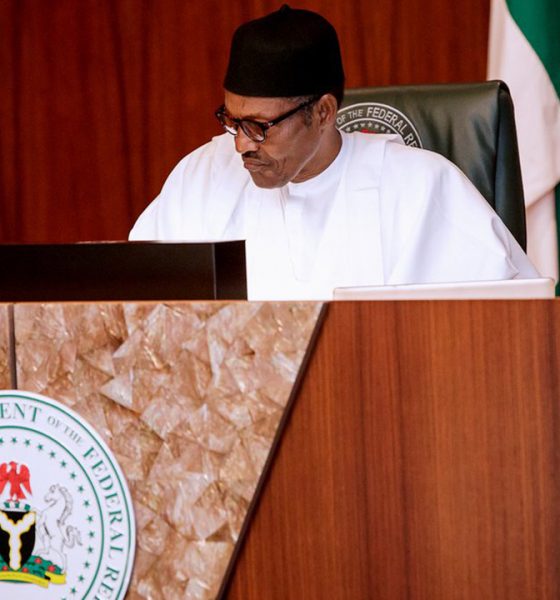
The attempt by President Muhammadu Buhari to pin the $9billion British court’s judgement debt on former President, Goodluck Jonathan, has been dismissed by the Process and Industrial Developments Limited (P&ID), the very Irish company, that is in the thick of the entire saga.

P&ID in a clear statement, on Friday, completely absolved the former President of culpability and blamed both Buhari and the Attorney General, Abubakar Malami responsible for the development.

The company, in attempt to set the record straight, P&ID, detailed how the Buhari government, practically slept on the issue and accused Malami particularly of trying to revise history and introduce allegations of contract fraud.

Read the full statement:

Malami’s Revisionist History

It is another day, and with it comes another attempt from the Nigerian Government to create a fictional history of the P&ID case.

This week’s series of desperate conspiracy theories point to something deeper: the Buhari Administration is refusing to admit its own role in the P&ID case from 2015-2019 after it came into office.

Appearing on CNBC Africa, Attorney General Abubakar Malami sought to wipe his hands and the hands of the Buhari Administration clean when he stated, “[t]he government as a unit was delicately involved. And that was the government in 2010, the award was in 2012, and then three years thereafter the current administration under the leadership of Muhammadu Buhari came into place. So the time when this administration came to place in 2015, the award was over three years, there was no appeal, no application for execution, no application to set the award aside.”

Attorney General Malami seems to have a case of amnesia.

Let’s set the record straight:

May 3, 2015: P&ID offers to settle the dispute with the Nigerian Government for $850mm. President Goodluck Jonathan indicates they are handing over the negotiations to the incoming Buhari Administration.

May 29, 2015: Muhammadu Buhari is sworn in as the 15th President of Nigeria, but fails to appoint a cabinet for five months.

July 17, 2015: The Arbitration Tribunal found in favor of P&ID (i.e. – the Liability Award). The new Buhari Administration did not make any attempts at settling or negotiating with P&ID, and did not make any effort to challenge the decision.

November 11, 2015: Attorney General Malami was sworn in November 11, 2015, just under three months after the Liability Award.

May 27, 2016: The Arbitration Tribunal wrote to the Nigeria Government confirming that: “As the parties will be aware from Procedural Order No 12, the Tribunal has decided that the seat of the arbitration is England. It follows that the Federal Court of Nigeria had no jurisdiction to set aside its Award.” Neither Attorney General Malami, nor any representative of the Buhari Administration did anything in response other than continue with the proceedings, thereby tacitly accepting the analysis of the Arbitration Tribunal.

June 24, 2016: Having failed to set aside the Liability Award by falsely claiming the seat of arbitration was in Nigeria; not England, Attorney General Malami wrote personally to the arbitrators to say “my office has taken over the handling of the above arbitration on behalf of the Ministry of Petroleum Resources.” He asked for and obtained an extension of time to file a defence to quantum, and appointed his own legal team in place of the Ministry of Petroleum Resource’s legal team.

August 30-31, 2016: The Quantum Hearing (i.e. – amount of damages payable) takes place in London. Attorney General Malami’s legal team conducted Nigeria’s defence at the quantum hearing. Expert witnesses as to quantum were called to give evidence and were cross-examined.
After the Quantum Hearing, Attorney General Malami instructed his lawyers to request a standstill agreement, which would take effect from the date of the Award.

This fact has never been publicly reported until today.

January 31, 2017: The Arbitral Tribunal issued a final award, ordering Nigeria to pay P&ID $6.5 billion plus $2.3 billion in uncollected interest as of March 2018.

February 17, 2017: The Award on Quantum was delivered to the parties on February 17, 2017. Despite the 60-day standstill having been agreed by P&ID, Attorney General Malami made no attempt to negotiate with P&ID during the 60 days following the handing down of the Quantum Award.

April 28, 2017: After the 60 days had expired, Attorney General Malami instructed his lawyers to write to P&ID’s lawyers and explained that “The delay was occasioned by the bureaucracy of the Federal Government in a bid to determine a reasonable strategy after receipt of the Arbitral award.” The Attorney General’s lawyers added: “we now have the authority of the Vice President of the Federal Republic of Nigeria to meet with the Claimant to negotiate the Terms of the Arbitral award.”

Today: In the lead up to the judgment by the English Commercial Court, Attorney General Malami allowed the time for acknowledging service in both the United States and London to lapse without filing any response. In both jurisdictions, Nigeria’s lawyers Curtis Mallet had to apply for ex post facto extensions of time and make the necessary apologies and explanations to the court.

In London, a senior Curtis Mallet partner explained that the Claim Form was “immediately filed and not passed up the chain of command” at the Ministry of Justice. The partner pleaded that “the delay was neither deliberate nor intended to be disrespectful to the Court.”

In the US, Curtis Mallet explained that the deadline was missed because they were in the process of being formally retained by the Nigerian Government and had been instructed to enquire about the potential for a settlement

The Attorney General’s pronouncements in the Nigerian press are a clear attempt to cover up his own incompetence and that of the Buhari Administration. This is a matter, which could have been settled shortly after he took office in November 2015 for $850 million. Instead, he personally took the decision to gamble on the arbitration and turned an $850 million liability into a $9.6 billion liability.

And at no time since has Attorney General Malami assumed responsibility has he raised any allegation of fraud or scam, either in the arbitration or in the subsequent enforcement proceedings. The reason for this is that there was no fraud. All of this raises serious concerns for foreign investors in Nigeria, whether you are investing in a commercial enterprise or buying Eurobonds. Not only will Nigeria deliberately refuse to pay an international arbitration award backed by an English Court, but they are prepared to launch sham investigations and character assassinations when all else fails.

This is a serious assault on the Rule of Law by a demonstrably dishonest administration.

Meanwhile, P&ID is now focused on vigorously enforcing its legal rights in the UK, including seizing Nigerian assets to satisfy the award. This will begin as soon as possible.

Source: whirlwindnews

Continue Reading
Click to comment

Leave a Reply

Your email address will not be published. Required fields are marked *

Featured

Sowore ‘Slumps’ Amid Police Teargas During Abuja Protest

Published

on

By

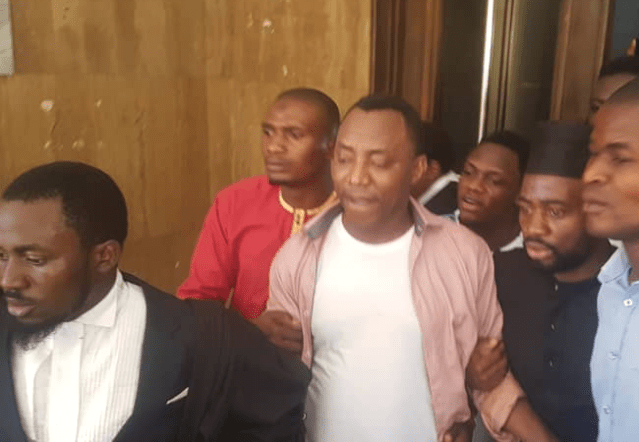
There was panic on Friday after human rights activist, Omoyele Sowore, collapsed following a confrontation with the police during a Democracy Day protest at the Unity Fountain in Abuja.

Reports said that Sowore collapsed after police operatives moved to disperse protesters gathered to demonstrate against insecurity, economic hardship and bad governance.

The demonstrators were dispersed after security personnel fired teargas canisters at the protesters in an apparent attempt to break up the gathering.

Following the incident, Sowore has reportedly been taken to an undisclosed hospital for further examination and treatment.

Continue Reading

Featured

Global Stage, Local Heart: Davido Champions Justice for Kidnapped Oyo Schoolchildren at FIFA Concert

Published

on

By

By Shakirat Akintola

He may be selling out arenas worldwide and headlining some of the biggest global stages, but Afrobeats megastar Davido proved this week that his heart remains firmly with the people of Nigeria.

On Wednesday night, during his highly anticipated performance at the official FIFA World Cup Countdown Concert in Los Angeles, the “Unavailable” crooner turned a massive moment of global celebration into a powerful, intentional act of advocacy.

Walking onto the Crypto.com Arena stage, the international icon chose not to wear high-end luxury fashion, but rather a custom black leather jacket designed to honor the 39 schoolchildren and seven teachers violently abducted from the Oriire Local Government Area of Oyo State.
A Global Icon Who Refuses to Forget His Roots

For an artist operating at Davido’s level, navigating massive global brands like FIFA usually comes with strict, highly sanitized corporate boundaries. Yet, the singer intentionally used his massive platform to ensure that the tragedy unfolding back home would not be swept under the rug by international media.

Backstage and throughout his high-energy performance of hits like “Fall,” the singer made sure his wardrobe spoke volumes. The front of his jacket was adorned with green circular buttons, each bearing the individual name of a student or teacher taken from the Ahoro-Esinele community in May.

In a heartbreaking and meticulously planned detail, the names of those still held in captivity were written in white, while the names of the victims who have tragically already died during the ordeal were highlighted in stark red. Across the back of the jacket, the message was clear and unmissable to the millions watching worldwide: “BRING THEM HOME.”

“We Represent Everywhere We Go”
Speaking moments before he climbed the stage alongside international electronic group Major Lazer, Davido was visibly carrying the weight of the situation, showing that his global success hasn’t detached him from the realities facing everyday Nigerians.

“Peace and love everywhere. May God be with the families of the abducted and the ones who have been killed,” Davido said in an emotional backstage address. “They still haven’t been rescued, we’re praying to God every day. We’re also praying to God that the government hastens… My country is going through a lot. We represent everywhere we go.”

This isn’t a passive, one-off gesture for the singer. Despite a grueling international schedule ahead of the 2026 World Cup—where he is prominently featured on the tournament’s official soundtrack album—Davido has consistently used his massive social media presence to demand immediate, decisive action from both federal and state authorities.

Amplifying the Cry for Help

By bringing the Oriire local tragedy to one of the premier entertainment capitals of the world, Davido has forcefully inserted Nigeria’s security challenges into the global conversation.

Back home, the crisis remains critical. The ongoing hostage situation has already sparked a total shutdown of public schools in Oyo State, with the Nigeria Union of Teachers (NUT) declaring an indefinite strike until their colleagues and students are safely returned.

In a landscape where international superstars are often criticized for becoming disconnected from local struggles, Davido’s bold FIFA showcase serves as a stark reminder of what true cultural ambassadorship looks like. He didn’t just perform for the world; he made the world look at the faces and names of the people who need them most.

Continue Reading

Featured

Statement on the State of the Nation by Some Concerned Nigerians

Published

on

By

We are a group of concerned Nigerians, alarmed at increasing threats to the Nigerian Nation and desirous of sharing our concerns with fellow citizens.

Our assessment of the state of the Nation reveals that Nigeria stands at a dangerous crossroads where rising insecurity, an alarming level of electoral manipulation by government, and the weakening of democratic institutions are converging into a national crisis that threatens the country’s survival.

Nigeria faces a grave threat to its foundational constitutional principle of the separation of powers. Checks and balances between the branches of government have been imperilled.

The legislative branch has been placed under near total control of the executive branch. The judiciary appears to have lost both its independence and its integrity. There are no checks on the powers of the executive who now govern as they please without accountability or respect for the people’s concerns.

Institutions have been compromised, weakened, and subordinated to the interests of the executive arm of government. This erosion of institutional independence has fuelled public distrust to its highest level in our history creating a crisis of political exclusion and impunity that is pushing violent extremism, organized crime, and communal conflict to a tipping point.

To reverse this trajectory, Nigeria must urgently recommit to democratic accountability, judicial independence, and institutional reforms that strengthen the rule of law. The electoral processes must be transparent, credible, and insulated from executive interference.

The crisis in Nigeria cannot be separated from the broader instability engulfing the Sahel region. The spread of terrorism, arms trafficking, unconstitutional changes of government, and porous borders across countries such as Mali, Burkina Faso, and Niger continue to intensify insecurity in Nigeria and the wider Lake Chad Basin. The collapse of regional cooperation and democratic governance in parts of the Sahel further emboldens armed groups, weakens state authority, and undermines civilian protection across West Africa.

Regional security cooperation between Nigeria and Sahelian states should be revitalized by establishing strong bilateral and multilateral platforms for intelligence sharing, border governance, and community-based peacebuilding initiatives.

Equally important is investing in youth employment, education, social protection, and local conflict resolution mechanisms to address the root causes of radicalization and insecurity.

Recommendations

1. Government should as a matter of urgency recognise that insecurity in the Sahel fuels the Nigerian crisis and that rapprochement between AES (Alliance of Sahel States) and ECOWAS is an important element in Nigeria’s national interest.

2. Government should immediately appoint a high-level Special Envoy for the Sahel to begin the urgent task of rebuilding trust between Nigeria, the AES and ECOWAS while revamping regional mechanisms for peace and security.

3. Civil society organisations should actively sensitize citizens and strengthen public demand for accountability. Nigerians must be bold and courageous in protecting civic rights and resisting the current climate of restricting civic space.

4. We call on the Private Sector as critical stakeholders in the nation-state agenda to continue to support and demand accountability in governance and the promotion of the rule of law as the basic premise of economic progress and nation building. Professional bodies and associations must rise to the challenge of building a broad national consensus to oppose tyranny and ensure maintenance of checks and balances in governance and the protection of the rule of law.

5. We call on our traditional leaders and members of the clergy to rise to the full weight of their moral and civic authority to promote peaceful co-existence, solidarity, and inter-faith dialogue to arrest the current slide to criminality and civil disorder.

6. Given the clear and consistent indications of the lack of neutrality and competence of INEC, professional bodies such as the Nigerian Bar Association, Unions, and other civic groups must set up mechanism of engaging the electoral body to ensure that the 2027 elections are free, fair and credible.

7. The Judiciary must address the perception of its complicity to stall democratic processes. It must remain independent and uphold the rule of law. As a matter of urgency, the Nigerian Bar Association must call its members to order for professional conduct and strengthen its monitoring on the judiciary, it must stay alert and patriotic and ensure political actors play by the rule. The National Judicial Council must set up a framework for holding judges accountable for decisions they take in the context of electoral process.

DATED AT ABUJA, NIGERIA 8th JUNE 2026

1. Dr. Husseini Abdu
2. Amb. Fatima Balla OON
3. Dr. Usman Bugaje
4. Prof. Ibrahim Gambari, CON
5. Dr. Yahaya Hashim
6. Prof. Jibrin Ibrahim
7. Prof. Attahiru Muhammadu Jega OFR
8. Prof. Mohammed Kuna
9. Abubakar Balarabe Mahmoud, SAN, OON
10. Mal Kabiru Yusuf

Continue Reading

Trending