
Featured
Psychology, Panacea for National Restructuring – Dr. Akintola, Head Psychology Dept., UNILAG

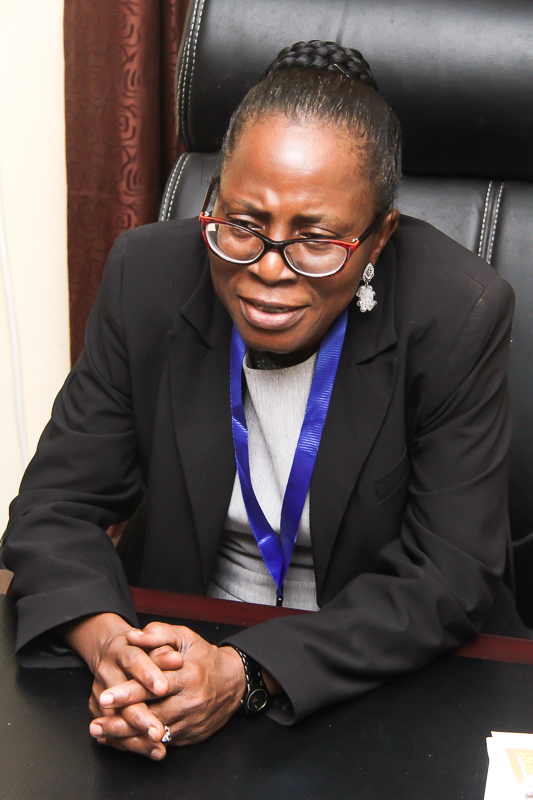

By Eric Elezuo
She is among the very few who are at home wherever you meet them as regards their discipline. Her name is Dr. Esther Akintola, the Head, Department of Psychology, University of Lagos. In this brief chat, she explains the intricacies of psychology as a course of study as well as what it takes to bring up God fearing children worthy of leading the nation to the next level. Excerpts:
Can we meet you?
My name is Esther Foluke Akinsola, an Associate professor of Psychology and Acting Head of Psychology Department, University of Lagos.
Apart from psychology, what else is Dr. Akinsola known for?
Well, I am a Consultant developmental and Clinical psychologist and I do research and teachings in clinical and psychological matters. I have also addressed many family problems. These were families that were engrossed in challenges resulting from breakdown in adolescent communication. Often times, we do not tend to understand adolescents and where they are coming from and same with the adolescents, they do not understand their parents so it creates a problem. They want freedom, they desire freedom.
Want or deserve freedom?
No, not deserve. They want unreserved freedom but they do not want to take responsibilities for the actions they take. This is called psychological trauma and it is responsible for creating a gap in family communication.
So, what is being done to bridge this gap?
Friendship breeds communication and this is where most parents loose it. Majority or parents are not friends to their children and there is no way these adolescents would open up to you if friendship has not been established. And this is the kind of strategy I am bringing on board that you begin talking to your children even from the womb. It will flow naturally so as they grow up it doesn’t seem like a hard thing because you have cultivated the habit. They do not want orders or dictation and this is what parents are prone to do at that point.

These adolescents do a lot of thinking and the only panacea to the gap between them and their parent is communication.
How long have you been in the field of psychology that has made you so vast in it?
I started lecturing in psychology in 1981 in the University of Lagos. I graduated in 1976 with a Second Class Upper division. I was doing a lot of things together at that time. I got married as a student in 1974, graduated in 1976, just 3 weeks after I gave birth to my first child, so I was a mother, a wife and a student. To be candid, I never wanted to be a teacher but I think as destiny would have it, that is what I am. I did my A levels and you know then A levels were done in December and when I finished my A levels the first job I got was teaching.
How would you say psychology has impacted on the socioeconomic growth of the country?
Psychology is the study of human beings, the study of human behavior and as long as there are people in the society there is a need for psychology and since it is humans who control these sectors, psychology is important. So, psychology is important because it pays a huge role in policy making and development. I heard someone once say that there is no way the minimum wage given at #18,000 will stop corruption and you expect people not to steal.
So, policies must have a humane approach to them and even then you can make the work interesting for whoever is doing it. These are some of the things psychology seeks to teach.
Psychology also teaches financial management and stability which is key to any country’s growth.

Are you saying in essence that psychology is what the country needs?
Yes! Yes! Psychology of financial and human resources! I heard that family members of fighters against Boko Haram are given stipends when they die in sharp contrast to the members of Boko Haram who are paid millions. Some psychologists would even posit that it is beneficial to be a Boko Haram member than a soldier. I also heard that there are some places in the Niger area where they have not seen government presence and this Boko Haram comes along offering them food and money, you think if one was there, one wouldn’t be tempted to join the sect?
What advice do you have for many young people who are still indecisive on what course to study?
I have advice for them and their parents. The parents must let the children choose their career path. Gone are the days when parents decide for their children, saying my child must be a lawyer. The child should be motivated to follow his passion and support must come from the parents.
As for the children, discover early enough what you want to do. Just recently, a student came to me and said he wants to drop psychology and study Creative Arts, that this is where his passion is, and he is in his 300 level. I instructed him to at least finish the psychology first before thinking of changing. After all, these are the days that one can own more than one certificate.
Also, as much as parents enjoin their children to pursue their interests, they must keep close tab on them. The children must know that interest doesn’t mean friendship or peer group. It should not be because my friend is going to the sciences, I must follow him when in the real sense your strength is in the arts.
About two years ago, this department produced a straight 5.0 First class graduate. Is that the first time?
Yes and the first in the whole school.
So, what are you doing to maintain this feat?
I think it is more dependent on the student. The young man who had a 5.0 took a course of mine in his 200 level and I did not know him, at least not until his 5.0 feat. What I am saying is that I am sure the young man made up his mind when he entered the University to be studious and serious. In essence, it is dependent on the students. The lecturers are dedicated and committed to their success.
Is that why you retained the young man?
Yes, we want him to serve as an inspiration to others. He is still young and he understands the young people more than we can ever do.

On a final note, can you advice our parents?
Okay! There is something called positive child rearing and it should be the attitude every parent shows their children. Rather than say, you stupid child, look at what you have done you can say, look at the stupid thing you have done. In that sense, you have not condemned the actor and the action, just the action alone.
Again, as positive parenting goes, you cannot be smoking or drinking and you are telling your child not to. You must be a role model to him or her. We must all strive to become that kind of parent.
Thank you very much for your time.
Thank you.




When Architecture of Policy Meets Architecture of Connection

Statement on the State of the Nation by Some Concerned Nigerians

Why Dele Momodu May Be Atiku’s Smartest Running Mate Option Yet
Dele Momodu: The Bridge Between Politics and the People

The Bridge Nigeria Needs: Reflections on Leadership, National Unity, and the Ati-Dele Conversation

UBA Foundation Marks World Environment Day 2026 with Tree-Planting Initiative

The Search for Justice: ADC vs Tsoho

Packed Centres and Penalty Heartbreak: How UCL Final Captured the City’s Imagination

Friday Sermon: Terrorism: The Curse of Islam 1

Nigeria’s Persistent Insecurity Challenge and It’s Stark Realities

How We Rescued Adelabu’s Sister and Her Twin Sons from Kidnappers – Police

The Trials of Leadership in National Security: Lessons, Challenges and Enduring Solutions

First Lady’s Cars Distribution to APC Women Amid Oyo Kidnapping Crisis, Outrage or Applause?

Lessons from 2019, 2023 Elections: Why Atiku Abubakar Needs Dele Momodu As Running Mate
-
 Opinion4 days ago
Packed Centres and Penalty Heartbreak: How UCL Final Captured the City’s Imagination
-
 Islam5 days ago
Friday Sermon: Terrorism: The Curse of Islam 1
-
 Opinion5 days ago
Nigeria’s Persistent Insecurity Challenge and It’s Stark Realities
-
 Featured3 days ago
How We Rescued Adelabu’s Sister and Her Twin Sons from Kidnappers – Police
-
 Opinion4 days ago
The Trials of Leadership in National Security: Lessons, Challenges and Enduring Solutions
-
 Featured4 days ago
First Lady’s Cars Distribution to APC Women Amid Oyo Kidnapping Crisis, Outrage or Applause?
-
 Opinion2 days ago
Lessons from 2019, 2023 Elections: Why Atiku Abubakar Needs Dele Momodu As Running Mate
-

 Opinion2 days ago
The Dark Link Between the Forest Cartels and the Ballot