Connect with us

Featured

UN Reviews Nigeria’s Human Rights Record, 13 Other Countries

Published

on

UN highest human rights body, the Human Rights Council (HRC), will start reviewing the track records of Nigeria and 13 other countries on Monday.

The process is called, Universal Periodic Review (UPR), and the ultimate goal is to improve human rights situation for people around the globe.

The UPR review sessions take place for two weeks, three times a year, and 14 countries are reviewed in each session – a total of 42 per year.

This time, the countries will be reviewed in this order: Saudi Arabia, Senegal, China, Nigeria, Mexico, Mauritius, Jordan, Malaysia, the Central African Republic, Monaco, Belize, Chad, Congo and Malta.

Every four and a half years, the 193 UN Member States undergo interactive review of human rights situation in their countries on rotational basis.

The idea is to give equal treatment to all the countries and allow them to exchange best practices.

The Human Rights Council was created in 2006 as part of a general wave of reforms of the UN system, composed of 47 Member States, elected by the UN’s 193 Member States.

However, any country can take part in the discussions held during a review; each state review is led by group of three countries (known as “troikas”), randomly chosen.

Information and evidence are presented, and questions are asked by special independent experts (called ‘Special Rapporteurs’), and the UN’s Member States.

Civil-society organisations can also submit questions and evidence through country representatives.

The country under review is given a chance to explain the actions they have taken, or plan to take, to address the issues presented.

Recommendations are officially made, and technical assistance provided where needed, with each country’s review lasting about three and a half hours.

The UPR assesses the human rights obligations set out in the UN Charter, the Universal Declaration of Human Rights, the human rights treaties ratified by the reviewed Member State, and International Humanitarian Law.

A report is prepared by the troika with the involvement of the reviewed Member State and technical assistance from the UN Office of the High Commissioner for Human Rights (OHCHR).

This report provides a summary of the actual discussion, with the questions, comments and recommendations made, as well as the responses by the reviewed Member State.

The report is discussed a few days after the review and adopted at a plenary session of the Human Rights Council.

The reviewed State has the primary responsibility to implement the recommendations contained in the final report.

Countries are expected to provide information on what they have been doing to make changes during their review, as well as on any developments on human rights when they undergo their UPR.

The international community and OHCHR are to assist and provide technical assistance, in consultation with the country concerned.

The Human Rights Council can take series of measures, such as specific investigations and can set up dedicated committees to put pressure on non-cooperating Member States, and draw the world’s attention to them.

(NAN)

Continue Reading
Click to comment

Leave a Reply

Your email address will not be published. Required fields are marked *

Featured

Statement on the State of the Nation by Some Concerned Nigerians

Published

on

By

We are a group of concerned Nigerians, alarmed at increasing threats to the Nigerian Nation and desirous of sharing our concerns with fellow citizens.

Our assessment of the state of the Nation reveals that Nigeria stands at a dangerous crossroads where rising insecurity, an alarming level of electoral manipulation by government, and the weakening of democratic institutions are converging into a national crisis that threatens the country’s survival.

Nigeria faces a grave threat to its foundational constitutional principle of the separation of powers. Checks and balances between the branches of government have been imperilled.

The legislative branch has been placed under near total control of the executive branch. The judiciary appears to have lost both its independence and its integrity. There are no checks on the powers of the executive who now govern as they please without accountability or respect for the people’s concerns.

Institutions have been compromised, weakened, and subordinated to the interests of the executive arm of government. This erosion of institutional independence has fuelled public distrust to its highest level in our history creating a crisis of political exclusion and impunity that is pushing violent extremism, organized crime, and communal conflict to a tipping point.

To reverse this trajectory, Nigeria must urgently recommit to democratic accountability, judicial independence, and institutional reforms that strengthen the rule of law. The electoral processes must be transparent, credible, and insulated from executive interference.

The crisis in Nigeria cannot be separated from the broader instability engulfing the Sahel region. The spread of terrorism, arms trafficking, unconstitutional changes of government, and porous borders across countries such as Mali, Burkina Faso, and Niger continue to intensify insecurity in Nigeria and the wider Lake Chad Basin. The collapse of regional cooperation and democratic governance in parts of the Sahel further emboldens armed groups, weakens state authority, and undermines civilian protection across West Africa.

Regional security cooperation between Nigeria and Sahelian states should be revitalized by establishing strong bilateral and multilateral platforms for intelligence sharing, border governance, and community-based peacebuilding initiatives.

Equally important is investing in youth employment, education, social protection, and local conflict resolution mechanisms to address the root causes of radicalization and insecurity.

Recommendations

1. Government should as a matter of urgency recognise that insecurity in the Sahel fuels the Nigerian crisis and that rapprochement between AES (Alliance of Sahel States) and ECOWAS is an important element in Nigeria’s national interest.

2. Government should immediately appoint a high-level Special Envoy for the Sahel to begin the urgent task of rebuilding trust between Nigeria, the AES and ECOWAS while revamping regional mechanisms for peace and security.

3. Civil society organisations should actively sensitize citizens and strengthen public demand for accountability. Nigerians must be bold and courageous in protecting civic rights and resisting the current climate of restricting civic space.

4. We call on the Private Sector as critical stakeholders in the nation-state agenda to continue to support and demand accountability in governance and the promotion of the rule of law as the basic premise of economic progress and nation building. Professional bodies and associations must rise to the challenge of building a broad national consensus to oppose tyranny and ensure maintenance of checks and balances in governance and the protection of the rule of law.

5. We call on our traditional leaders and members of the clergy to rise to the full weight of their moral and civic authority to promote peaceful co-existence, solidarity, and inter-faith dialogue to arrest the current slide to criminality and civil disorder.

6. Given the clear and consistent indications of the lack of neutrality and competence of INEC, professional bodies such as the Nigerian Bar Association, Unions, and other civic groups must set up mechanism of engaging the electoral body to ensure that the 2027 elections are free, fair and credible.

7. The Judiciary must address the perception of its complicity to stall democratic processes. It must remain independent and uphold the rule of law. As a matter of urgency, the Nigerian Bar Association must call its members to order for professional conduct and strengthen its monitoring on the judiciary, it must stay alert and patriotic and ensure political actors play by the rule. The National Judicial Council must set up a framework for holding judges accountable for decisions they take in the context of electoral process.

DATED AT ABUJA, NIGERIA 8th JUNE 2026

1. Dr. Husseini Abdu
2. Amb. Fatima Balla OON
3. Dr. Usman Bugaje
4. Prof. Ibrahim Gambari, CON
5. Dr. Yahaya Hashim
6. Prof. Jibrin Ibrahim
7. Prof. Attahiru Muhammadu Jega OFR
8. Prof. Mohammed Kuna
9. Abubakar Balarabe Mahmoud, SAN, OON
10. Mal Kabiru Yusuf

Continue Reading

Featured

Time for National Reconciliation, Re-Orientation and Reconstruction

Published

on

By

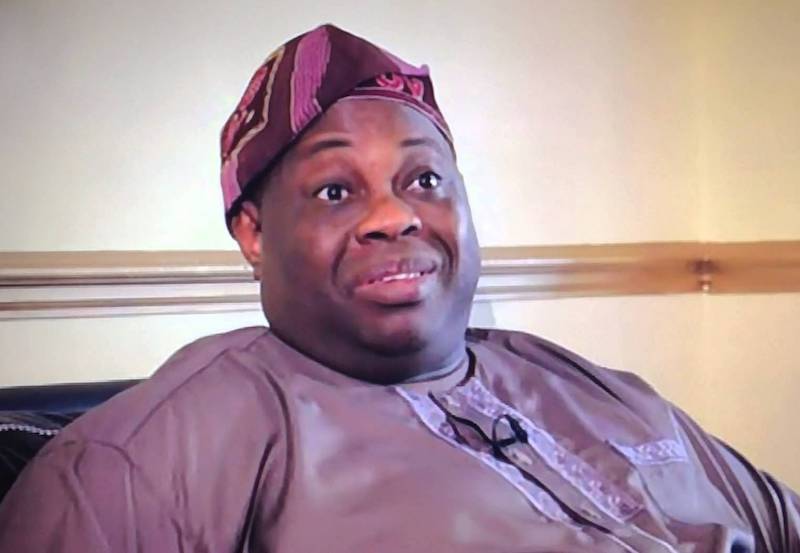
By Dele Momodu

The 2027 Presidential election is expected to be a major fight between PRESIDENT BOLA AHMED TINUBU and his biggest challenger, ALHAJI ATIKU ABUBAKAR. It promises to be the battle of the Tians. A third force, hopefully, may show up, like it did in 2023, but not with enough fire power and tenacity to upstage, and obliterate the two elder statesmen.

This is why it has become pertinent, and urgent, for our dear party ADC to change the traditional way of playing politics by becoming a link between the old and modern, conservative and cosmopolitan tendencies, veteran politicians and technocrats in government. There’s no better combination than this duo, assuring of a colorful blend. The North and the South will reunite in a game of ethnic & religious rivalries.

The present combustive tensions, and absolute chaos, cannot be allowed to continue. It will consume all of us.

The time has come to retrace our steps and return to the days of robust ideas, ideologies and inspirational figures. Our founding fathers such as Dr. Nnamdi Azikiwe, The Sardauna Sir Ahmadu Bello, Chief Obafemi Awolowo, and others, tried their best, even if they were not perfect. Today, we’ve completely derailed from the legacies they bequeathed to us. The politics of gansterism has become unbearably malignant in our nation. This is the type of strong bridge we need between the North and the South.

We must act before it is too late…

Continue Reading

Featured

How We Rescued Adelabu’s Sister and Her Twin Sons from Kidnappers – Police

Published

on

By

The Nigerian Police Force has announced the rescue of former Minister of Power, Adebayo Adelabu’s sister and her twin sons, who were abducted on June 3, in Ibadan.

A statement signed by the Force Public Relations Officer, DCP Anthony Okon Pkacid revealed ad follows:

The Nigeria Police Force announces the successful rescue of Mrs. Olaide Busayo Adegoke John-Paul and her 12-year-old twin sons, Peter and Paul, who were abducted on June 3, 2026, in Ibadan, Oyo State.

The hostages were rescued during a coordinated operation by the Force Intelligence Department Intelligence Response Team (FID-IRT) in Ibadan at approximately 7:30 p.m. on Saturday, June 6, 2026.

Mrs. Adegoke and her children were abducted while she was driving them to school at about 7:30 a.m. on June 3, 2026. The rescue was achieved through sustained intelligence gathering, surveillance, and tactical operations. These efforts enabled investigators to track the kidnappers’ movements, resulting in a confrontation with FID-IRT operatives.

During the confrontation, two suspected kidnappers were fatally wounded and two rifles were recovered. The victims were rescued unharmed and are now in safe custody, receiving medical care and support.

The Inspector-General of Police commends the courage, professionalism, and effectiveness of the FID-IRT operatives and all officers involved. Their resilience and commitment were instrumental in the safe rescue of the hostages.

Security operatives have intensified efforts in the area to apprehend fleeing members of the kidnapping syndicate. Preliminary intelligence indicates that some suspects escaped with gunshot injuries. Operations are ongoing to track, arrest, and bring all involved to justice.

The Nigeria Police Force appreciates the public’s support, cooperation, and patience during the operation. We remain committed to combating violent crime, protecting lives and property, and ensuring the safety of all citizens.

Continue Reading

Trending