
Connect with us

Featured

Dele Momodu Makes Case for Osun As a Strong Investment Destination

Published

on

By Eric Elezuo

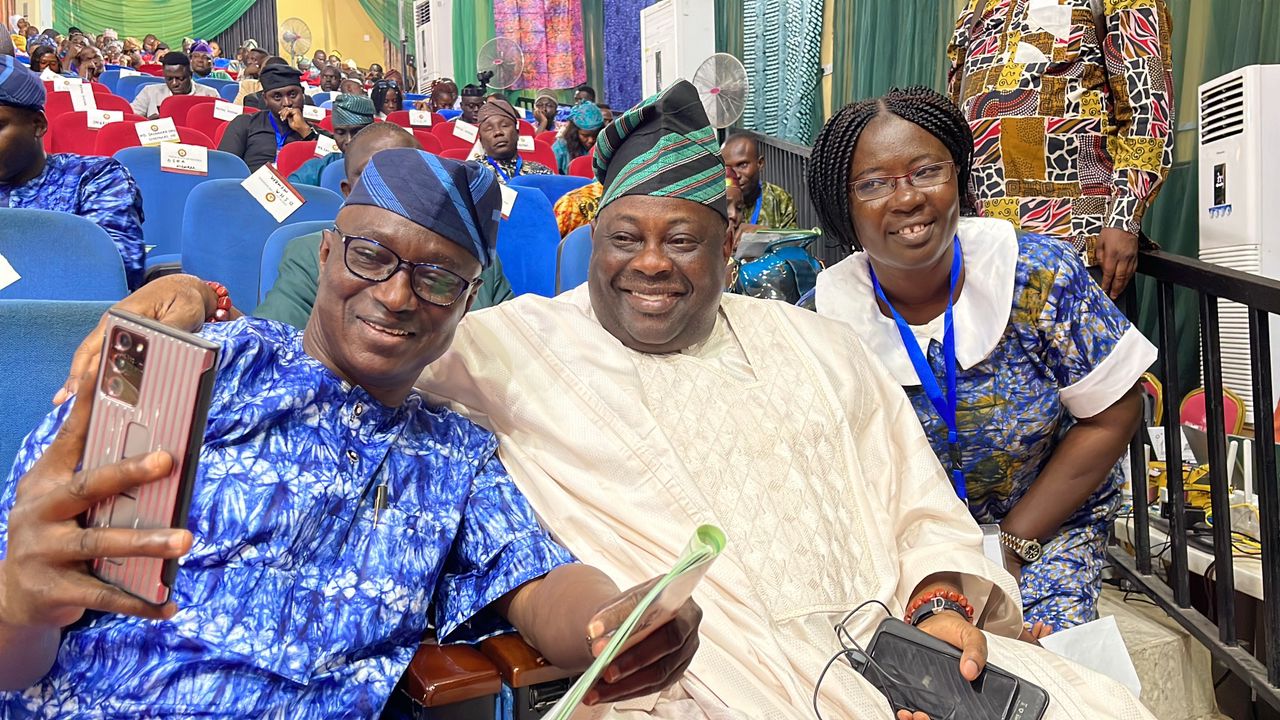
Notable media entrepreneur and Chairman, Ovation Media Group, Aare Dele Momodu, has declared Osun State as a strong investment destination, with evidential circumstances that set it apart among a comity of states.

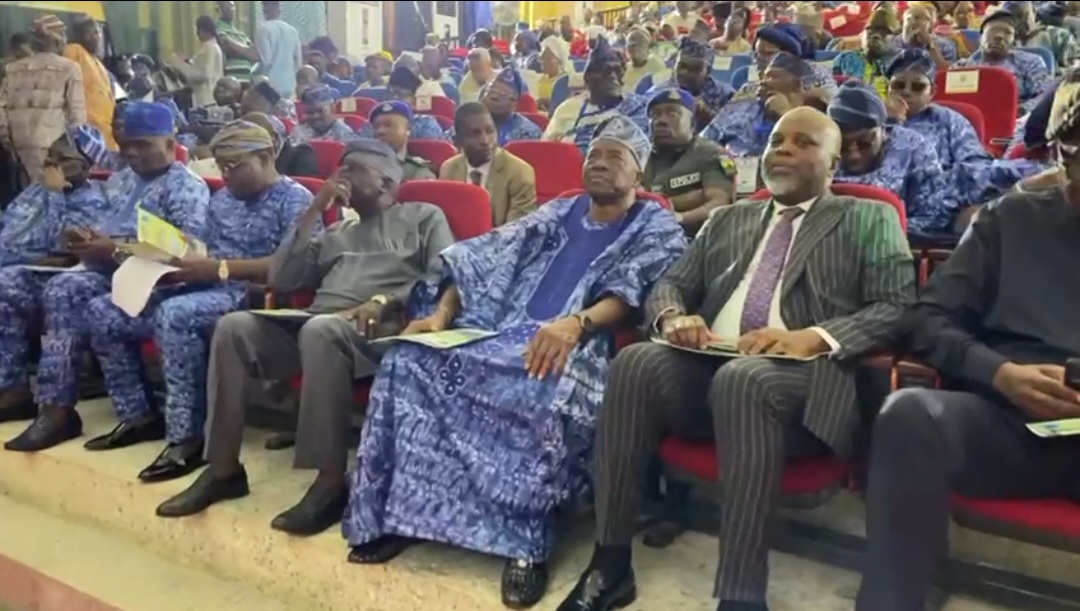
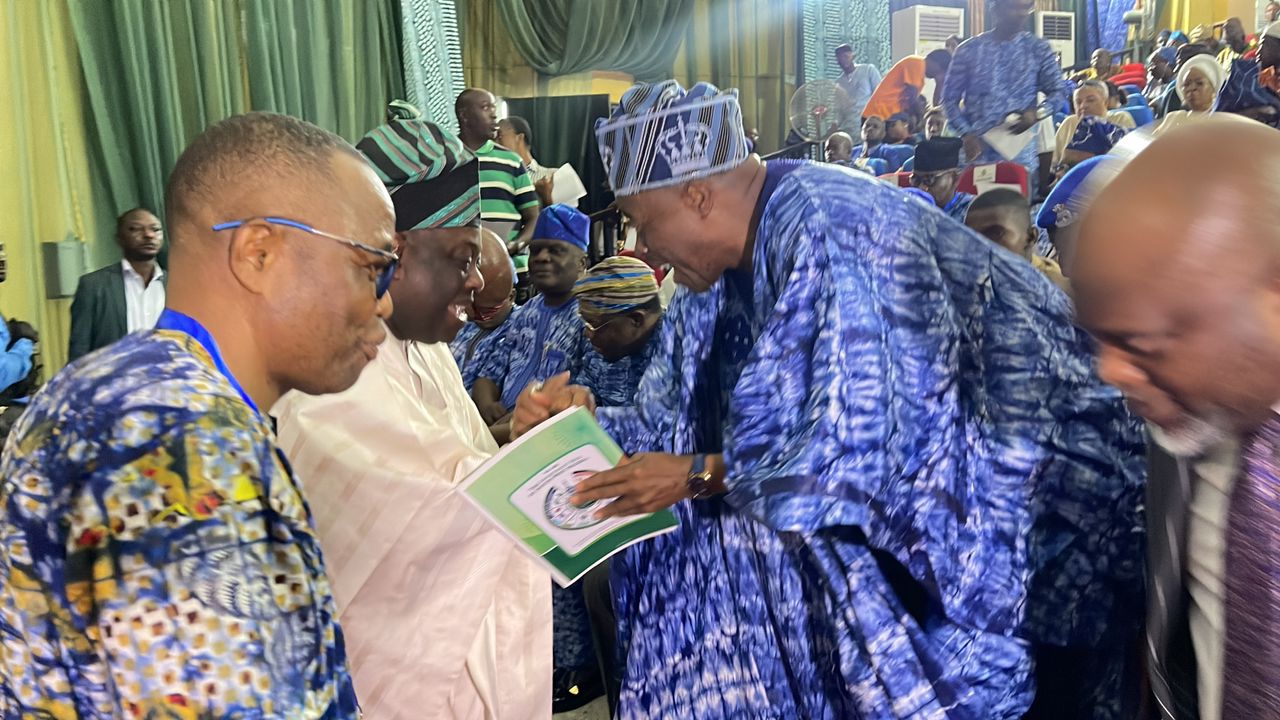
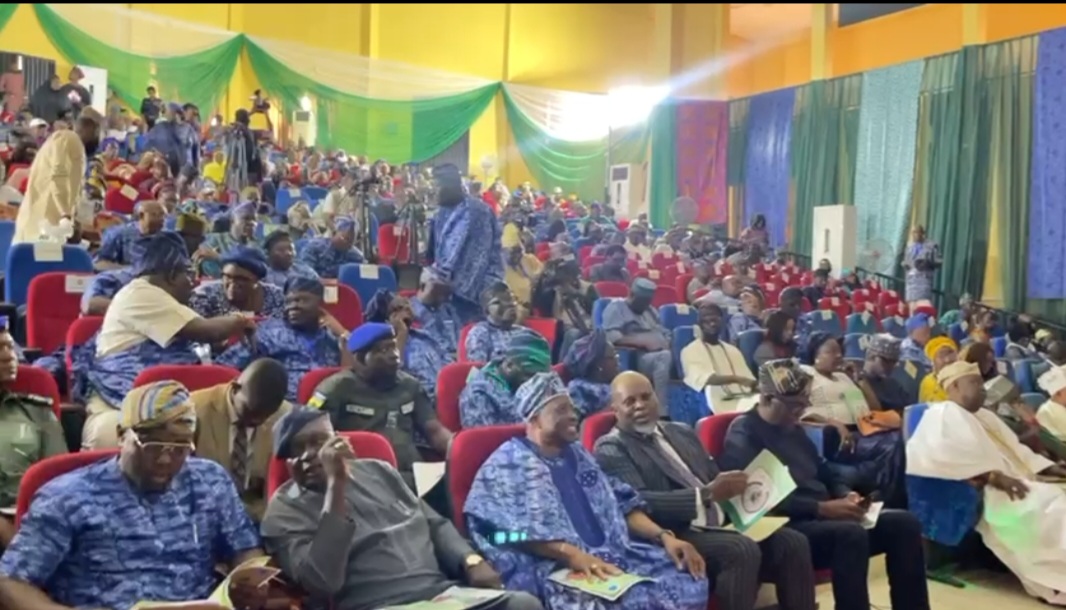
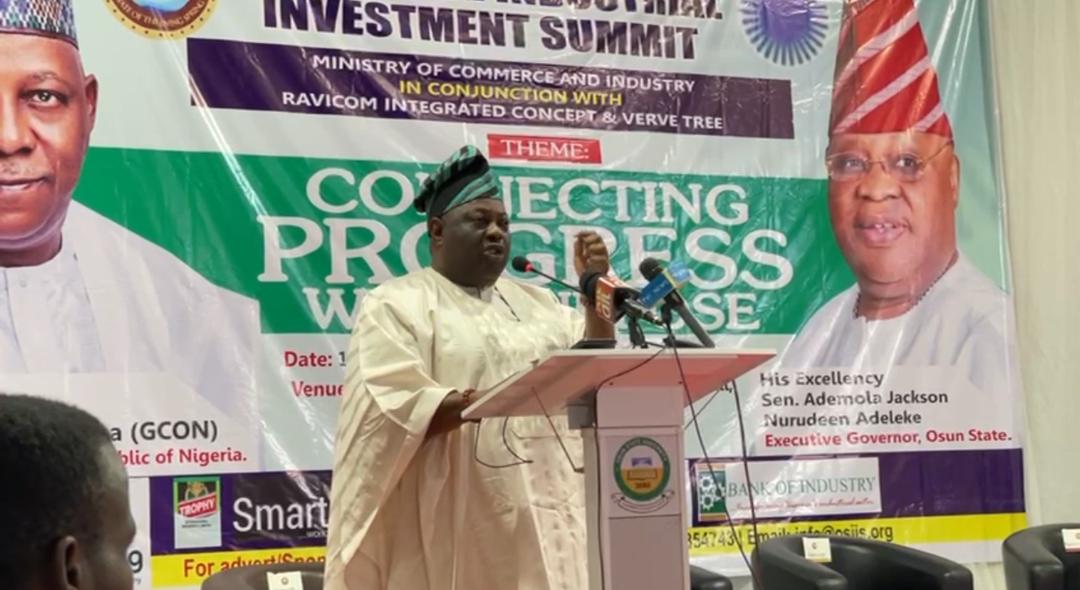
The veteran journalist made the revelation at the just concluded Osun Industrial Investment Summit, held in Osogbo, the state capital, where he was the guest speaker.
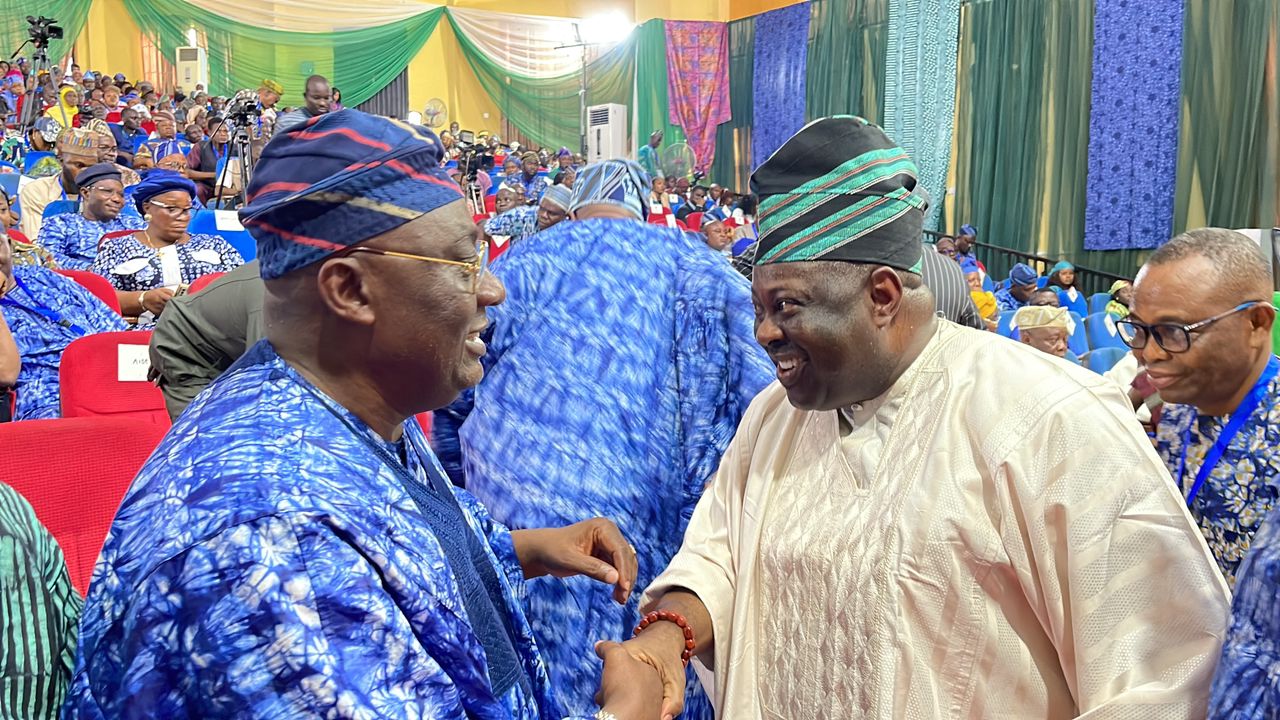
He eulogised the state as the cradle of the Yoruba nation as well as the heartland of South Western Nigeria, blessed economically and academically amongst other natural and developmental advantages.

Momodu further informed that the state “possesses a rich investment landscape across the sectors. From agricultural to mining processing to digital economy, the state of the living spring confronts potential investors with enticing possibilities. From the richly, European like Owalla dam for inland beach resorts to the mesmerizing Erin Ijesa waterfalls to the multi-billion dollar cultural assets, there is no better place to invest than Osun.”
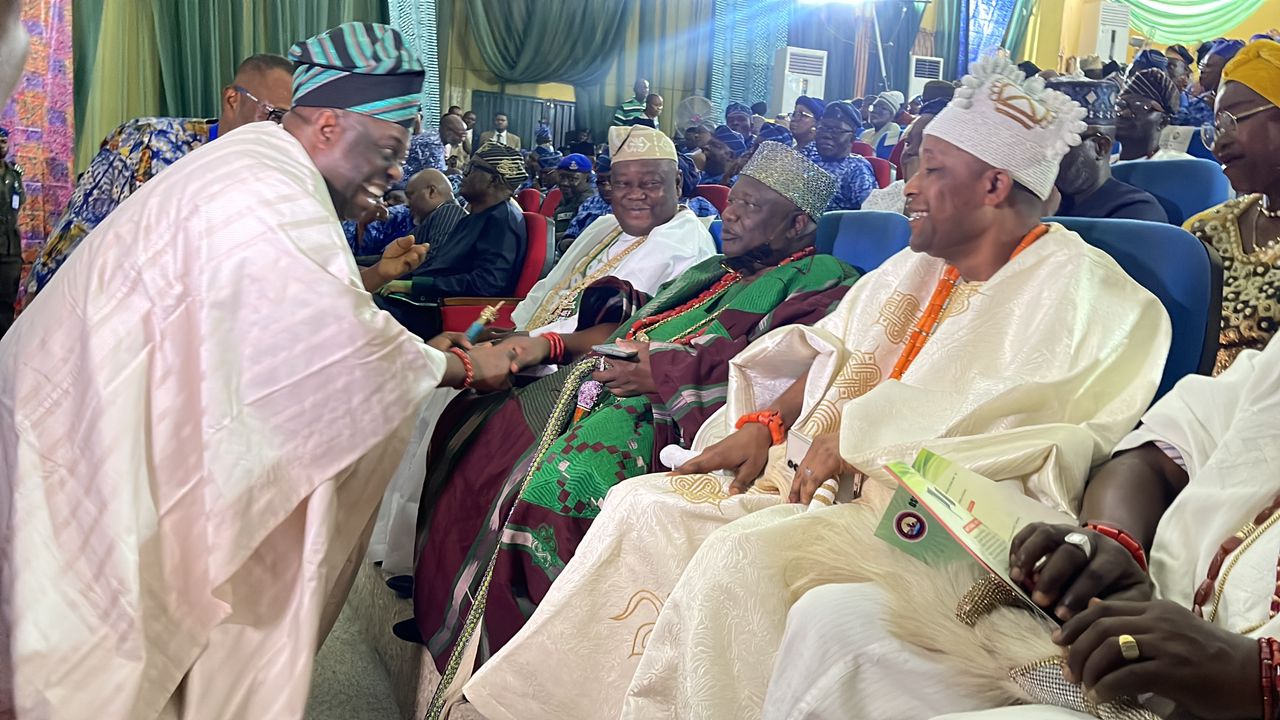
Here’s a text of his full speech at the event, which had the state governor, Senator Ademola Adeleke, and other notable state officials in attendance.

“Osun State is the cradle of Yoruba nation, the heartland of South Western Nigeria. This is the cultural capital of highly developed Yoruba people with descendants in South and North America;

“Osun State is an economically and educationally rich state, boasting of huge solid mineral resources, highly literate  population, heavy multiple University presences, varied agricultural potentials and a billion dollar developing cultural industry;
“Osun is an unusually peaceful state within a turbulent but extremely great nation, a state that accepts non-indigene with open arms and support non-native business ventures and activities with native hospitality and patronage;
“Osun is a natural tech hub of the Federation as its sons and daughters dominate the tech innovation world and with the state already building a digital economy to tap into the acknowledged talents of young Osun tech enthusiasts;

“We are all gathered here to drum up support for inflow of investment into a state with an ambitious Governor, a widely traveled leader and a 21st century manager who is positioning the state as investors’ first choice within the comity of states;

“My pitching Osun today is not out of mere filial affiliation. I am Osun and Osun is me. But it is more than that. The case for Osun as an investment destination is strong and evidence based;
“The state possesses a rich investment landscape across the sectors. From agricultural to mining processing to digital economy, the state of the living spring confronts potential investors with enticing possibilities. From the richly, European like Owalla dam for inland beach resorts to the mesmerizing Erin Ijesa waterfalls to the multi-billion dollar cultural assets, there is no better place to invest that Osun;

“Beyond the natural investment potentials, I review trade logistics and I am confronted with appealing reality. One is the national railway line that traversed the heartland of the state. Then I saw the government masterplan for an international airport with a cargo terminal integrated alongside a free trade zone;

“Free trade zone? Yes. Airport of international standard?  Yes. Railway link directly to Apapa port in Lagos? Yes. Trade logistics and connectivity are top notch;

“What of internal infrastructure? Osun as a highly urbanized city is implementing a multi-sectoral , multi-billion naira infra upgrade across health, education, roads , water and environmental sectors. The major towns are construction sites alongside huge construction ongoing across the local governments to enhance rural – urban connectivity;

“As an investor, the destination is not ripe by possessing all the above. There must be something else which can actually tip the balance of decision making;

“Are there legal frameworks? Are there policy frameworks for the various sectors?

“Again, Osun beats all limitations with the state Governor running a battle of policy coverage for the state economy. From November 2022 to date, my investigation showed that the state has successfully established state policies covering several critical sectors;

“Aside the state Industrial Development Policy, Osun now has a state ICT policy, State Tech Innovation Policy, State Electricity Market policy, State Transport policy, State Mining policy among others;
“Investors thus have nothing to worry about in the area of policy frameworks. In many cases, the policies are being transformed into actual state legislations. This deepens assurance frameworks for investors;

“One of the biggest unique selling points for the state aside from all the above rare features is the Adeleke family, a dynasty with entrenched interest in the national economy and the entertainment world. The Governor and his family are in reality one of the biggest insurance and magnet for investors;

“To the diaspora population,  my charge is to make hay while the sun shines. Rush to Osun to take a piece of the pie;
“To the global investment community, Osun is a goldmine that has more than gold. As a globally traveled serial entrepreneur myself, Osun represents the first choice. No investor will regret putting his money into such a potentially buoyant state economy.

Continue Reading
Click to comment

Leave a Reply

Your email address will not be published. Required fields are marked *

Featured

UBA Reinforces Commitment to Rewarding Customer-Loyalty with N400m Bonus

Published

on

By

UBA Rewards Customer Loyalty with Over ₦400 Million Bumper Account Anniversary Bonus
…Reinforces commitment to rewarding customers for consistent savings
Africa’s Global Bank, United Bank for Africa (UBA) Plc, has rewarded thousands of customers with over ₦400 million in anniversary bonuses under its flagship UBA Bumper Account, reaffirming the Bank’s unwavering commitment to rewarding customer loyalty and promoting a strong savings culture.

The payout, one of the largest loyalty rewards under the Bumper Account initiative since its launch, saw qualifying customers receive anniversary bonuses directly into their accounts, demonstrating UBA’s resolve to create lasting value for customers who consistently save with the Bank.

The UBA Bumper Account is a unique savings product that rewards customers simply for maintaining and growing their savings. Every year an eligible account reaches its anniversary, customers receive a cash bonus, making disciplined saving both rewarding and beneficial over time.
Speaking on the milestone, UBA’s Head, Retail Products, Tomiwa Sotiloye, said the Bank remains committed to ensuring that customers benefit directly from their relationship with UBA.

“At UBA, we believe customer loyalty deserves meaningful recognition. Every bonus paid is our way of saying ‘thank you’ to customers who continue to trust us with their financial aspirations. Surpassing the ₦400 million milestone reflects our commitment to creating products that not only help customers save but also reward them in tangible ways. It is another demonstration that when our customers grow, we grow with them.”

He added that both new and existing customers can open a UBA Bumper Account seamlessly through https://on.ubagroup.com/bumper-tc, any any UBA branch, the UBA Mobile Banking App, by dialing *919#, or online, positioning themselves to qualify for future anniversary rewards.

Also speaking, UBA’s Group Head, Brands, Marketing and Corporate Communications, Alero Ladipo, said the Bank’s customer-centric philosophy continues to shape its product offerings.

“The UBA Bumper Account reflects our unwavering commitment to putting customers first. We deliberately design products that reward responsible financial behaviour while delivering real value. Crediting over ₦400 million directly into customers’ accounts is not just a payout; it is evidence of our promise to make banking more rewarding and to continually appreciate the confidence our customers repose in us.”

The UBA Bumper Account remains one of the Bank’s flagship retail savings products, combining competitive savings benefits, digital convenience and attractive loyalty rewards. It forms part of UBA’s broader strategy to deepen financial inclusion by encouraging sustainable savings habits while delivering exceptional customer experiences.

Continue Reading

Featured

Dele Momodu Leadership Centre Hosts Media Scholar, Prof Abiodun Adeniyi

Published

on

By

By Anjorin Fehintola Stella

We often measure leadership by the institutions people build or the positions they occupy. Yet, during his visit to the Dele Momodu Leadership Centre, Professor Abiodun Adeniyi repeatedly returned to something less visible but perhaps more enduring; the responsibility of documenting one’s life and thoughts. He spoke as someone who understands, at a personal level, what is lost when experience is left unrecorded. His emphasis on documentation was not stylistic advice for writers. It was an argument about memory itself, about how societies retain or lose the wisdom of the people who pass through them.

Ideas disappear when they are undocumented because memory, at the collective level, is fragile and selective. A society does not remember everything that happens within it, it remembers what is written down, repeated, taught, or institutionalised. An undocumented thought, however brilliant, dies with the person who held it, or worse, drifts into vague anecdote, stripped of its original precision. This is why oral cultures, for all their richness, often struggle to transmit complex ideas across generations with fidelity. Professor Adeniyi’s point, then, was not simply about personal record-keeping. History remembers people largely through what they leave behind, not through what they intended to leave behind. Intention without artefact disappears.

When he spoke about travelling, it would be easy to reduce his words to a fondness for movement or exposure. But the deeper claim runs further than that. Travel disrupts familiarity. It exposes individuals to different ways of living, thinking, governing and imagining society. Professor Adeniyi suggested that travelling remains one of the simplest yet most profound forms of education because it broadens not only knowledge but perspective. A person confined to one environment mistakes the local for the universal. Movement across geographies forces a confrontation with alternative logics, alternative arrangements of power, family, and meaning, and that confrontation is often where genuine learning begins.

Perhaps the strongest advice he gave concerned the pursuit of a doctorate. When Aare Dele Momodu spoke of his desire to pursue a PhD, Professor Adeniyi’s response challenged a growing culture in which academic qualifications are sometimes pursued as symbols of prestige rather than vehicles of inquiry. A PhD earned for the title that follows a name produces a credential without a contribution. A PhD earned out of genuine curiosity produces new knowledge and, more importantly, sustains the kind of intellectual restlessness that defines a thinking life. Professor Adeniyi’s counsel was that one should choose a field that strikes them professionally and personally, something that connects to lived purpose rather than social signalling, because the value of advanced study lies in the questions it forces a person to keep asking long after the degree is conferred.

Professor Abiodun did not reserve his counsel for matters of scholarship alone. Turning to the younger staff in the room, Professor Adeniyi offered something closer to reassurance than instruction, that everything they are currently going through, the uncertainty, the striving, the sense of being far from where they hope to be, is a phase both he and Aare Dele Momodu have lived through themselves. It was a reminder that ambition rarely moves on a straight or visible timeline. The goals and dreams that feel distant now are not denied, only delayed, and what stands between the present moment and their fulfilment is simply time and dedication, applied without pause.


Underneath all these threads, travel, documentation, the meaning of scholarship, was a single, unifying idea about legacy. Legacy isn’t what people say about you. It’s what remains after you leave. This distinction matters because praise is temporary and circumstantial, shaped by mood, politics, and memory’s natural decay. What remains, however, is structural. It is the book on a shelf, the institution still running, the idea still being taught.

This is where the conversation returned, inevitably, to the Centre itself. The library. The scholars’ rooms. The conversations. The institution. Professor Adeniyi appeared genuinely moved by what he encountered, not by the scale of the buildings, but by what the buildings were designed to hold. Perhaps that is why Professor Adeniyi appeared genuinely moved by the Centre. It was never merely about architecture. It was about permanence. Buildings become legacy only when they preserve ideas.

Every visit leaves footprints. Some are physical. Others are intellectual. Professor Abiodun Adeniyi’s visit left the latter.

Continue Reading

Featured

Lagos Govt Sues for Calm As Flood Ravages City, Okays Dredging of 28 Channels

Published

on

By

The Lagos State Government has appealed for calm following persistent rainfall and flash floods across many parts of the State over the past two weeks, announcing the immediate dredging of 28 additional primary drainage channels to improve flood control.

Governor Babajide Sanwo-Olu approved the emergency dredging intervention as part of efforts to strengthen the state’s drainage network.

The Commissioner for Environment and Water Resources, Tokunbo Wahab, said the recent downpours are an extreme weather event that produced an unusually large volume of rainfall within a short period, overwhelming drainage systems in some locations and causing temporary flooding in parts of Victoria Island, Lekki, Ikeja, Gbagada, Mushin, Mafoloku and other communities.

According to him, the situation was not peculiar to Lagos; several African countries and parts of North America also experienced heavy rainfall and flooding during the same period.

Wahab, however, said Lagos presents a more complex hydrological challenge because of its extensive network of lagoons, rivers, creeks and tidal water bodies, coupled with its high rainfall intensity.

He explained that the interaction between the Atlantic Ocean, Lagos Lagoon and inland waterways, especially during high tide, naturally slows the discharge of storm-water into the sea, leading to temporary flooding in low-lying areas during exceptionally heavy rainfall.

The commissioner assured residents that the government was closely monitoring drainage infrastructure, flood-prone areas and major channels across the State.

He added that emergency response agencies have been deployed to affected areas to facilitate the quick recession of floodwaters and provide necessary support to residents.

Wahab said the government would continue to invest in drainage construction, channelisation, desilting, and other flood-control infrastructure, but stressed that residents also have a responsibility to support these efforts.

He urged residents to stop dumping refuse into drains, canals and waterways, warning that blocked drainage channels and illegal reclamation of wetlands contribute significantly to flooding.

He also cautioned against building on drainage alignments and engaging in activities that could obstruct the free flow of storm-water.

The commissioner said the increasing frequency of extreme rainfall events across coastal cities is a clear indication of the impact of climate change.

“Lagos is not exempt from these realities. However, the State Government remains steadfast in its commitment to building a flood-resilient city through sustained infrastructure development, environmental enforcement and active collaboration with residents,” he said.

Wahab described flood management as a shared responsibility, urging residents to keep drainage channels free of debris and to report any activities that could obstruct storm-water flow.

He also advised motorists to avoid driving through flooded roads during heavy rainfall and urged residents, particularly those in flood-prone communities, to comply with weather advisories and safety instructions issued by relevant government agencies.

He reaffirmed the government’s commitment to protecting lives and property through proactive flood management measures and called for continued public cooperation in building a cleaner, safer and more resilient Lagos.

Continue Reading

Trending