Connect with us

Featured

BBC Releases Findings on Tinubugate, Says No Evidence of Forgery, But Discrepancies in Documents Submitted

Published

on

These were made known in a report by the BBC’s Global Disinformation Team on Wednesday.

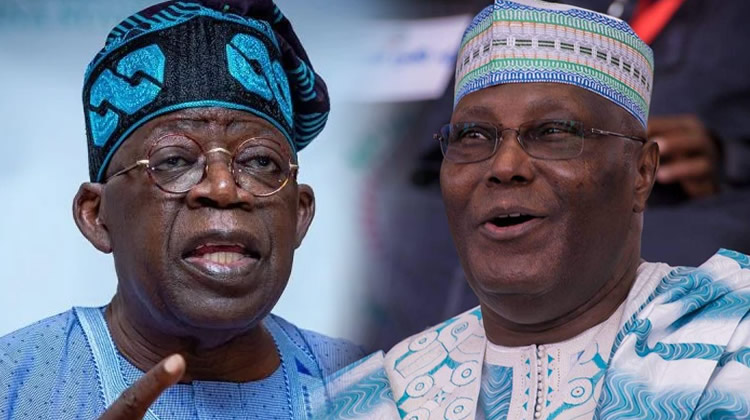
Recall that a United States court had asked CSU to release the president’s certificate to Atiku Abubakar , who contested for Nigeria’s most coveted political seat under the Peoples Democratic Party in the 2023 presidential election.

While Tinubu, through his aides, has reiterated that his certificate from the CSU was not falsified, the majority of Nigerians, especially from the opposition, thinks otherwise.

Recounting its findings, BBC said there are three versions of the CSU certificates for Tinubu.

“The CSU released several diplomas issued between 1979 and 2003. We analysed all of them.

“There are three different diplomas for Mr Tinubu that we refer to throughout our analysis:

“The original one, from 1979, which he has said in the past was lost when he went into exile in the 1990s.

“Additionally, CSU holds another replacement diploma for Mr Tinubu that they say is probably from the early 2000s that he never collected.

“The allegations on social media are based on a comparison between the document Mr Tinubu submitted to Inec and the 1979 diplomas released by CSU.”

According to the British media organisation, the deposition by CSU’s registrar, Caleb Westberg, also attested to it that Nigeria’s leader did not forge his diploma.

“Mr Westberg said the template of CSU’s diploma has changed several times over the years. He said any request for a new diploma would resemble the current template at that time, no matter when the student graduated,” BBC said.

It also disclosed that, “The BBC reached out to Mr Tinubu’s team to get a copy of the diploma in question. They sent what they said was the only existing copy of the diploma. It is a black and white photocopy identical to what was submitted to Inec.

“Another claim, made by a fact-checking organisation in Nigeria, was that the diploma Mr Tinubu submitted was not from CSU as its diplomas do not include the phrase “with honors” under the degree name.

“But the BBC found that while this was not reflected in the other diplomas released by CSU, it does appears in Mr Tinubu’s diploma issued in the early 2000s, which was authenticated by Mr Westberg during his deposition.

“It has the words “with honors” – a match with the diploma with the same detail submitted by the president to INEC.”

“Mr Westberg said that the school could authenticate this particular diploma because it was still in its possession as it was never picked up,” it stated.

“Not every student graduates from university with honours. Mr Tinubu, as attested to by CSU in several court documents seen by the BBC, did graduate from CSU with honours.”

Lastly, the BBC contacted CSU with questions about its diplomas and it referred us to a statement that read in part: “We are confident and always have been in the veracity and integrity of our records regarding Tinubu’s attendance and completion of graduation requirements”.

But the BBC Disinformation Team added that:

“However, the released documents did raise questions about Mr Tinubu’s birth date and the secondary school he attended.

“One of the documents stated that Mr Tinubu attended Government College Lagos in 1970. However, information available on the school website stated that it was only founded in 1974.

“Aside from the gender discrepancy, the birth dates in some of the released documents differ from the official birth date of President Tinubu, which is 29 March 1952.

“His transcript from CSU has his date of birth as 29 March 1954. His undergraduate admissions application form has his date of birth as 29 March 1955.

“Mr Atiku’s lawyer said during Mr Westberg’s deposition that on the forms submitted to Inec, Mr Tinubu had given his date of birth as 29 March 1952.

“Mr Westberg, during cross-examination, responded that the discrepancies could have been due to human error.”

Continue Reading
Click to comment

Leave a Reply

Your email address will not be published. Required fields are marked *

Featured

Attempted Coup: DSS Arraigns Five for Alleged Refusal to Reveal Timipre Sylva’s Hiding Place

Published

on

By

The Department of State Services (DSS) at the Federal High Court in Abuja, arraigned five associates of former Minister of Petroleum Resources, Timipre Sylva.

They are accused of concealing information regarding the whereabouts of their principal, who is alleged to be a financier of an aborted coup attempt against President Bola Tinubu.

Sylva, a former Governor of Bayelsa State, has been declared wanted by the Federal government, and his identified properties have been marked for forfeiture following his indictment as the sponsor and mastermind of the alleged coup plot.

The five associates are Reuben Ayuba, Musa Mohammed, Friday Paul, Paganengigha Anagaha, and Ayebaifife Suobite. They were arraigned on Wednesday before Justice Peter Lifu.

A two-count charge filed against them indicates that the accused became accessories after the fact of felony on April 28, 2026, by concealing the whereabouts of Timipre Sylva, who is classified as a fugitive. The alleged offense is contrary to Section 519 of the Criminal Code Act Law of the Federation of Nigeria, 2004.

Additionally, the DSS has accused them of conspiracy to commit a felony, specifically for concealing the whereabouts of Timipre Sylva, also a fugitive, in violation of Section 516 of the Criminal Code, LFN 2004.

All the accused persons pleaded not guilty to the charges when they were read to them.

DSS lawyer, Emmanuel Orubor, requested that the judge schedule a date for the DSS to commence their trial by calling witnesses to testify against the defendants.

In response, Sunusi Musa (SAN), who represented Reuben Ayuba and Paganengigha Anagaha (the 1st and 4th accused persons), filed a bail application for his clients on various grounds.

Similar applications were made by Ibrahim Imadegbelo, representing Musa Mohammed (the 2nd accused), I. G. Kelubia, standing for Friday Paul (the 3rd defendant), and E. C. Sogo, who argued for Ayebaifife Suobite (the 5th accused person).

The lawyers pointed out to Justice Lifu that their clients have been in custody since October 25, 2025, and urged the court to grant them bail on liberal terms.

In a brief ruling, Justice Lifu granted them bail in the sum of N5 million each, along with two sureties for each, in a similar amount. The sureties are required to swear to an affidavit of means, provide evidence of three years of tax payment, demonstrate visible means of livelihood, and submit recent passport photographs.

Justice Lifu ordered that the claims of identities of the sureties must be verified by the Registrar of the Court.

Pending the perfection of the bail conditions, the Judge ordered that the accused persons be remanded in Kuje Correctional Centre in Abuja and fixed July 22 for the commencement of trial.

Continue Reading

Featured

UBA Reinforces Commitment to Rewarding Customer-Loyalty with N400m Bonus

Published

on

By

UBA Rewards Customer Loyalty with Over ₦400 Million Bumper Account Anniversary Bonus
…Reinforces commitment to rewarding customers for consistent savings
Africa’s Global Bank, United Bank for Africa (UBA) Plc, has rewarded thousands of customers with over ₦400 million in anniversary bonuses under its flagship UBA Bumper Account, reaffirming the Bank’s unwavering commitment to rewarding customer loyalty and promoting a strong savings culture.

The payout, one of the largest loyalty rewards under the Bumper Account initiative since its launch, saw qualifying customers receive anniversary bonuses directly into their accounts, demonstrating UBA’s resolve to create lasting value for customers who consistently save with the Bank.

The UBA Bumper Account is a unique savings product that rewards customers simply for maintaining and growing their savings. Every year an eligible account reaches its anniversary, customers receive a cash bonus, making disciplined saving both rewarding and beneficial over time.
Speaking on the milestone, UBA’s Head, Retail Products, Tomiwa Sotiloye, said the Bank remains committed to ensuring that customers benefit directly from their relationship with UBA.

“At UBA, we believe customer loyalty deserves meaningful recognition. Every bonus paid is our way of saying ‘thank you’ to customers who continue to trust us with their financial aspirations. Surpassing the ₦400 million milestone reflects our commitment to creating products that not only help customers save but also reward them in tangible ways. It is another demonstration that when our customers grow, we grow with them.”

He added that both new and existing customers can open a UBA Bumper Account seamlessly through https://on.ubagroup.com/bumper-tc, any any UBA branch, the UBA Mobile Banking App, by dialing *919#, or online, positioning themselves to qualify for future anniversary rewards.

Also speaking, UBA’s Group Head, Brands, Marketing and Corporate Communications, Alero Ladipo, said the Bank’s customer-centric philosophy continues to shape its product offerings.

“The UBA Bumper Account reflects our unwavering commitment to putting customers first. We deliberately design products that reward responsible financial behaviour while delivering real value. Crediting over ₦400 million directly into customers’ accounts is not just a payout; it is evidence of our promise to make banking more rewarding and to continually appreciate the confidence our customers repose in us.”

The UBA Bumper Account remains one of the Bank’s flagship retail savings products, combining competitive savings benefits, digital convenience and attractive loyalty rewards. It forms part of UBA’s broader strategy to deepen financial inclusion by encouraging sustainable savings habits while delivering exceptional customer experiences.

Continue Reading

Featured

Dele Momodu Leadership Centre Hosts Media Scholar, Prof Abiodun Adeniyi

Published

on

By

By Anjorin Fehintola Stella

We often measure leadership by the institutions people build or the positions they occupy. Yet, during his visit to the Dele Momodu Leadership Centre, Professor Abiodun Adeniyi repeatedly returned to something less visible but perhaps more enduring; the responsibility of documenting one’s life and thoughts. He spoke as someone who understands, at a personal level, what is lost when experience is left unrecorded. His emphasis on documentation was not stylistic advice for writers. It was an argument about memory itself, about how societies retain or lose the wisdom of the people who pass through them.

Ideas disappear when they are undocumented because memory, at the collective level, is fragile and selective. A society does not remember everything that happens within it, it remembers what is written down, repeated, taught, or institutionalised. An undocumented thought, however brilliant, dies with the person who held it, or worse, drifts into vague anecdote, stripped of its original precision. This is why oral cultures, for all their richness, often struggle to transmit complex ideas across generations with fidelity. Professor Adeniyi’s point, then, was not simply about personal record-keeping. History remembers people largely through what they leave behind, not through what they intended to leave behind. Intention without artefact disappears.

When he spoke about travelling, it would be easy to reduce his words to a fondness for movement or exposure. But the deeper claim runs further than that. Travel disrupts familiarity. It exposes individuals to different ways of living, thinking, governing and imagining society. Professor Adeniyi suggested that travelling remains one of the simplest yet most profound forms of education because it broadens not only knowledge but perspective. A person confined to one environment mistakes the local for the universal. Movement across geographies forces a confrontation with alternative logics, alternative arrangements of power, family, and meaning, and that confrontation is often where genuine learning begins.

Perhaps the strongest advice he gave concerned the pursuit of a doctorate. When Aare Dele Momodu spoke of his desire to pursue a PhD, Professor Adeniyi’s response challenged a growing culture in which academic qualifications are sometimes pursued as symbols of prestige rather than vehicles of inquiry. A PhD earned for the title that follows a name produces a credential without a contribution. A PhD earned out of genuine curiosity produces new knowledge and, more importantly, sustains the kind of intellectual restlessness that defines a thinking life. Professor Adeniyi’s counsel was that one should choose a field that strikes them professionally and personally, something that connects to lived purpose rather than social signalling, because the value of advanced study lies in the questions it forces a person to keep asking long after the degree is conferred.

Professor Abiodun did not reserve his counsel for matters of scholarship alone. Turning to the younger staff in the room, Professor Adeniyi offered something closer to reassurance than instruction, that everything they are currently going through, the uncertainty, the striving, the sense of being far from where they hope to be, is a phase both he and Aare Dele Momodu have lived through themselves. It was a reminder that ambition rarely moves on a straight or visible timeline. The goals and dreams that feel distant now are not denied, only delayed, and what stands between the present moment and their fulfilment is simply time and dedication, applied without pause.


Underneath all these threads, travel, documentation, the meaning of scholarship, was a single, unifying idea about legacy. Legacy isn’t what people say about you. It’s what remains after you leave. This distinction matters because praise is temporary and circumstantial, shaped by mood, politics, and memory’s natural decay. What remains, however, is structural. It is the book on a shelf, the institution still running, the idea still being taught.

This is where the conversation returned, inevitably, to the Centre itself. The library. The scholars’ rooms. The conversations. The institution. Professor Adeniyi appeared genuinely moved by what he encountered, not by the scale of the buildings, but by what the buildings were designed to hold. Perhaps that is why Professor Adeniyi appeared genuinely moved by the Centre. It was never merely about architecture. It was about permanence. Buildings become legacy only when they preserve ideas.

Every visit leaves footprints. Some are physical. Others are intellectual. Professor Abiodun Adeniyi’s visit left the latter.

Continue Reading

Trending