Connect with us

Economy

Osinbajo rubbishes claims of Buhari protecting killer herdsmen, Boko Haram members

Published

on

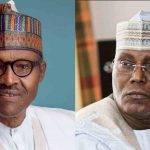
The Vice President, Prof. Yemi Osinbajo has rubbished the perception in some quarters that President Muhammadu Buhari was protecting killer herdsmen and Boko Haram members.

Osinbajo said the narrative that the “president was protecting killer herdsmen and Boko Haram members was a desperate ploy to promote ethnic and religious suspicion”.

He spoke at an event to mark the 80th birthday of former Governor of Ogun State, Chief Olusegun Osoba in Lagos, on Monday, NAN reports.

The Vice President said Boko Haram terrorists once made an attempt on the president’s life, and the incident, which occurred during one of his campaign visits, had betrayed the fact that the claims that he was protecting them were just to cause disunity.

He said the government was committed to the well-being of all Nigerians and urged citizens to unite against all evils, including religious extremism.

Osinbajo said that Boko Haram, Islamic State West Africa Province (ISWAP) and others were enemies of the nation, urging all citizens to join hands with the government to root them out.

”The likes of Boko Haram, ISIS, Islamic State West Africa Province and many Salafist-Jihadist ideologies are expansionist ideologies that feed purely on hate, hatred of any person or group that does not belong to their particular sect.

”They have no redressible grievances; so there are no terms of reference for peace. Fanatics committed to a twisted creed.

”They exploit the ignorance of the tenets of Islam, poverty and exclusion, recruit men and women and use children to perpetrate the most heinous atrocities.

“They are motivated by a satanic desire to control communities by murder and terror.

”Whether it is in Iraq, Borno or Syria their victims are men, women and children, Muslim or Christians so long as they do not share their sick ideology, they target churches, mosques, markets and motor parks where people gather, using children as human bombs to kill randomly, regardless of tribe or faith.

”The challenge for us is to recognize this extremism for what it is. To form alliances across faiths and ethnicities to destroy an evil that confronts us all,” he said.

According to him, herder and farmer conflicts, random killings, banditry and kidnapping in different parts of the country are extant challenges that the army has had to intervene in on several occasions.

”I want to reassure all Nigerians that these issues are being seriously tackled by the Federal Government, working with the States, through a multi-pronged approach. Nobody will be allowed to maim, kill or commit other crimes and escape.

”It is our duty to apprehend and punish these criminals and we are doing and will continue to do so,” Osinbajo said.


Continue Reading
Click to comment

Leave a Reply

Your email address will not be published. Required fields are marked *

Economy

World Bank Flags ‘Hidden Spending System’ Diverting N34.53trn of Nigeria’s Revenue

Published

on

By

The World Bank has raised concerns over Nigeria’s fiscal framework, revealing that more than N34.53 trillion was diverted from federation revenue over the past three years through pre-distribution deductions.

In its latest Nigeria Development Update obtained from its website, the global lender disclosed that although total federation revenue rose sharply to about N84 trillion between 2023 and 2025, about 41 per cent of the earnings did not reach the Federation Account for distribution to the federal, state and local governments.

According to the report, gross revenue increased from N17.08 trillion in 2023 to an estimated N37.44 trillion in 2025. However, deductions classified as “first-line charges” also rose significantly, from N6.22 trillion to nearly N15 trillion within the same period, reducing the pool of funds available for distribution.

The World Bank noted that the development has created a paradox in which rising revenues have not translated into improved public spending capacity, as a substantial portion is automatically retained by certain agencies before allocation.

It explained that reforms such as the removal of petrol subsidy and foreign exchange adjustments boosted nominal revenues, but much of the gains were offset by the structure of deductions tied to cost of collection and statutory transfers.

Agencies such as the Nigeria Customs Service, Nigerian National Petroleum Company Limited, and the Federal Inland Revenue Service account for a significant portion of these deductions. The report stated that their funding is based on fixed percentages of gross revenue, leading to higher allocations as revenues increase.

Describing the model as “pro-cyclical”, the Bretton Woods institution said it operates outside the conventional budgetary framework and weakens legislative oversight. In some cases, allocations to individual agencies exceed the revenues of several states and even the budgets of key federal ministries.

The report also highlighted the impact on public finances, noting a decline in capital expenditure from N5.5 trillion in 2024 to N4.5 trillion in 2025, with only about 25 per cent of the approved capital budget implemented. Meanwhile, the federal fiscal deficit remained elevated at N16.9 trillion, driven by debt servicing and recurrent expenditure.

The World Bank warned that the current arrangement undermines fiscal transparency and accountability, as significant portions of public revenue are spent outside the standard appropriation process.

Source: tribuneonline

Continue Reading

Economy

Dangote Refinery Raises Petrol Price to N1,275, Diesel Now N1,950

Published

on

By

The Dangote Petroleum Refinery has increased the gantry price of petrol and diesel, further tightening pressure on consumers and businesses across Nigeria. This is however, in response to the rising geopolitical tensions in the Middle East and their ripple effects on global energy markets.

A top official at the refinery, who confirmed the development to our correspondent on Tuesday night, said the facility adjusted its pricing in response to prevailing international crude oil benchmarks and market realities.

The new pricing template shows that petrol rose by N75 per litre to N1,275, representing an increase of about 5.02 per cent, while diesel jumped by N200 per litre to N1,950.

This marks a sharp increase from last month’s prices of N1,200 per litre for petrol and N1,750 for diesel, signalling that diesel is now on track to breach the N2,000 per litre mark at the pump, further intensifying cost pressures across the economy.

“The adjustment is in line with global market trends. You are aware of the ongoing tensions in the Middle East and how they have impacted crude oil prices. These are external factors that directly influence refined product pricing,” the official, who spoke in confidence due to the lack of authorisation to speak on the matter, stated.

He added, “Petrol has been reviewed upward by N75 to N1,275 per litre, which is about a five per cent increase, while diesel has increased more significantly by N200 to N1,950 per litre. These changes reflect the realities of the international market.”

Market data from Petroleumprice.ng corroborated the development, indicating that the latest petrol price reflects a 5.02 per cent increase at the gantry level.

The development comes at a time when stakeholders had hoped that increased local refining capacity would help stabilise domestic fuel prices. However, analysts say Nigeria remains exposed to global oil price volatility due to its reliance on international crude benchmarks for pricing.

The latest hike could trigger a fresh wave of increases in pump prices nationwide, with marketers expected to pass on the additional cost to consumers in the coming days.

Global oil markets have remained volatile in recent weeks due to escalating tensions in the Middle East, a region that accounts for a significant share of the world’s crude oil supply. Any disruption or perceived risk to supply routes often leads to price spikes, which in turn affect refined petroleum products globally.

Nigeria, despite being an oil-producing country, operates a deregulated downstream sector where fuel prices are largely determined by market forces. This means that local prices are influenced by international crude prices, exchange rates, logistics costs, and refinery operations.

The Dangote Petroleum Refinery, Africa’s largest, was expected to reduce Nigeria’s dependence on imported fuel and help stabilise prices. However, experts note that as long as crude oil pricing remains tied to global benchmarks, domestic fuel prices will continue to fluctuate in response to international developments.

The latest increase also comes amid concerns over affordability, with consumers already grappling with high energy and transportation costs. A sustained price increase could worsen inflationary pressures and slow economic recovery.

Continue Reading

Economy

Tinubu Seeks World Bank Support to Boost Agriculture, Economic Reforms

Published

on

By

President Bola Tinubu has called on the World Bank to support Nigeria’s ongoing economic reforms, with a focus on agriculture, youth employment, and private sector growth, as part of his administration’s strategy to strengthen the economy and expand opportunities for the citizens.

The president made the remarks on Tuesday while receiving a delegation from the World Bank led by Anna Bjerde, Managing Director of Operations, at the State House, Abuja.

“Since we went into this tunnel of reform, we have our hands on the power and we’re never going to look back. Initially, it was painful and difficult, but those who win are not the ones who give up in difficult times,” Tinubu said.

The president highlighted the importance of mechanization and modernization of agriculture to increase productivity and create opportunities for Nigeria’s large young population.

“We have mechanization centers to help farmers with improved seedlings and fertilizers to enhance their programs. The goal is to move farmers from small-scale holders to large cooperatives that can create opportunities for Nigerians,” he explained.

Tinubu also pointed to the petrochemical sector and other domestic industries as areas where the government is working to improve outputs and strengthen local markets. He stressed that reforms are continuous and must be grounded in transparency, accountability, and stability.

“The first reaction to reforms was high inflation, but it has come down dramatically, and the Naira is now stable. We want to help investors operate with ease, reduce bureaucracy, and develop the skills of our people,” he said.

Anna Bjerde commended Tinubu’s administration for its consistent and steady approach to reforms over the past two years. She highlighted that Nigeria has become a global example of reform implementation, giving confidence to investors and policymakers worldwide. “The results achieved in the last two years are commendable. Your steady communication of the importance of reforms has given confidence and clarity, and there is no turning back,” Bjerde said.

She emphasized the importance of job creation, particularly for Nigeria’s youth, noting that Africa’s young population is growing rapidly and that SMEs are central to employment generation.

“Agriculture is a huge part of the economy and a major employer. Innovations in mechanization, cooperatives, value-chain development, and infrastructure can be scaled to create more opportunities,” Bjerde said.

She also highlighted the World Bank’s financial support for Nigeria, including public sector financing of $17 billion, private sector support of $5 billion through the IFC, and investment guarantees exceeding $500 million. These instruments are aligned with Nigeria’s reforms, including trade, digital initiatives, and inflation management, to stimulate private sector growth and human development.

“We want to work with Nigeria to accelerate growth, improve access to finance for SMEs, and support early childhood development as part of a comprehensive human development strategy,” she added.

The meeting underscored Nigeria’s push to attract foreign support for strategic reforms, particularly in sectors that directly affect youth employment, food security, and overall economic growth.

Continue Reading

Trending