
Headline
Celebrating Prominent Nigerians Born in Independence Year


By Eric Elezuo
As Nigeria celebrates its diamond jubilee independence, The Boss wishes to take time out to celebrate some worthy Nigerians who were born in the year of independence, and who over the period of 60 years have carved a niche for themselves.
Most of these worthy Nigerians have excelled in politics, entertainment, religion, academia, media and a host of other veritable human endeavours. Some of them are:
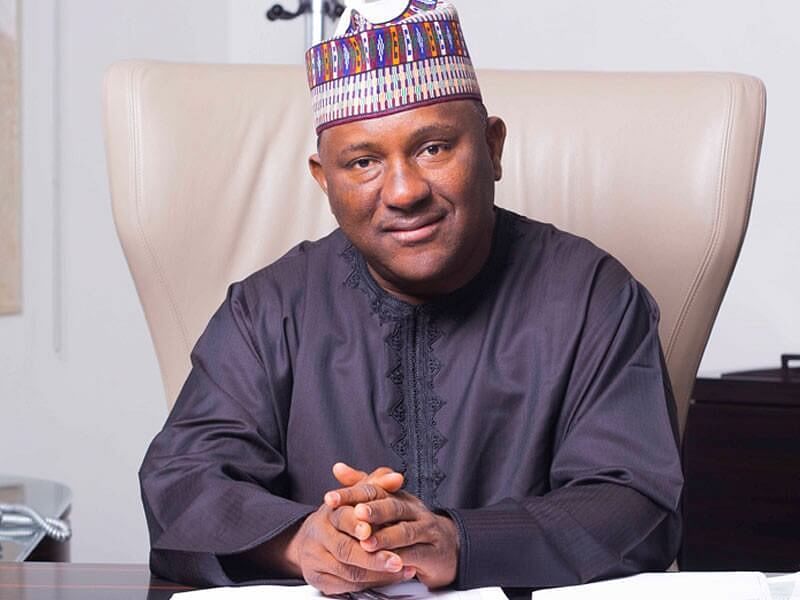
ABDUL SAMAD ISYAKU RABIU CON
The prominent businessman was born on August 4, 1960 in Kano to late Khalifah Isyaku Rabiu, who was one of Nigeria’s foremost industrialists in the 1970s and 1980s. Abdul Samad is the founder and chairman of BUA Group, a conglomerate with bias on manufacturing, infrastructure and agriculture and producing a revenue in excess of $2.5 billion. He is also the chairman of the Bank of Industry (BOI).
Abdul Samad is the 716th on the list of global billionaire’s club, and has an estimated wealth of $3.2 billion, according to Forbes release on July 7, 2020.
Soundly educated, Abdul Samad Rabiu attended Capital University in Columbus,Ohio, and returned to Nigeria at the age of 24 to oversee the family business. He established BUA International Limited in 1988 for the sole purpose of commodity trading. The company imported rice, edible oil, flour, and iron and steel.
The company made its break when in 1990, it was contracted to supply its raw materials in exchange for finished products by Delta Steel Company. Since then, BUA has expanded further into steel, producing billets, importing iron ore, and constructing multiple rolling mills in Nigeria.
Rabiu’s BUA has contributed so much to the economic growth of Nigeria including breaking an eight-year monopoly in the Nigerian sugar industry by commissioning the second-largest sugar refinery in sub-Saharan Africa. In 2009 the company went on to acquire a controlling stake in a publicly-listed Cement Company in Northern Nigeria and began to construct a $900 million cement plant in Edo State, completing it in early 2015.
Rabiu’s corporate social responsibility to Nigerians and the Nigerian government has been tremendous, including the contribution of about N1.5 billion to fight the dreaded coronavirus in the country.
DELE MOMODU

Born Ayòbámidélé Àbáyòmí Ojútelégàn Àjàní Momodu on May 16, 1960, Chief Dele Momodu as he is known in the business circle, and Bob Dee, in the social stage, is by every standard a man who is diligent in his business. And it is no wonder that he has not only stood before kings, he had and continues to dine with kings. There is practically no influential person that Dele Momodu does not know across the length and breadth of Nigeria, Africa and on the inter-continental stage. He is that large!
Most men who had gone far in life are products of instructions well taken, and among such rare breeds is the man who has grown in leaps and bounds to become Chairman/CEO of Ovation Media Group, and creating a tripod publication namely Ovation International, a magazine that has given publicity to people from all over the world, and reflected the true of Africa; Ovation TV and The Boss Newspaper online, which he officially launched in 2015.
By every standard a rare breed, Momodu is many things in one; journalist/publisher, businessman, philanthropist, actor, politician and motivational speaker. Among all these he considers himself simply as a reporter, and even with a retinue of seasoned staff still ventures into the field to scoop exclusives. Those who have referred to him as a workaholic are not far from the truth. Even he, himself has an oft quoted line thus “those who come from poor background cannot afford to sleep too much”.
A graduate of University of Ife, (now Obafemi Awolowo University, Ile-Ife) (1982), Dele Momodu holds a degree in Yoruba and a master’s degree in English Literature (1988). On 30 July 2016, Dele was awarded with an honorary doctorate degree (PhD) from the University of Professional Studies, Accra, Ghana, earning him the title “Doctor of Humane Letters”. Among his many accolades is the singular honour of being a Fellow of the Oxford University.
Momodu’s impact in affecting the young ones is legendary. He constantly hosts a yearly concert, known as Ovation Carol to discover young budding talents, and nurtures them for greatness. The philanthropist has also been involved in dishing out palliatives to selected Nigerians even as hardship occasioned by the coronavirus pandemic prevails.
BISADE OLOGUNDE (LAGBAJA)

Very few persons know the real names of this unique legendary singer as his stage name, Lagbaja for his signature use of mask, powerfully dwarfs his real name. Born in Lagos in 1960, Bisade Ologunde has waxed strong in afrobeat music, became a singer-songwriter and percussionist of not. He believes in social reform through music.
When he embarked on his career in the early 90s, Ologunde adopted the name Lágbájá (meaning ‘anonymous’ or ‘faceless one’ in Yoruba) His name was reflected in his choice of stage attire – a slitted textile and rubber mask adopted so that the artist represented the ‘common man’ in keeping with the carnival tradition of the Yoruba tribe. He formed his first small band in 1991 in Lagos after he had taught himself to play the saxophone. With a high quotient of percussion instruments including congas and talking drums Lagbaja’s album We Before Me (IndigeDisc/PDSE) released in 2000 demanded honesty from politicians and urged brotherhood and unity. He shared lyrics of his songs with a backup singer, Ego Ihenacho, and equally plays tenor saxophone. In 2006, he won the Channel O Music Video Awards for Best Male Video with the song, “Never Far Away”.
BRIGHT CHIMEZIE

The originator of the Zigima Sound, Bright Chimezie aka Okoro Jnr, was born on October 1, 1960 to a clergy father. He is a notable musician. Here was a man, who believe that he is a preacher like his father. But much as his father chose to preach from the altar, he chose to preach from the stage. At the end of the day, messages to better humanity were transferred.
His music style of music, which became known as Zigima Sound, is a genre popular in the Eastern part of Nigeria in the early 1980s. It is a mix of traditional Nigerian music and igbo highlife fused with chanted vocals. Bright Chimezie used it to revolutionize the musical structure in Nigeria with lyrics that focused on social issues of the country in a rather funny way.
His first album, which gave him the nickname, Okoro Jnr. was an instant hit, and launched him into limelight. Bright Chimezie made more hit tracks such as ‘Ube Nwanne’, ‘because of English’ , African style. His album ‘Respect Africa’ brought him to Limelight as he used these songs to ridicule problems in the society. He is also known for his dance steps. popularly known as legwork. His stylish way of mixing excellent steps and a warning chant gave him the title ‘ the duke of African music’.
Chimezie also dabbled into movie acting as well as other forms of entertainment.
OLUREMI TINUBU

Oluremi Tinubu became the First Lady of Lagos State when her husband, Bola Tinubu, was elected as governor in 1999 after returning from exile following the intimidating junta of late General Sani Abacha. As first lady, she expressed her milk of human kindness and brought her humanity to the fore with the establishment of the New Era Foundation. The foundation was dedicated to establishing centres for “all round development of young ones and promote public awareness on environmental health and community service.” It also established the prestigious Spelling Bee competition for secondary school children. The prize was mind blowing including the offer of becoming the governor of Lagos State for 24 hours. This singular prize created many teenage governors for the Lagos State.
She is also an ordained pastor of the Redeemed Christian Church of God.
AKINTADE OGIDAN

Also known as Tade Ogidan, this film and television screenwriter as well as producer and director, was born in July, 1960 in Lagos, Nigeria, to Akinola and Rachael Ogidan. He grew up in Surulere, a suburb of Lagos State.
Tade had his elementary school education in the mid ‘60s into the ‘70s at Government Demonstration School and Surulere Baptist School, both in Surulere, Lagos. Between 1972 and 1974, he attended secondary school at Ekiti Parapo College, Ido-Ekiti, and graduated at Maryland Comprehensive Secondary School, Ikeja, Lagos, in 1978. From 1979, Ogidan attended Eastern New Mexico University in Portales, NM, USA. He completed a short stint at the State University of New York, in Buffalo, NY, USA.
From 1982 to 1983, Tade Ogidan completed the government-mandated National Youth Service Corp program at the Nigerian Television Authority, NTA, in Lagos, after which he became a full-time Producer/Director with NTA Channel 10, and a Continuity Announcer with NTA 2 – Channel 5, both in Lagos, Nigeria. Ogidan spent 8 years with the Nigerian Television Authority, (NTA 10, NTA 2 – Channel 5 and NTA National Network Service and projects).
He is reputed to have produced blockbuster productons such as PLAY OF THE WEEK drama series, TELE THEATRE drama series, LEGAL ANGLE series, THE NEW VILLAGE HEADMASTER drama series among others.
He also delved into Nollywood production at the advent of home video production in Nigeria. Tade is not only prolific, but a tested professional in the business of making people happy through motion pictures.
To be continued…



Simi Features As Special Guest on Glo-sponsored African Voices

Airforce Confirms Nigeria’s Readiness to Acquire 24 Fighter Jets from Italy’s Leonardo

Adding Value: Dealing with Defective Success by Henry Ukazu

The Oracle: Chief Ayo Adebanjo: A Member of the Dwindling Mohicans

Ex-Gov Bello Stripped of Security Details, Placed on Watchlist

Friday Sermon: The World in Turmoil and the Killing Fields of Gaza

N80.2b Fraud: EFCC Declares Ex- Gov Bello Wanted

Nigerian Engineer Wins $500m Contract to Build Monorail Network in Iraq

WORLD EXCLUSIVE: Will Senate President, Bukola Saraki, Join Presidential Race?

World Exclusive: How Cabal, Corruption Stalled Mambilla Hydropower Project …The Abba Kyari, Fashola and Malami Connection Plus FG May Lose $2bn

Rehabilitation Comment: Sanwo-Olu’s Support Group Replies Ambode (Video)

Pendulum: Can Atiku Abubakar Defeat Muhammadu Buhari in 2019?

Fashanu, Dolapo Awosika and Prophet Controversy: The Complete Story
Pendulum: An Evening with Two Presidential Aspirants in Abuja

Who are the early favorites to win the NFL rushing title?
Boxing continues to knock itself out with bewildering, incorrect decisions
Steph Curry finally got the contract he deserves from the Warriors
Phillies’ Aaron Altherr makes mind-boggling barehanded play
The tremendous importance of owning a perfect piece of clothing
-
 News6 years ago
Nigerian Engineer Wins $500m Contract to Build Monorail Network in Iraq
-
 Featured6 years ago
WORLD EXCLUSIVE: Will Senate President, Bukola Saraki, Join Presidential Race?
-
 Boss Picks6 years ago
World Exclusive: How Cabal, Corruption Stalled Mambilla Hydropower Project …The Abba Kyari, Fashola and Malami Connection Plus FG May Lose $2bn
-
 Headline6 years ago
Rehabilitation Comment: Sanwo-Olu’s Support Group Replies Ambode (Video)
-
 Headline6 years ago
Pendulum: Can Atiku Abubakar Defeat Muhammadu Buhari in 2019?
-
 Headline5 years ago
Fashanu, Dolapo Awosika and Prophet Controversy: The Complete Story
-
Headline6 years ago
Pendulum: An Evening with Two Presidential Aspirants in Abuja
-

 Headline6 years ago
2019: Parties’ Presidential Candidates Emerge (View Full List)