
Featured
No Peace in Senate Except Saraki Resigns – Katsina Senator

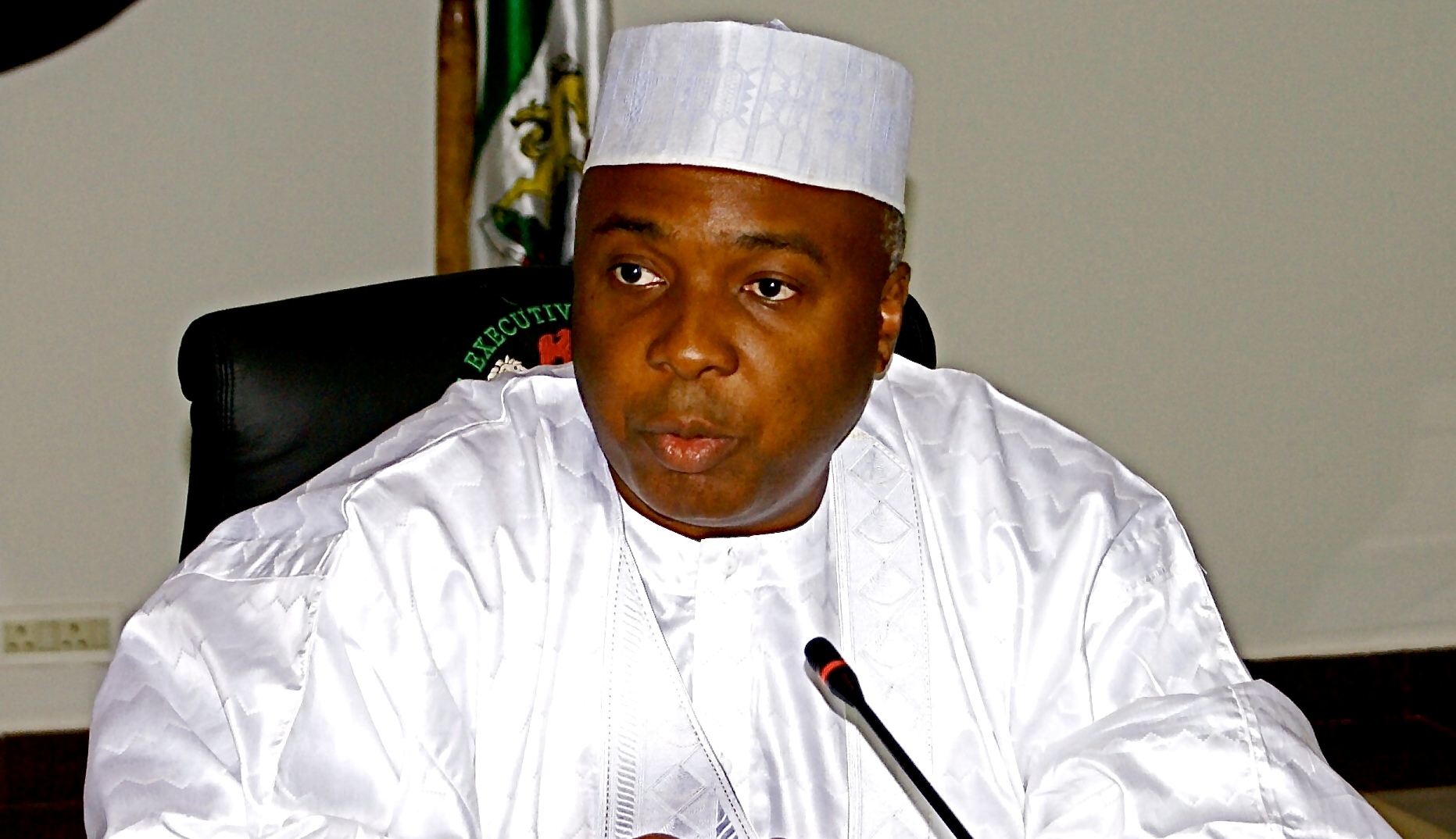

A senator, Abu Ibrahim (APC-Katsina) has said peace will be elusive in the Nigerian Senate until its President, Bukola Saraki, relinquishes the position.
In an interview with journalists on Thursday, Mr Ibrahim commended Mr Saraki for honourably leaving the All Progressives Congress(APC).
However, he asked him to follow up with the next logical deed: by honourably resigning.
“I think it is commendable that he has left the party. He has chosen the path of survival because it is the issue of political survival not any thing for Nigeria.
“But next is for him to resign as Senate President, because by all conventions all over the world, the majority party produces the leadership; Senate President, the Majority Leader and others.
“Again, let him be gentleman enough and resign as Senate President.
“If he does not, we will never have peace in that Senate because it is absolutely clear that APC has majority to produce the leadership.
Mr Ibrahim debunked claims that the PDP has the majority in the Senate with recent defections.
“I hear the PDP claiming majority, but it is crystal clear that APC has majority. We will have more members. We will conduct two bye-elections and we will have the two members.
“We also have some alliance with APGA. It is clear that APC has majority.
“APC with majority should produce the leadership in the Senate. 49 cannot produce the leadership.
“Saraki should resign as Senate President.”
Mr Ibrahim also debunked as unfounded an allegation that some senators attempted to break into the Senate chamber on Wednesday to reconvene plenary.
“How do you break into the chamber? If we like we can reconvene legally because it is legal for us to reconvene.
“We do not need to break into the chamber when we have the number. I will never subscribe to that.We can reconvene. The rules are there that if we are up to 30 we can reconvene.

“Why should we break into the chamber when we can reconvene legally and do what we want to do.
“It is legal. I do not see why anybody should contemplate that we can break into the chamber.
“I do not know about it and even if I know about it, I will say it is unwise.
“However, if the leadership does not ask for peace, it will not get peace. Peace is a function of leadership.
“I have been in the Senate for about four times. I cannot allow anybody to manipulate me. I cannot take it.”
He further said: “Nobody was elected as Senate President. We all came here as senators. So we have equal footing. We gave you leadership.
“If you fail to give us the right leadership and if majority of us don’t want you any more, you have to leave.
“Saraki was elected by us. At any time majority of us say he should go he has to go.
He said the APC has nothing to worry about some members leaving to team up with the PDP.
“There are some losses that will give you sleepless night. There are others that will not give you sleepless night. We have made our calculation and I am confident that we will not lose.
“For the past two years, Saraki has undermined the government.
“He has allowed frivolous motions to attack the president and the government. His continued stay as senate president did not augur well for the APC government.
“For somebody to be in the same party, same government and he did not see anything good in the president was disturbing.”
(NAN)


The Oracle: Chief Ayo Adebanjo: A Member of the Dwindling Mohicans

Ex-Gov Bello Stripped of Security Details, Placed on Watchlist

Friday Sermon: The World in Turmoil and the Killing Fields of Gaza

N80.2b Fraud: EFCC Declares Ex- Gov Bello Wanted

EFCC Seeks Military’s Help to Arrest Fleeing Ex-Gov Bello

Stay Away from CBT Centres, JAMB Warns Parents, Threatens Arrest

Oyo Govt Demolishes Operational Base of Yoruba Nation Agitators

Nigerian Engineer Wins $500m Contract to Build Monorail Network in Iraq

WORLD EXCLUSIVE: Will Senate President, Bukola Saraki, Join Presidential Race?

World Exclusive: How Cabal, Corruption Stalled Mambilla Hydropower Project …The Abba Kyari, Fashola and Malami Connection Plus FG May Lose $2bn

Rehabilitation Comment: Sanwo-Olu’s Support Group Replies Ambode (Video)

Pendulum: Can Atiku Abubakar Defeat Muhammadu Buhari in 2019?

Fashanu, Dolapo Awosika and Prophet Controversy: The Complete Story
Pendulum: An Evening with Two Presidential Aspirants in Abuja

Who are the early favorites to win the NFL rushing title?
Boxing continues to knock itself out with bewildering, incorrect decisions
Steph Curry finally got the contract he deserves from the Warriors
Phillies’ Aaron Altherr makes mind-boggling barehanded play
The tremendous importance of owning a perfect piece of clothing
-
 News6 years ago
Nigerian Engineer Wins $500m Contract to Build Monorail Network in Iraq
-
 Featured6 years ago
WORLD EXCLUSIVE: Will Senate President, Bukola Saraki, Join Presidential Race?
-
 Boss Picks6 years ago
World Exclusive: How Cabal, Corruption Stalled Mambilla Hydropower Project …The Abba Kyari, Fashola and Malami Connection Plus FG May Lose $2bn
-
 Headline6 years ago
Rehabilitation Comment: Sanwo-Olu’s Support Group Replies Ambode (Video)
-
 Headline6 years ago
Pendulum: Can Atiku Abubakar Defeat Muhammadu Buhari in 2019?
-
 Headline5 years ago
Fashanu, Dolapo Awosika and Prophet Controversy: The Complete Story
-
Headline6 years ago
Pendulum: An Evening with Two Presidential Aspirants in Abuja
-

 Headline6 years ago
2019: Parties’ Presidential Candidates Emerge (View Full List)